What Is Environmental Science? A Clear Definition
Environmental science studies how living things interact with air, water, soil and climate. See its main branches, how it differs from ecology, and real examples.
Environmental science is the study of how living things interact with each other and with the air, water, soil, and climate around them, and how human activity changes those interactions. It pulls together biology, chemistry, geology and geography into one field, because a question like "why is a lake turning green" needs all four to answer: the algae are living things (biology), growing on nutrients that washed in (chemistry), from soil that eroded off nearby land (geology), after heavier rainfall than usual (climate).
What is environmental science vs ecology?
Ecology is one branch inside environmental science, not the same thing. Ecology narrowly studies how organisms interact with each other and their habitat — predator and prey, competition for food, who pollinates what. Environmental science is the wider field: it includes ecology, but also covers pollution, natural resource use, energy, waste management and environmental policy — the human side of the picture that ecology on its own doesn't cover.
So every ecologist is doing environmental science, but not every environmental scientist is studying ecology. A scientist measuring lead levels in drinking water, or modelling how farmland affects river quality, is doing environmental science without touching ecology at all.
What are the main branches of environmental science?
- Ecology — how organisms interact with each other and their habitat, including food chains, populations and ecosystems.
- Environmental chemistry — tracking pollutants, their reactions in air, water and soil, and how they move through food chains.
- Geology and soil science — rocks, minerals, erosion and the nutrients soil provides to plants.
- Atmospheric science — weather, climate, and air pollution such as greenhouse gases and the ozone layer.
- Environmental policy — the laws, regulations and economics that shape how resources are used and protected.
What do environmental scientists actually study?
In practice, environmental scientists ask questions like: How much carbon dioxide does a forest absorb? What happens to a river when a factory discharges waste upstream? Which farming methods keep soil fertile for the longest? How do rising ocean temperatures affect coral reefs? Each question usually needs fieldwork (collecting water, soil or air samples), lab analysis, and then building a model to predict what happens next.
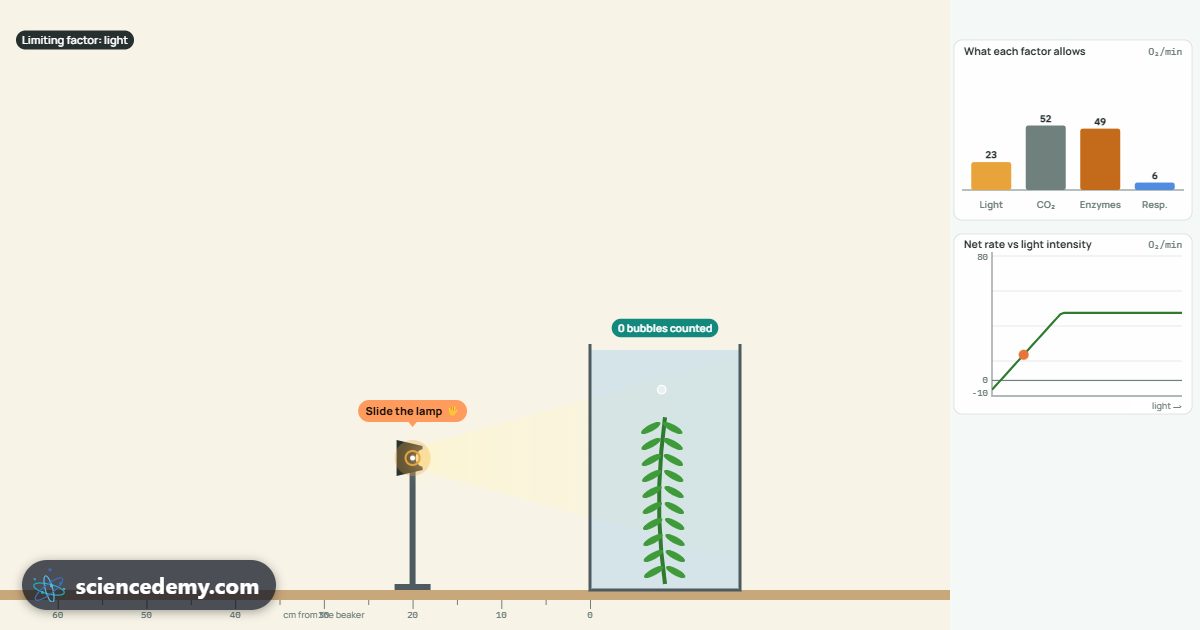
Much of this connects directly to processes you can study at the cell and organism level too. Photosynthesis is a core piece of how ecosystems capture energy in the first place, and osmosis explains how water moves into and out of cells under different conditions — both are the biological mechanisms environmental scientists rely on when they model a whole ecosystem's energy and water balance.
Why does environmental science matter?
Environmental science is what underpins decisions about climate change, renewable energy, clean water access, and protecting endangered species — it provides the evidence that policy is (or should be) built on. Without it, decisions about pollution limits, land use or resource extraction would be guesswork instead of measurement.
Frequently asked questions
What is AP Environmental Science?
AP Environmental Science is a US high-school course that covers the same ground as college-level introductory environmental science: ecosystems, biodiversity, population growth, land and water use, energy resources, pollution, and climate change. It's typically taken by students who want an interdisciplinary science credit that combines biology, chemistry and earth science.
Is environmental science a hard major?
It's considered interdisciplinary rather than uniquely difficult: it draws on biology, chemistry, geology and statistics, so the workload is spread across several sciences instead of going deep into just one. Students who find connecting ideas across subjects easier than memorizing one dense subject often find it more approachable than a single-discipline major.
What jobs can you get with an environmental science degree?
Common roles include environmental consultant, conservation scientist, water quality analyst, environmental policy analyst, sustainability coordinator, and park or wildlife ranger. Many roles sit at government agencies, environmental consultancies, or within companies managing their own environmental compliance.
Is environmental science the same as environmental studies?
They overlap but differ in emphasis: environmental science is science-focused (measuring, testing, modelling), while environmental studies leans more into the social sciences side — policy, economics, and ethics around environmental issues. Many environmental studies programs still require foundational science courses.
Try it yourself
See the biological processes behind every ecosystem up close: open Photosynthesis & Respiration to watch a plant capture energy from light, or Diffusion & Osmosis to see how water moves through living cells.
Véalo por sí mismo, en 3D y gratis.
Pruébalo en el Fotosíntesis y Respiración