The free virtual 3D science lab
A virtual 3D lab is a science experiment you can pick up and turn round. Mix chemicals and watch them react, switch on an electrolysis cell, throw a planet into orbit, fire a neuron or follow a blood cell through a beating heart. Every lab below is free, runs in your browser and comes with a guided tour and a quiz.
What makes it a lab, not a video
- You do the experimentPour, heat, drag, throw and switch things on. Nothing plays by itself: what you see comes from what you did.
- Real 3D, any angleTurn the beaker, walk round the heart, pull the lobes of the brain apart. Shapes that are hard to picture on a flat page make sense in 3D.
- Real numbersReactions are balanced, orbits come from Newton’s law, the heart’s output is stroke volume × rate. Graphs draw themselves as you go.
- A tour and a quiz in every labEach lab has a step-by-step guided tour, a classic experiment from history and a quiz that explains every wrong answer.
- Free, no login, any deviceIt runs in the browser on phones, tablets, Chromebooks and laptops. No account, no install, no tracking of students.
- Safe for any experimentBurn magnesium, make chlorine, overheat an enzyme or fling a planet into the Sun without a risk assessment.
Virtual chemistry lab
Build atoms, pull electrons off them, bond molecules, mix chemicals in a virtual lab and fuse nuclei like the Sun.
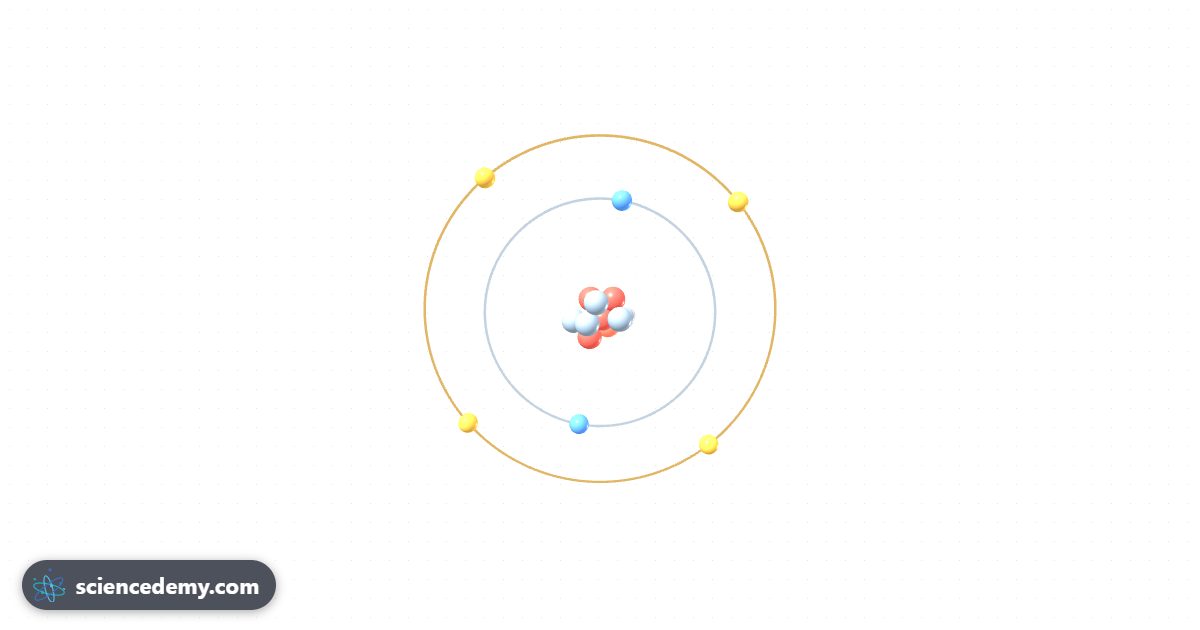 Atom BuilderAdd protons, neutrons and electrons and watch any of the 118 elements, isotopes and ions take shape.
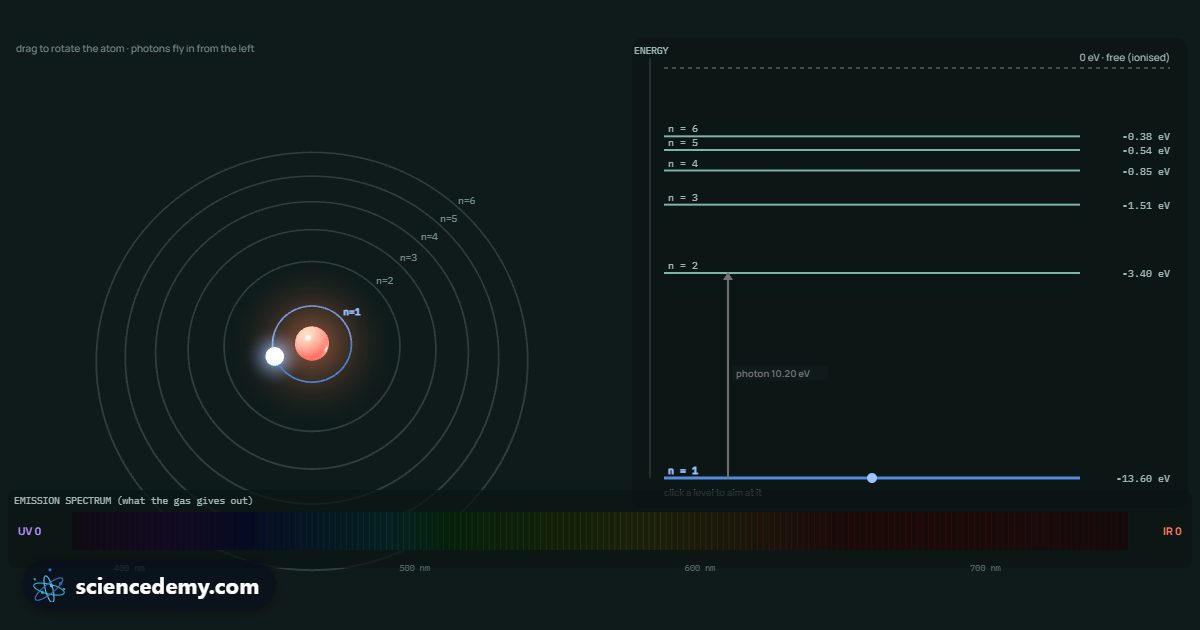 Electron LabFire photons at an atom: watch electrons jump between shells, glow in colour and finally escape.
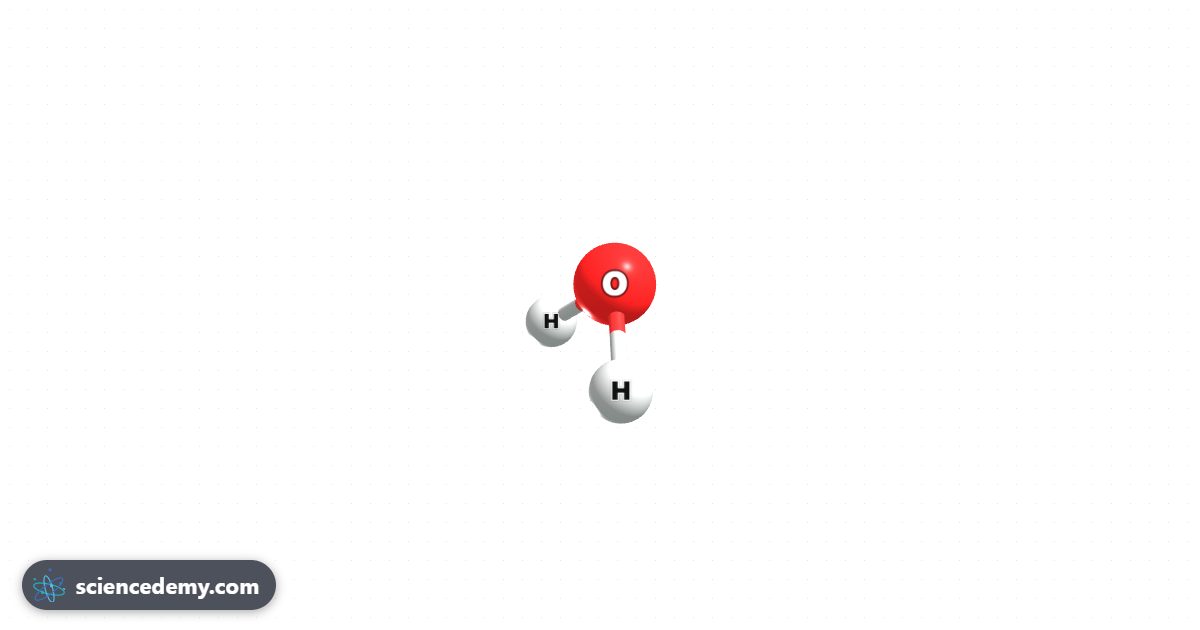 Molecule BuilderDrag atoms together to form single, double and triple bonds and discover real molecules.
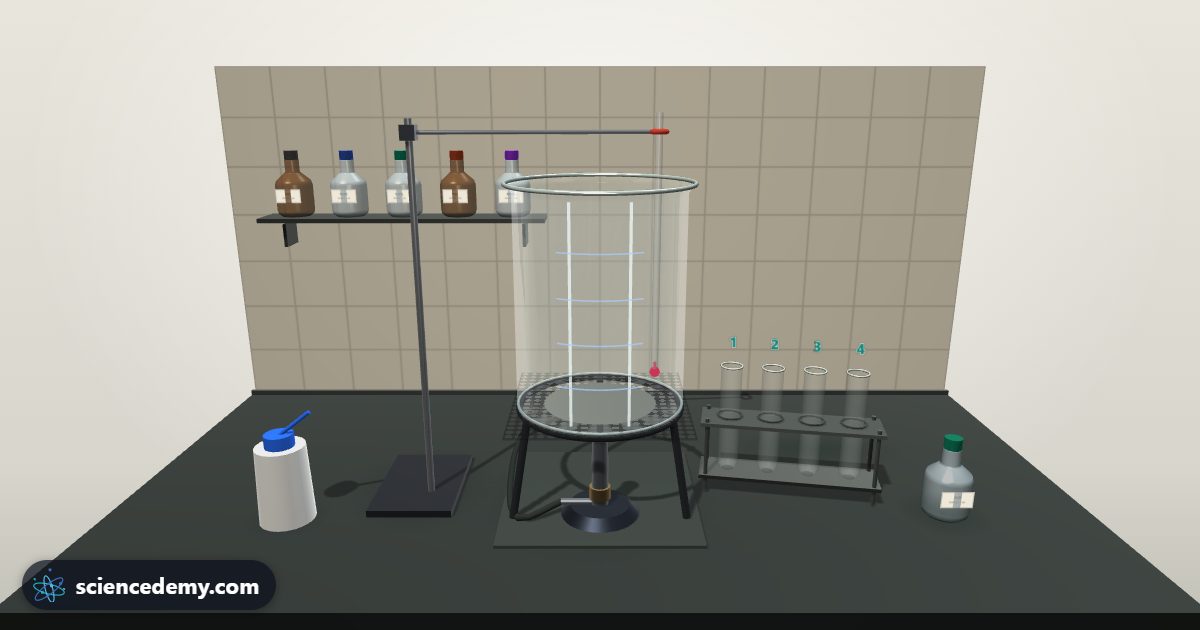 Chemistry LabPour chemicals into a beaker, heat them over a Bunsen burner and watch real reactions.
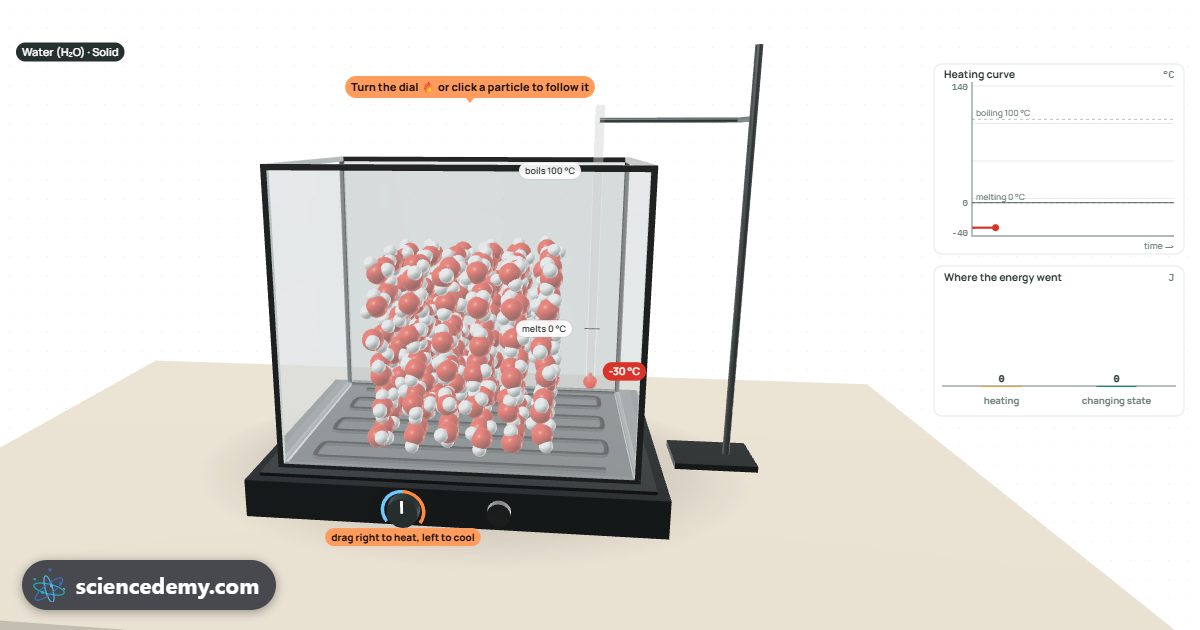 States of MatterHeat ice until it melts and boils: watch the particles change and the heating curve draw itself, flat steps and all.
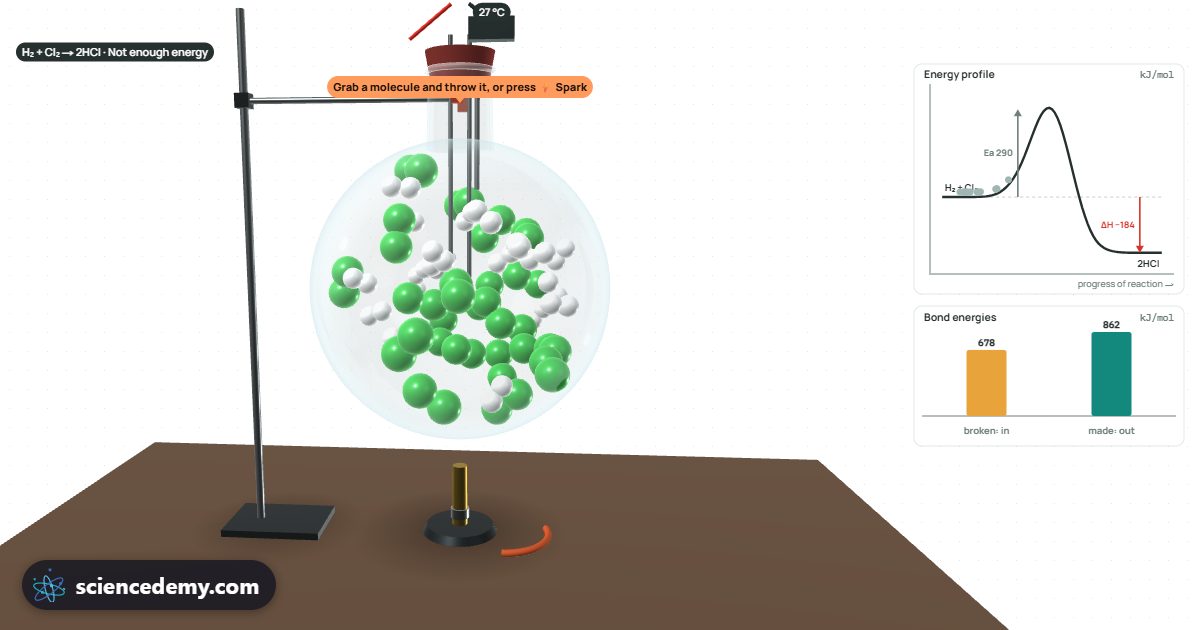 Chemical EnergeticsCollide molecules over an activation-energy hill and watch exothermic reactions heat up and endothermic ones cool down.
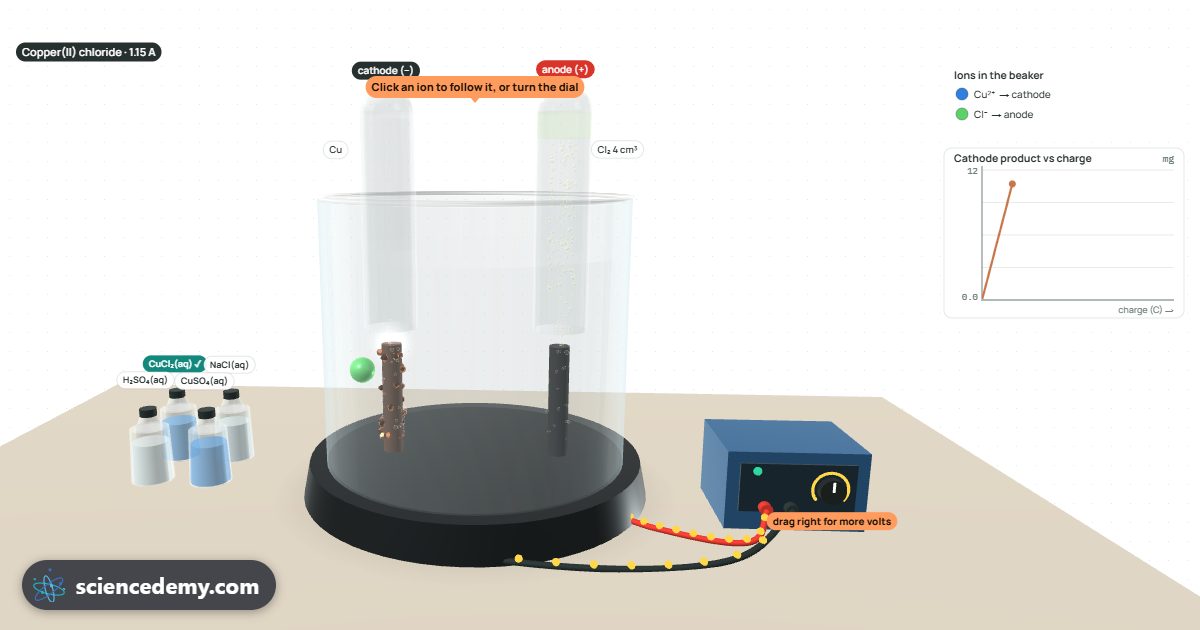 ElectrolysisSwitch on a power pack and watch ions drift to the electrodes: copper plates the cathode and gases bubble into the tubes.
 Nuclear FusionHeat a plasma and fire nuclei together to see how the Sun turns mass into energy.
- Chemistry FormulasEvery chemistry equation, live: type numbers or pull them from what you built.
Virtual physics lab
Read a Vernier caliper and screw gauge, time a pendulum, make waves and sound, launch projectiles, wire circuits and bend light through lenses.
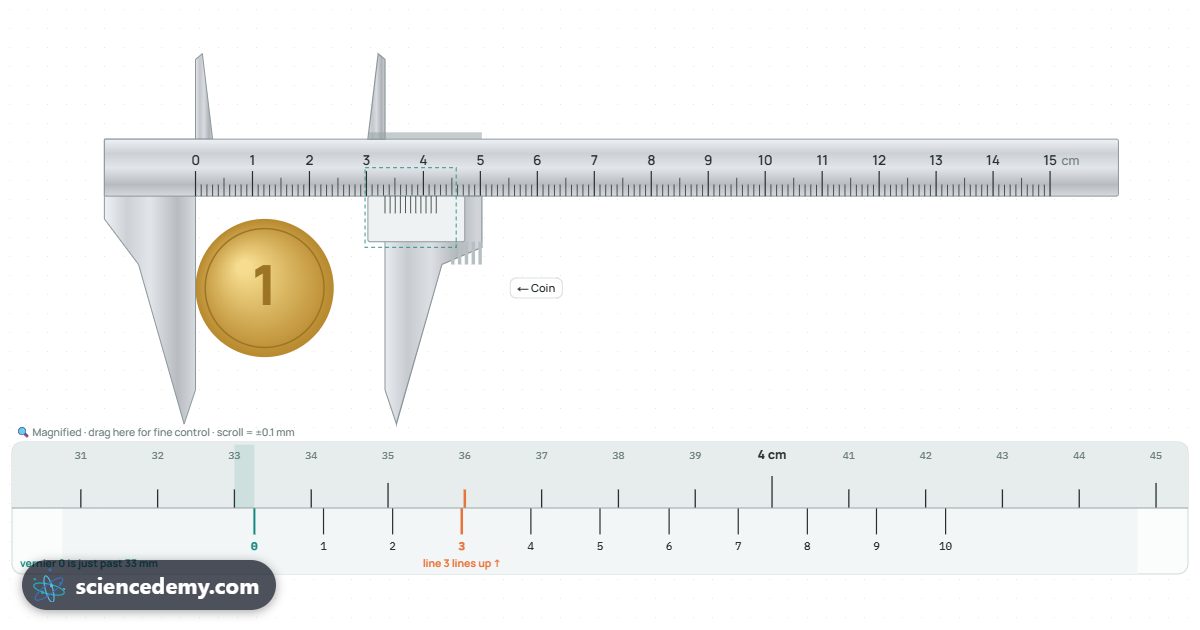 Vernier Caliper & Screw GaugeSlide the jaws of a Vernier caliper or turn a screw gauge, read the scales and check your reading.
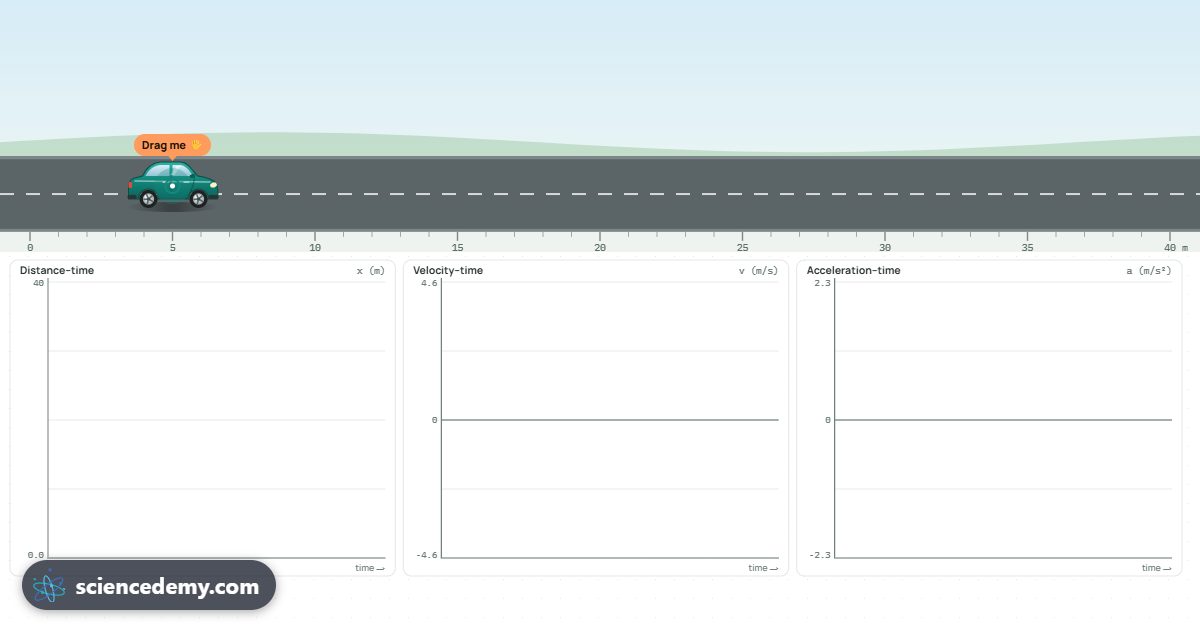 Motion GraphsDrive a car and watch its distance–time, velocity–time and acceleration–time graphs draw themselves live.
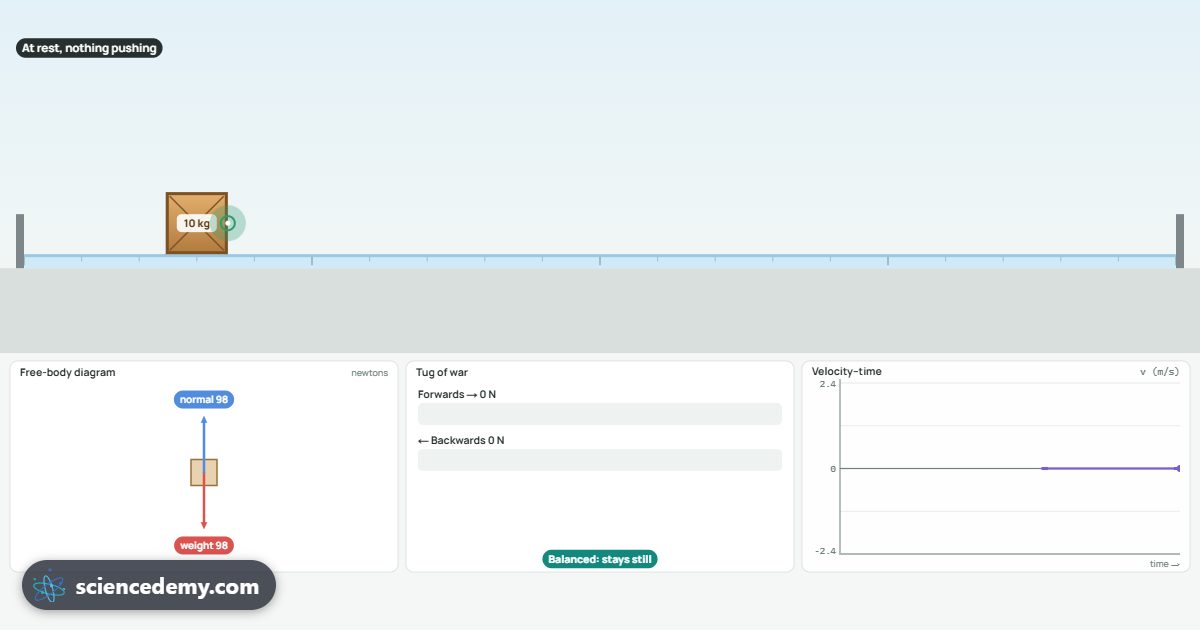 Forces & Newton's LawsPull a crate across wood, ice or rubber and watch its free-body diagram, friction and F = ma, live.
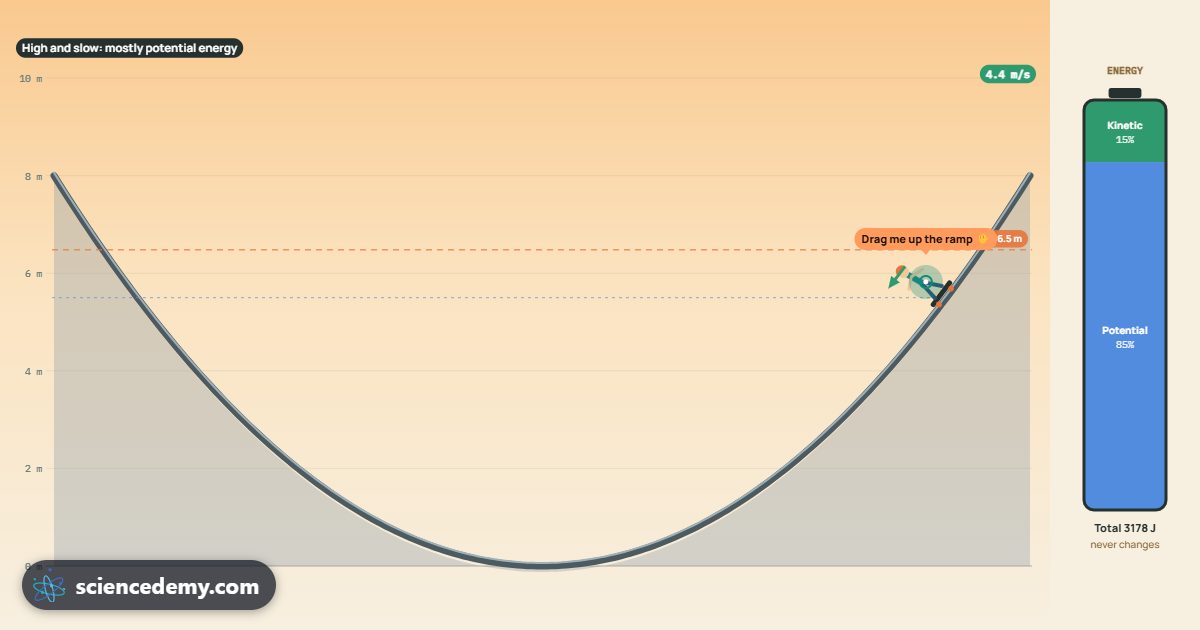 Energy Skate ParkDrop a skater into a half-pipe and watch kinetic, potential and thermal energy swap, while the total stays the same.
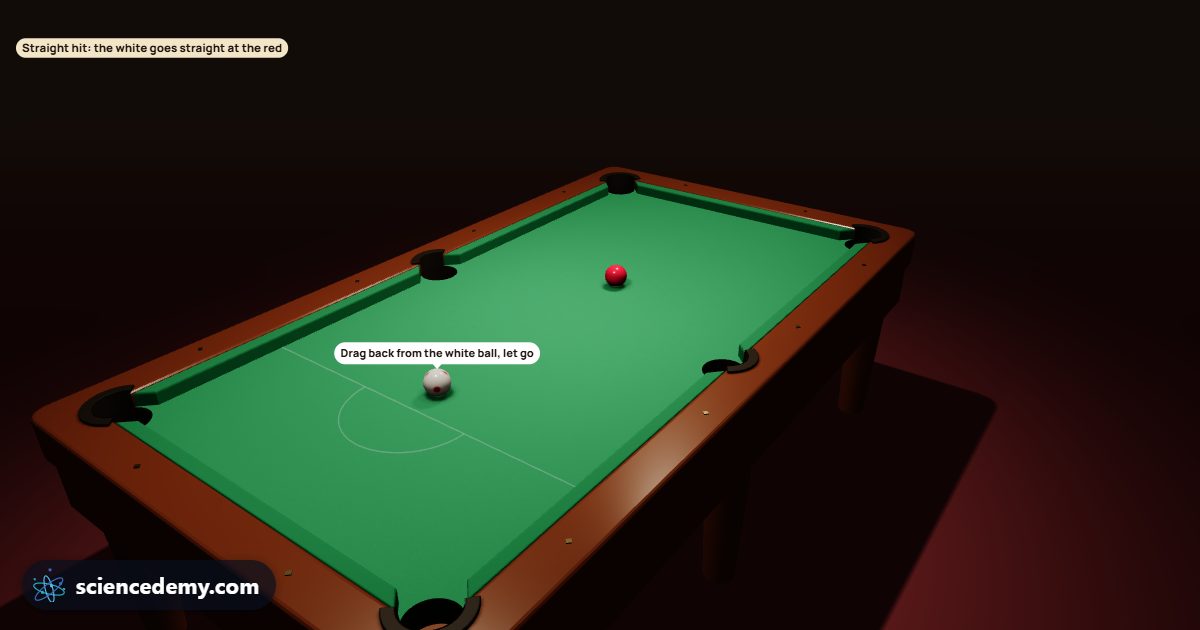 Momentum & CollisionsCrash carts on an air track, elastic or sticky, and see momentum conserved every time while kinetic energy is not.
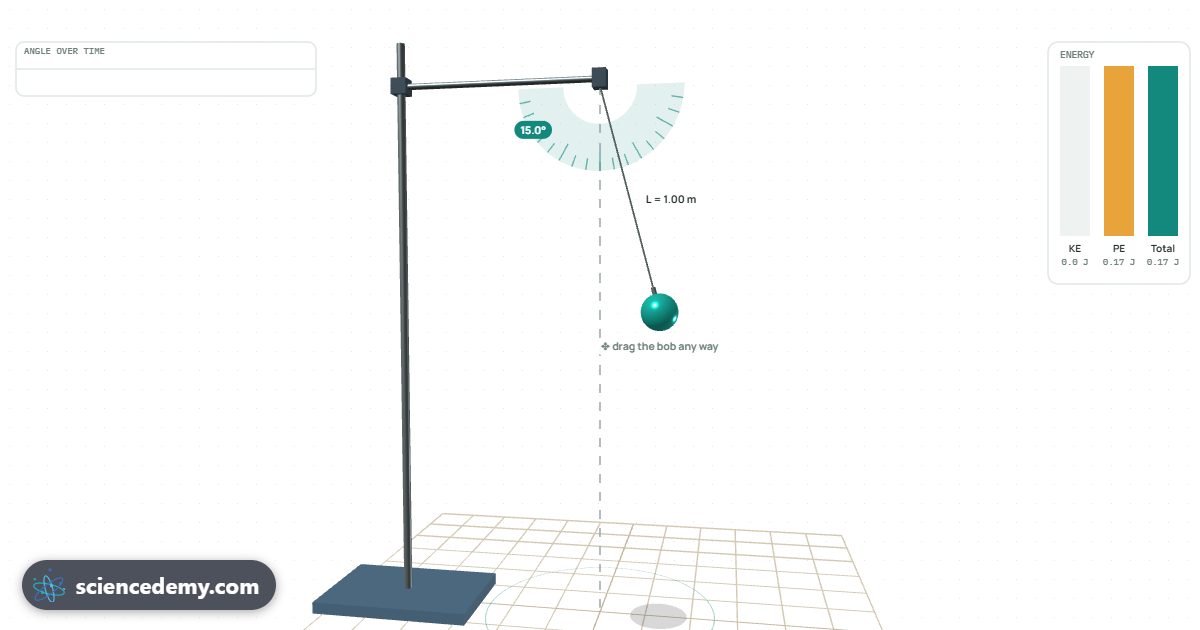 Pendulum LabChange the length, mass and planet, time the swings and work out g from your own graph.
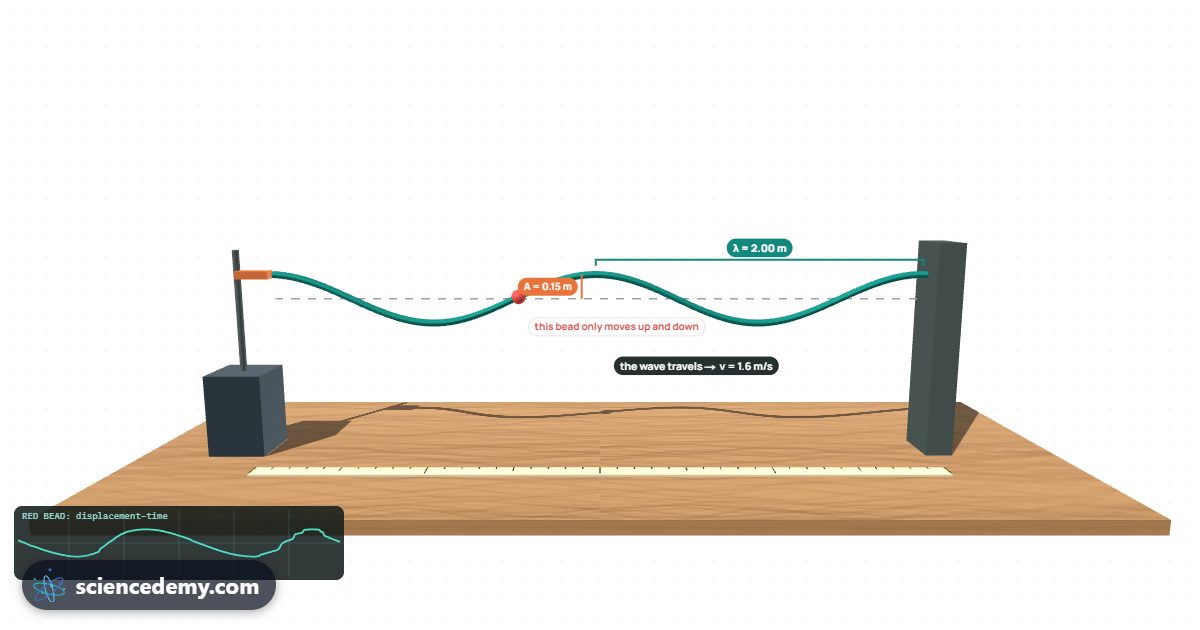 Waves & SoundMake waves on a rope, see and hear sound, pluck a 3D guitar and hit a drum: wavelength, frequency and v = fλ.
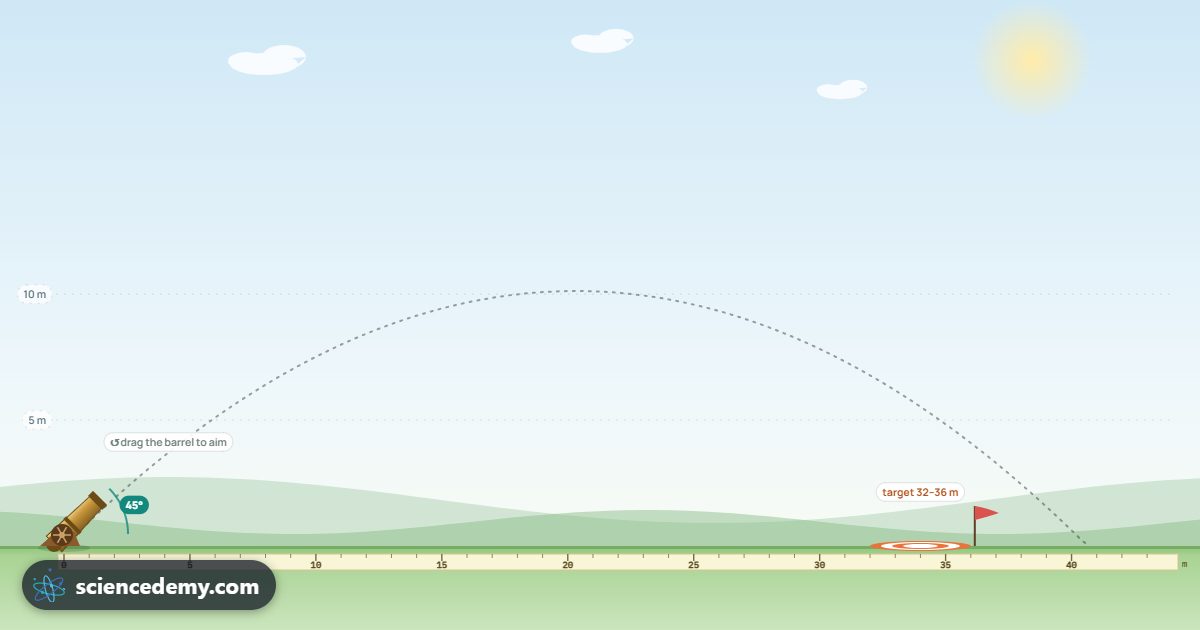 Projectile MotionLaunch a ball at any angle and speed, hit the target and see why 45° goes furthest.
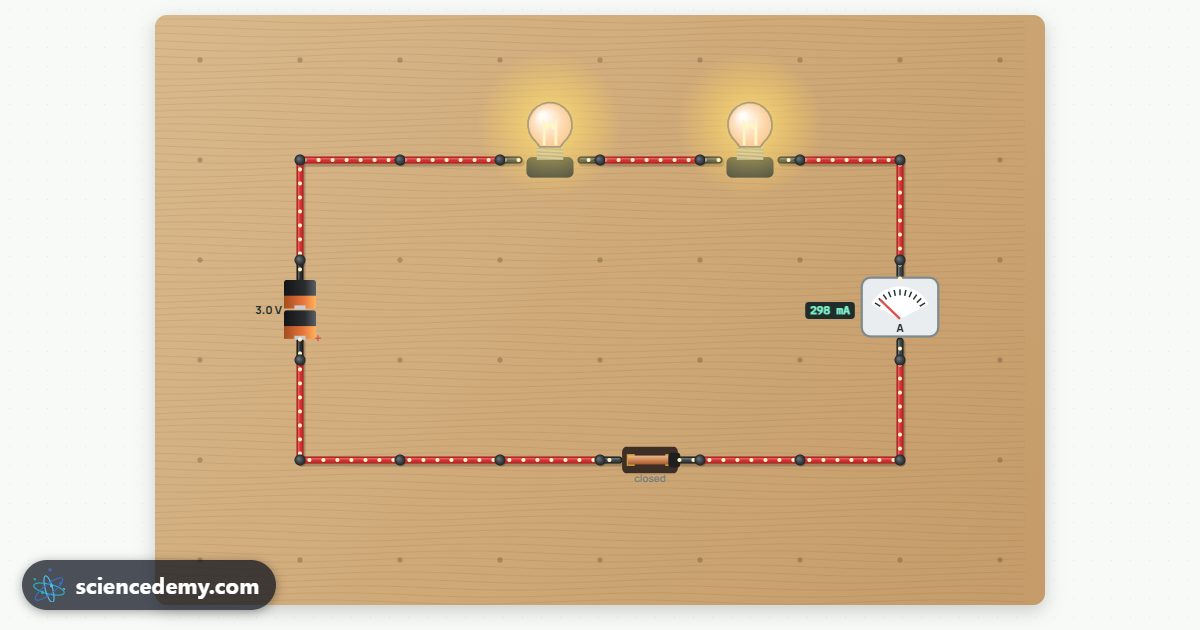 Circuit BuilderDrag batteries, bulbs, resistors and switches onto a board and watch the current flow.
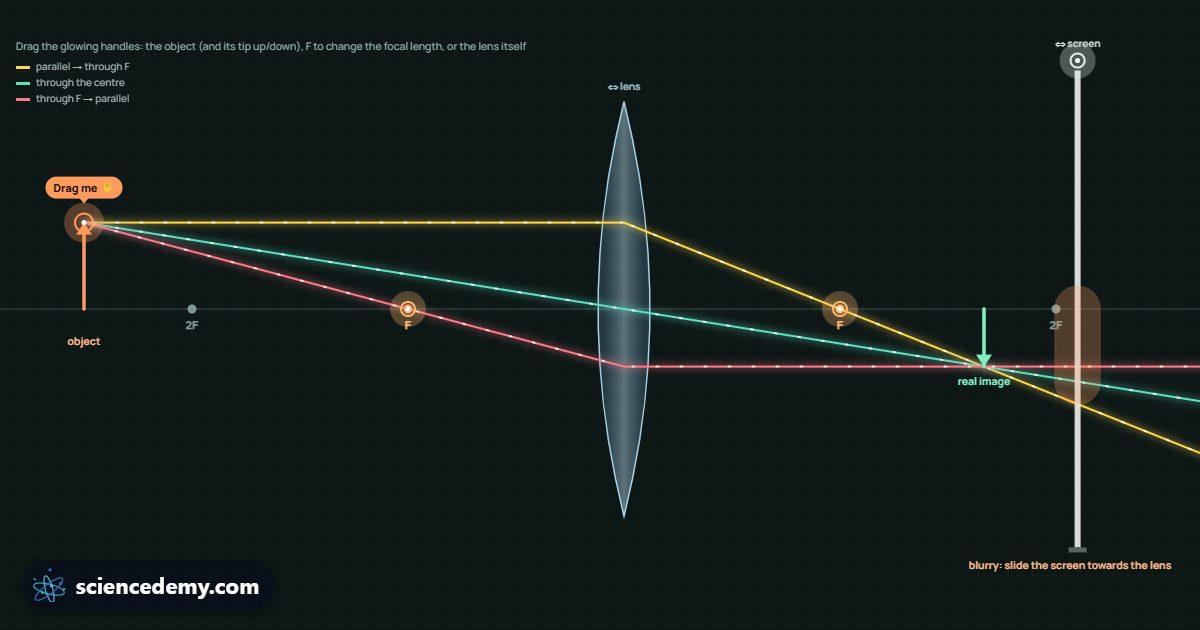 Lenses & LightMove an object past a lens or mirror and watch the rays form real and virtual images.
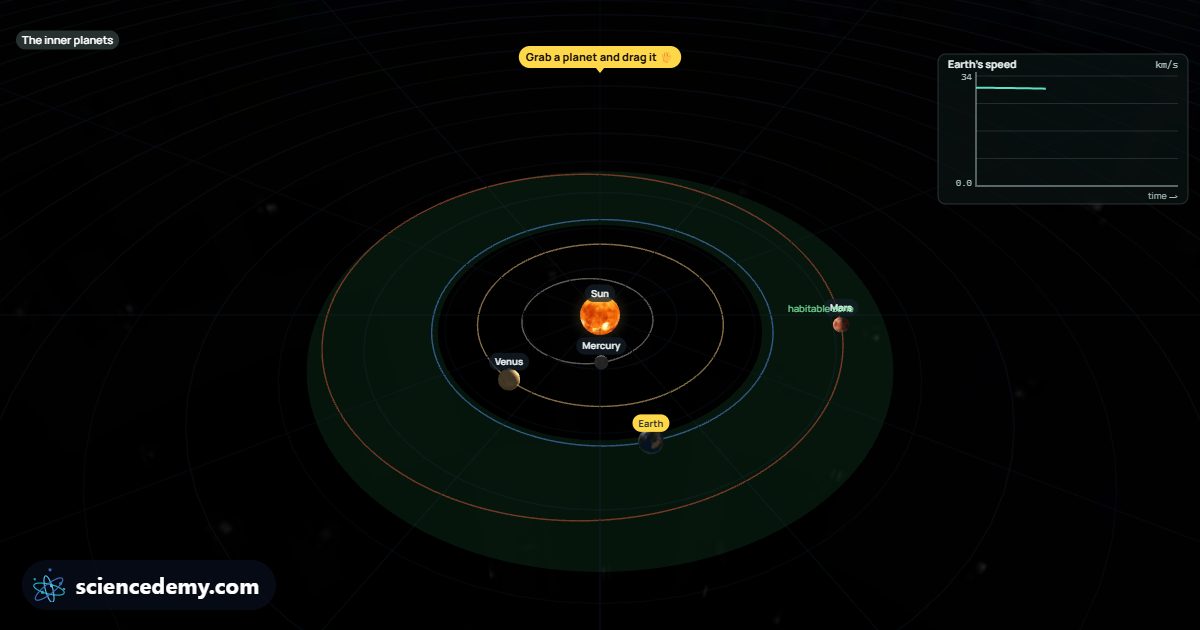 Gravity & OrbitsWatch the planets orbit in 3D, shade Kepler’s equal areas, try two suns and launch your own planet.
- Physics FormulasEvery physics equation as a calculator: solve for any value, or fill it from your own experiments.
Virtual biology lab
Open a 3D cell, watch osmosis, enzymes and photosynthesis at work, watch cells divide by mitosis and meiosis, and follow blood through a beating 3D heart.
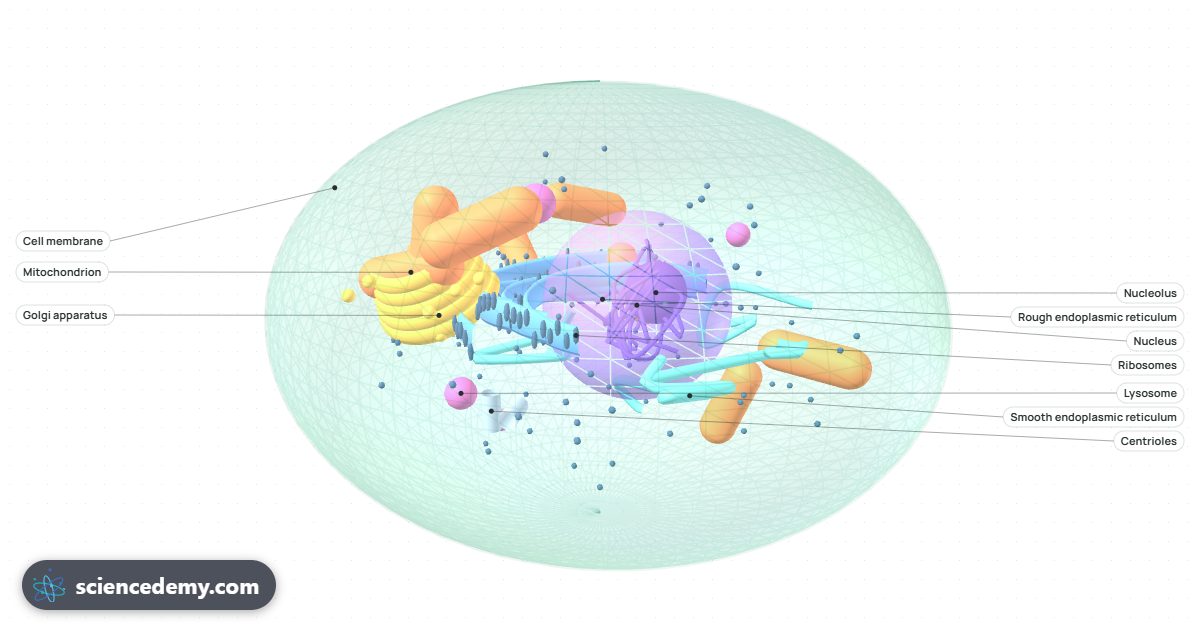 Cell ExplorerSpin a 3D animal or plant cell, click each organelle and find out what it does.
 Virtual MicroscopeLoad a slide, switch lenses and focus on onion cells, cheek cells, blood and more.
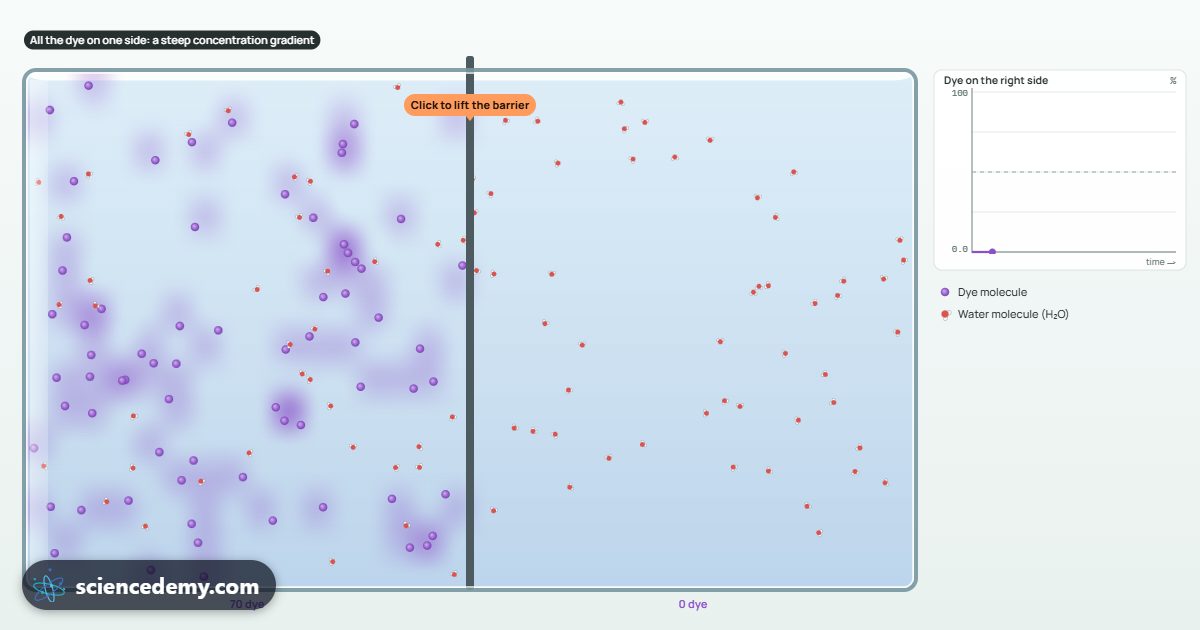 Diffusion & OsmosisWatch particles spread out, water cross a membrane, and cells swell, burst or shrivel in different solutions.
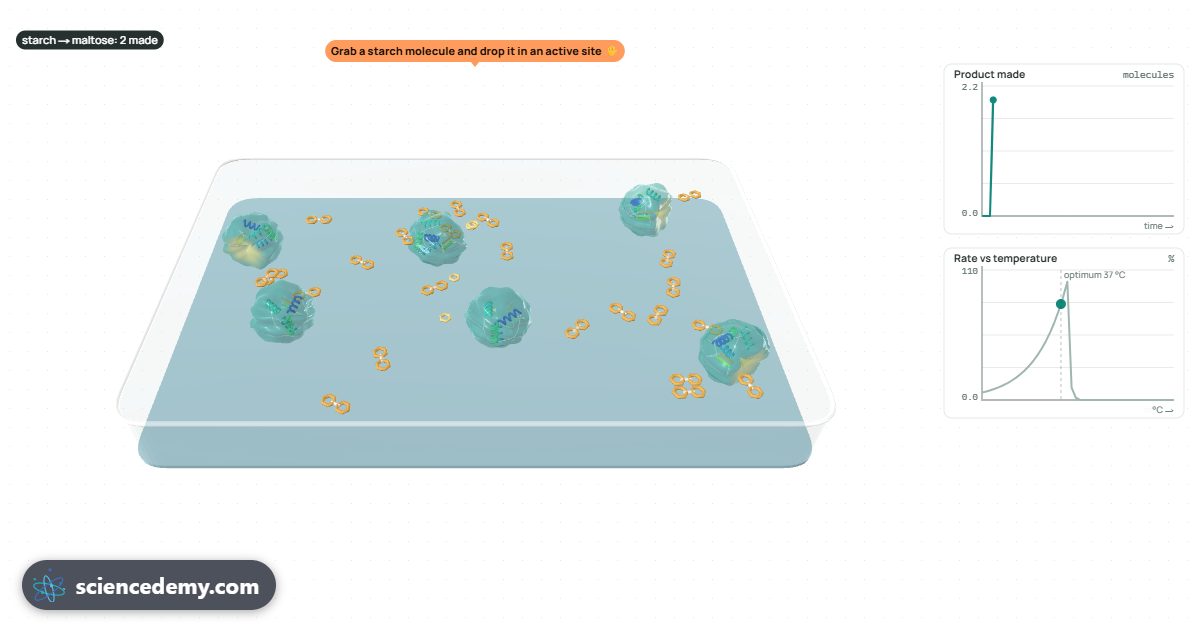 Enzyme LabFit substrates into active sites, then heat, change the pH and add inhibitors until the enzyme denatures.
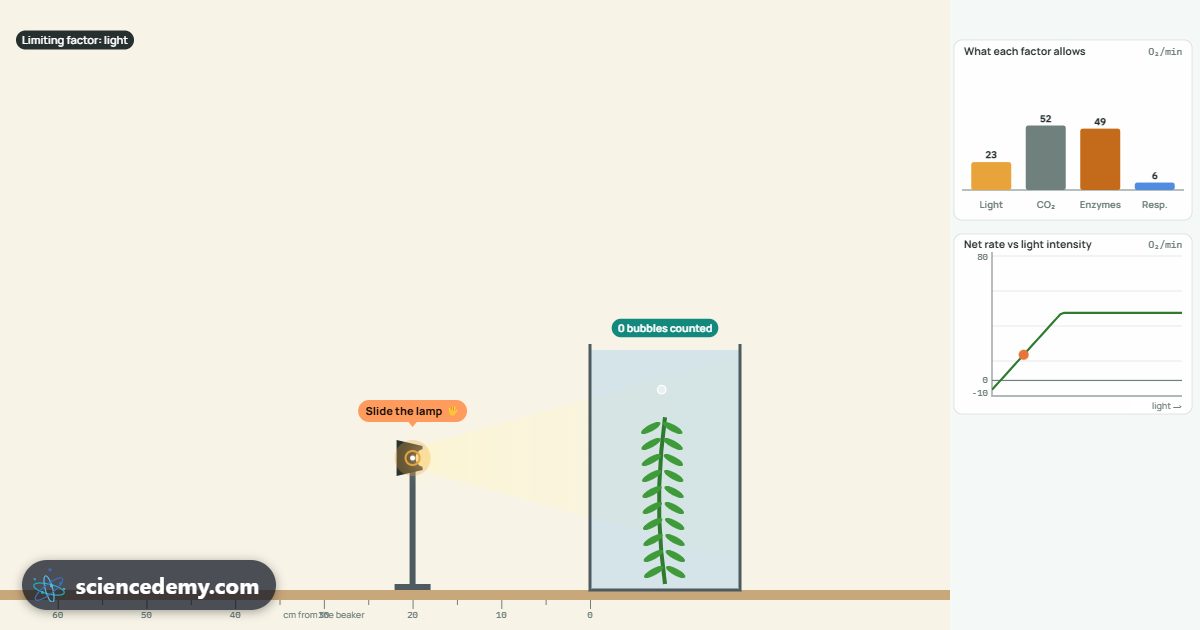 Photosynthesis & RespirationCount the oxygen bubbles from pondweed under a lamp and find the limiting factor, day and night.
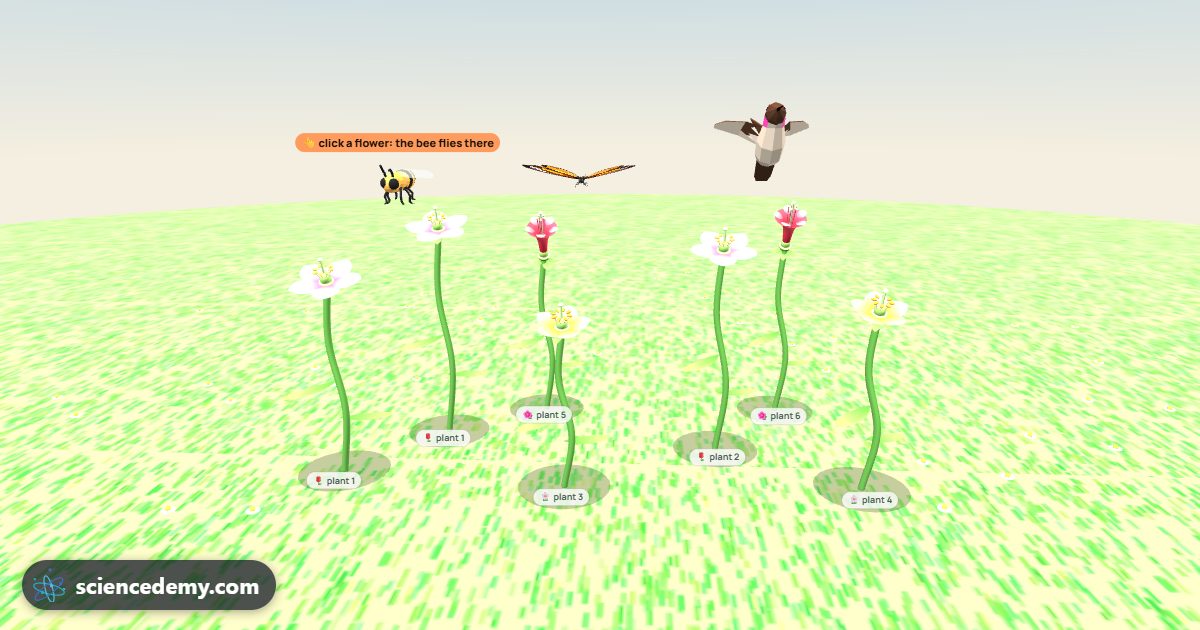 PollinationFly a bee round a 3D garden: carry pollen, watch the pollen tube grow and see fruit and seeds form.
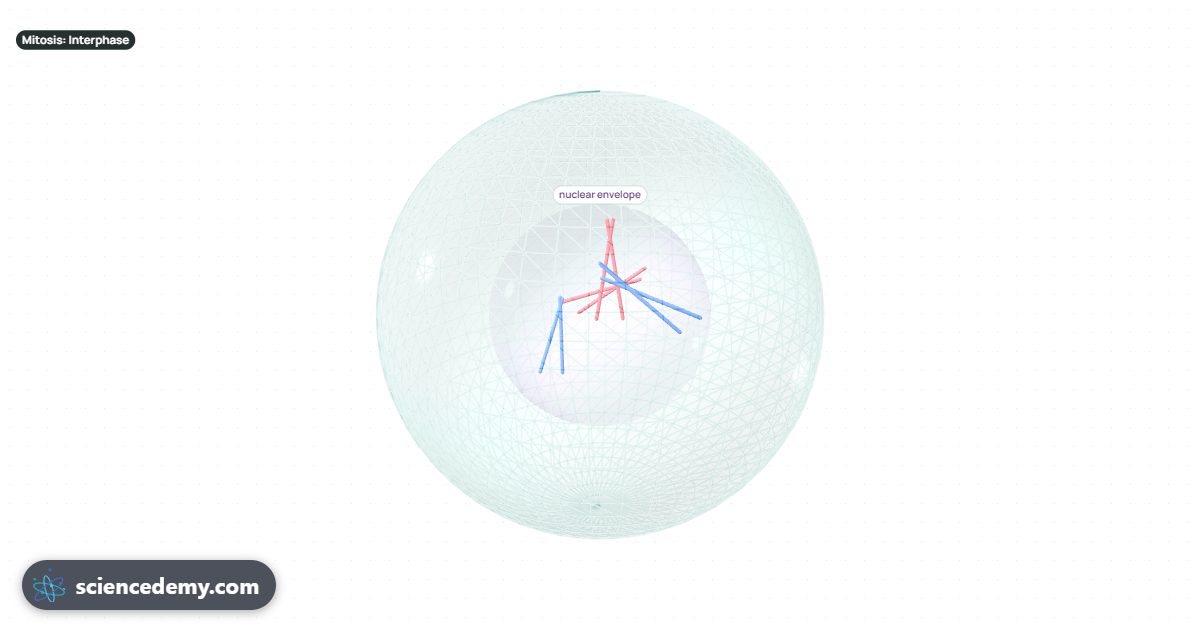 Cell Division: Mitosis & MeiosisStep through mitosis and meiosis: chromosomes copy, line up, cross over and pull apart.
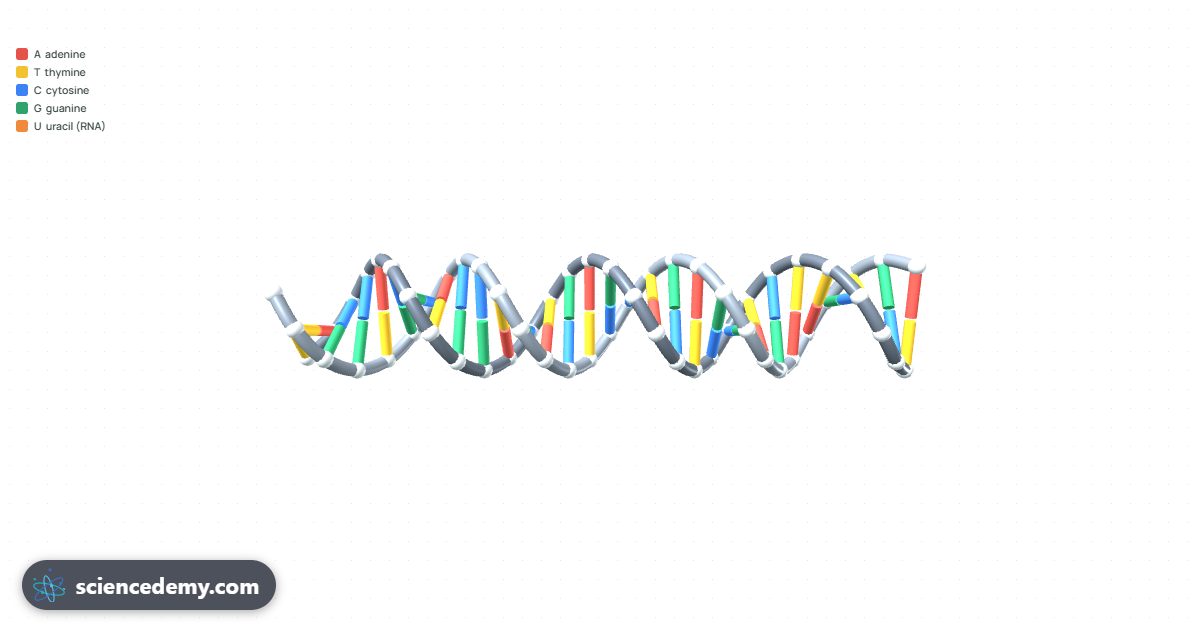 DNA BuilderPair the bases, unzip the helix, make mRNA and translate it into a protein.
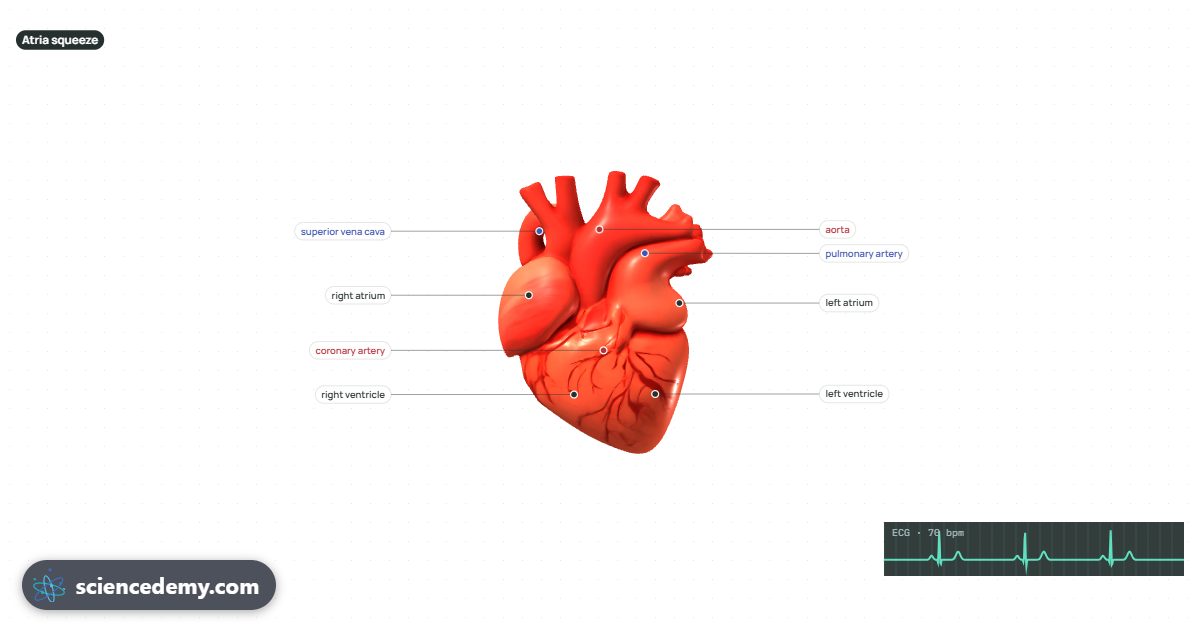 Heart & CirculationFollow blood through the four chambers and valves, read the ECG and see exercise change cardiac output.
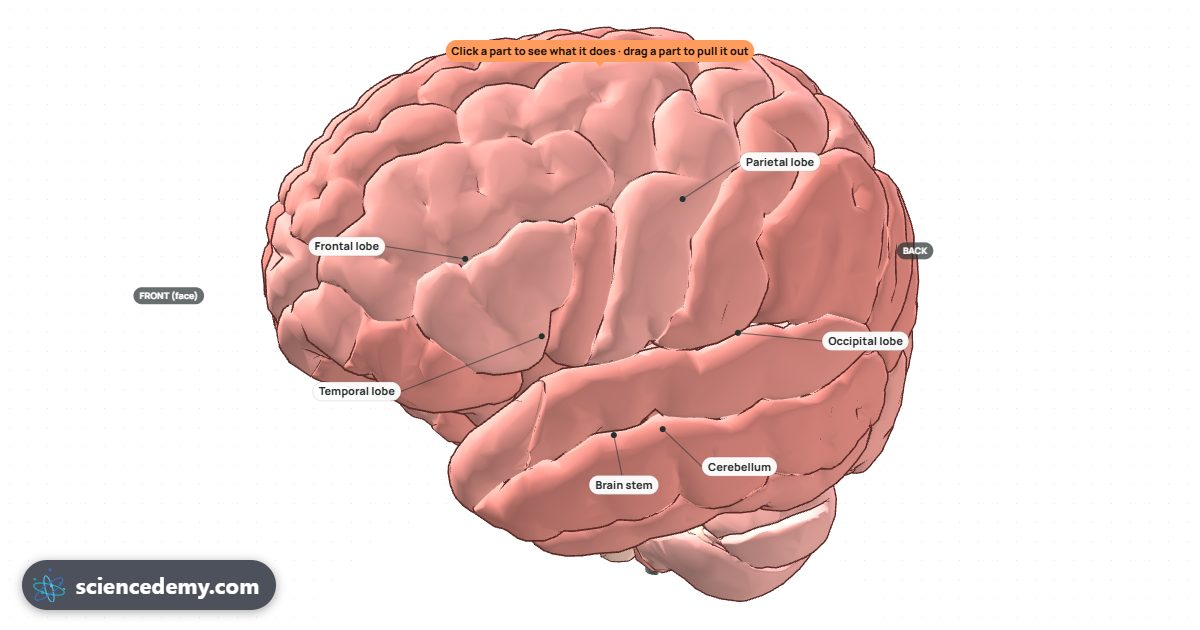 Brain & NeuronsTurn a real 3D brain, light up its lobes, then fire a neuron and send an impulse across a synapse.
- Biology FormulasEvery biology equation as a calculator: magnification, Hardy–Weinberg, cardiac output and more.
Virtual maths lab
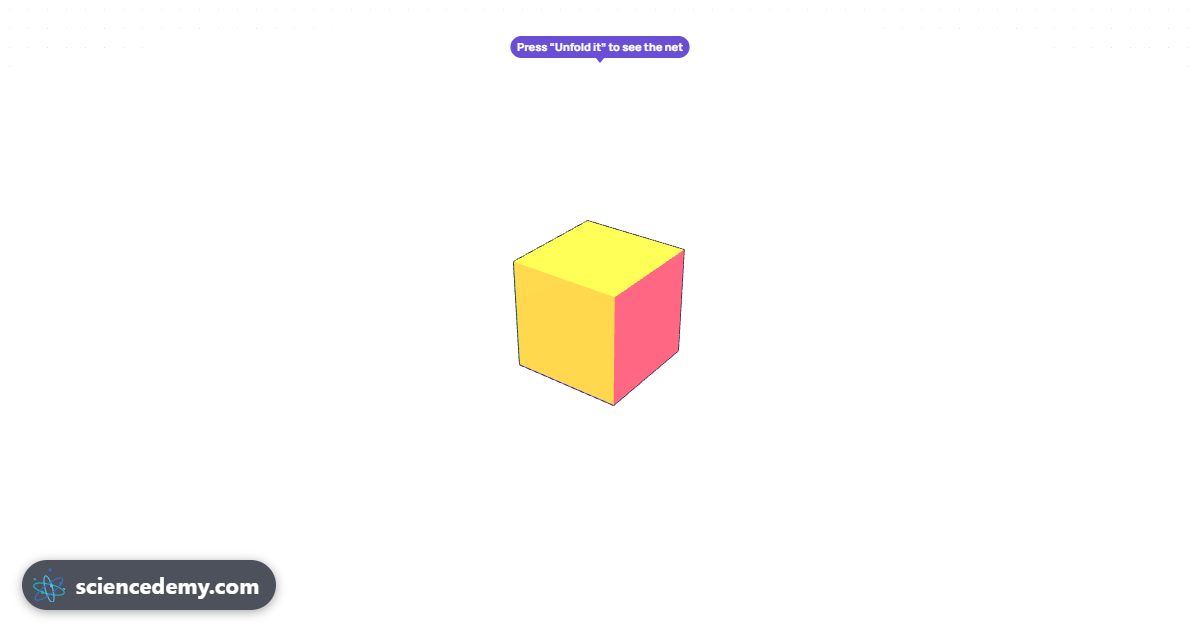
Unfold 3D shapes into nets, fill them with water to find their volume and slice them into cross-sections.
Using the virtual lab in class
- Before a practical: run it virtually first. Students predict, try the method and spot what could go wrong.
- Instead of a demo: project a lab and let the class call out what to change next (temperature, voltage, mass).
- For the dangerous or impossible: chlorine from brine, burning metals, nuclear fusion, the inside of a living brain.
- For homework and revision: the guided tour teaches, the quiz checks, and every wrong answer explains itself.
How it compares
| Feature | Science Academy | Typical paid virtual lab | Video demo |
|---|---|---|---|
| Price | Free | Per student licence | Free |
| Login or install | None | Account needed | None |
| You control the experiment | Yes | Yes | No |
| Turn it round in 3D | Yes | Sometimes | No |
| Phones and Chromebooks | Yes | Often not | Yes |
Frequently asked questions
What is a virtual 3D lab?
A virtual 3D lab is a science experiment you run on a screen instead of at a bench. You pick up the apparatus, change the conditions and watch the result in three dimensions, from any angle. Every lab here is free and runs in a web browser with nothing to install.
Is this virtual science lab free?
Yes. Every lab, guided tour and quiz on Science Academy is free, with no account, no login and no download. It runs on laptops, Chromebooks, tablets and phones.
Can a virtual lab replace real practicals?
Not completely: handling real equipment matters. A virtual lab is best before a practical (to plan and predict), after it (to explain the results) and for experiments too dangerous, slow, small or expensive for school, like electrolysis of brine, nuclear fusion or watching a single neuron fire.
Which subjects does the virtual lab cover?
Chemistry (9 labs: atoms, bonding, reactions, electrolysis, energetics), physics (12 labs: forces, momentum, waves, circuits, optics, gravity and orbits) and biology (11 labs: cells, DNA, enzymes, osmosis, the heart and the brain).
What age is it for?
It is written for secondary school, roughly ages 11 to 18 (KS3, GCSE, IGCSE, A level, and middle and high school science in the US). Each lab starts simple, and the guided tour, numbers and quiz go further for older students.
