Science you can touch.
A free virtual 3D science lab: build atoms, wire circuits, launch planets and open up a beating heart. Every simulation explains what is happening and how scientists found out, with guided tours and quizzes that tell you why an answer is right. Start with the virtual chemistry lab.
Pick a subject
- ChemistryBuild atoms, pull electrons off them, bond molecules, mix chemicals in a virtual lab and fuse nuclei like the Sun.Open Chemistry
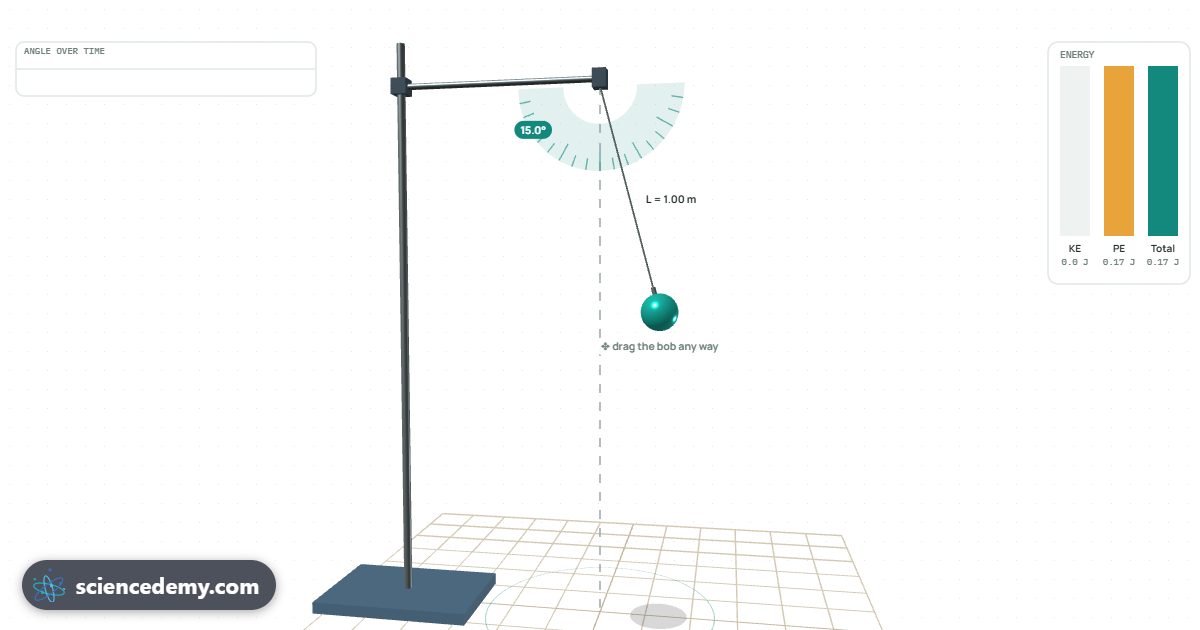
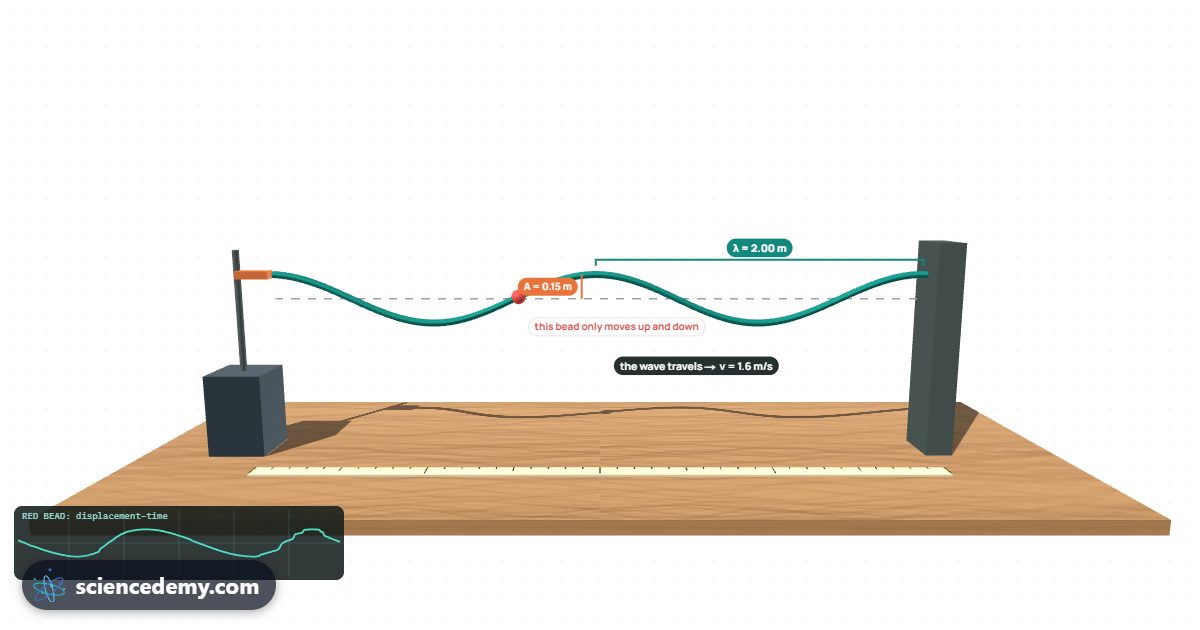
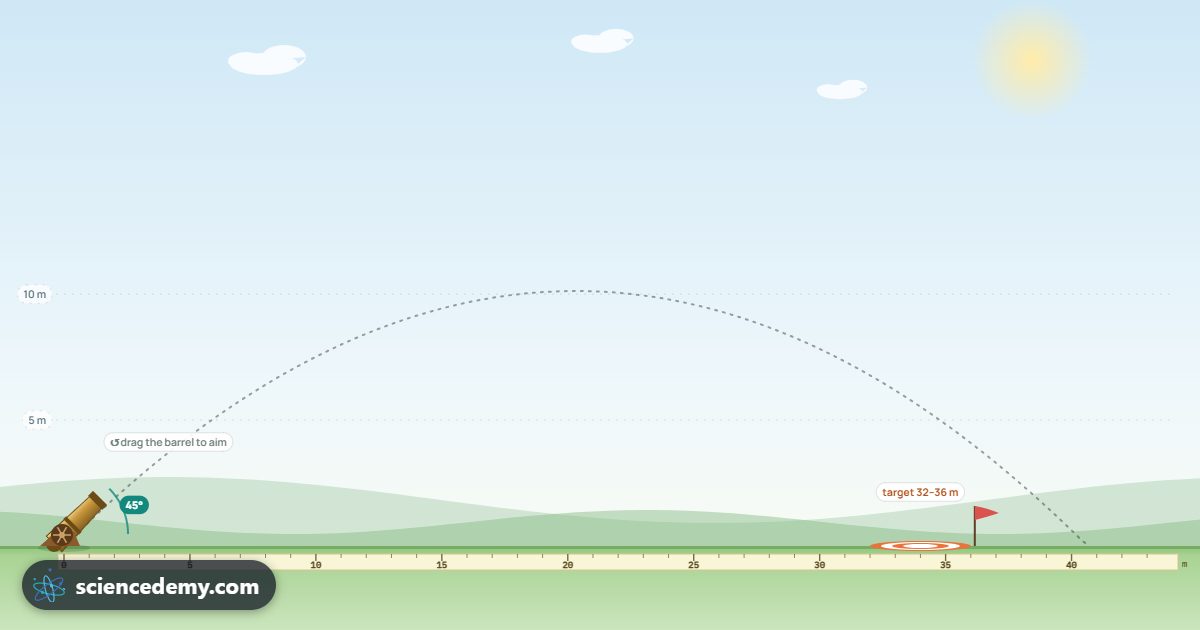
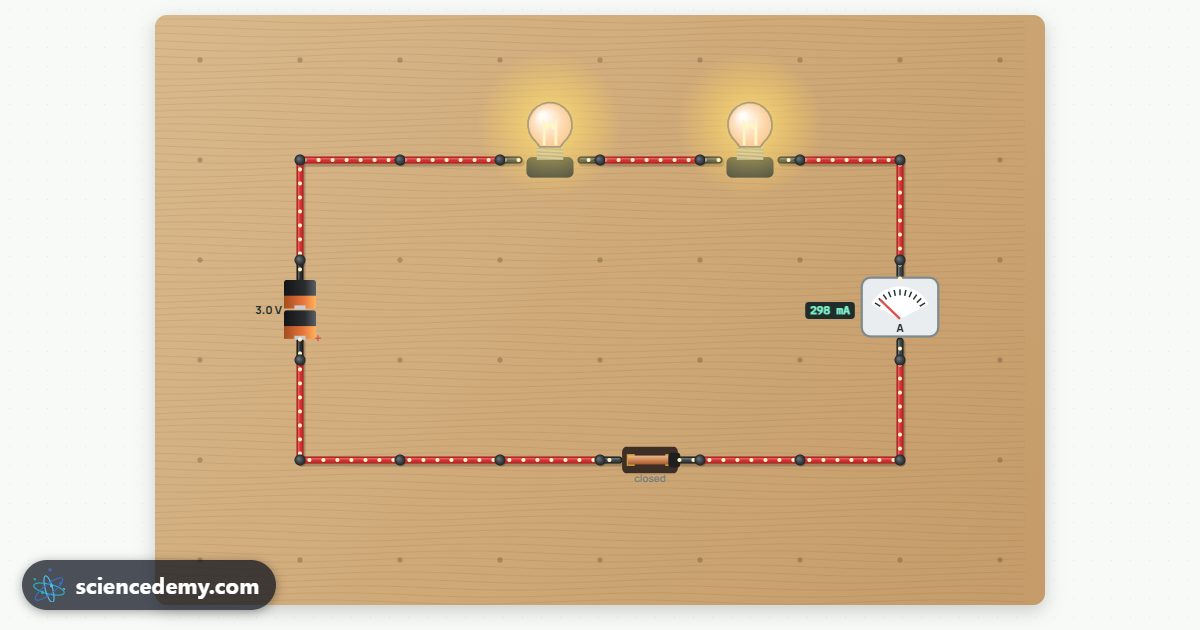
- PhysicsRead a Vernier caliper and screw gauge, time a pendulum, make waves and sound, launch projectiles, wire circuits and bend light through lenses.Open Physics
- BiologyOpen a 3D cell, watch osmosis, enzymes and photosynthesis at work, watch cells divide by mitosis and meiosis, and follow blood through a beating 3D heart.Open Biology
- MathsUnfold 3D shapes into nets, fill them with water to find their volume and slice them into cross-sections.Open Maths
- GeographyFollow a drop of water through the water cycle, from evaporation to rain and back again.Open Geography
Chemistry simulations
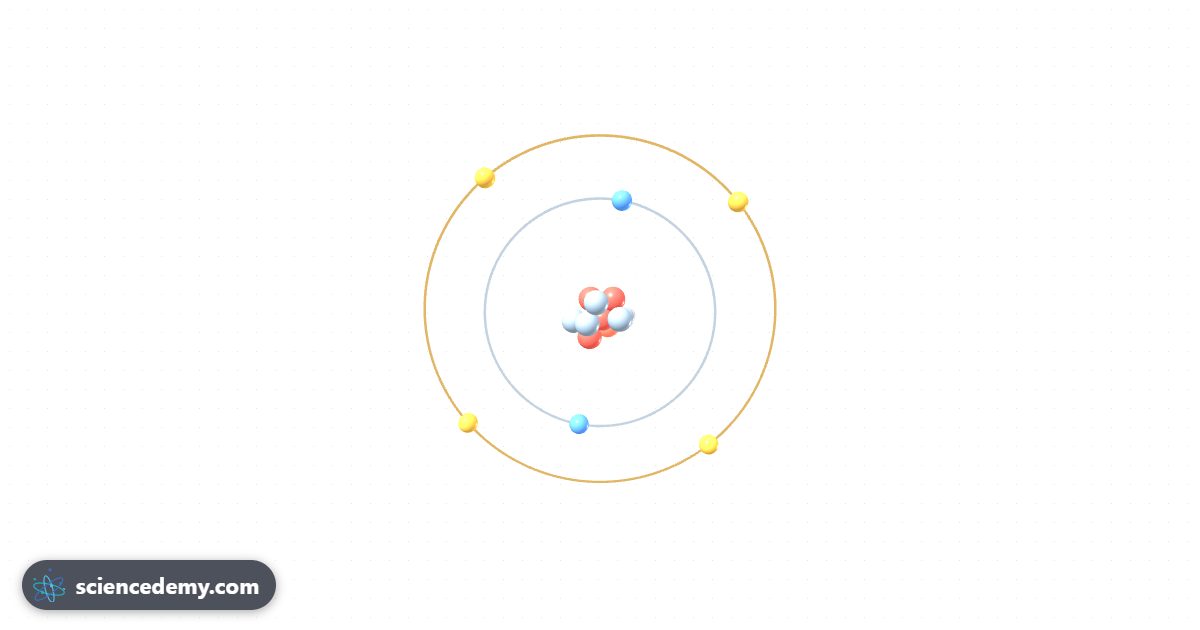
Atom BuilderAdd protons, neutrons and electrons and watch any of the 118 elements, isotopes and ions take shape.
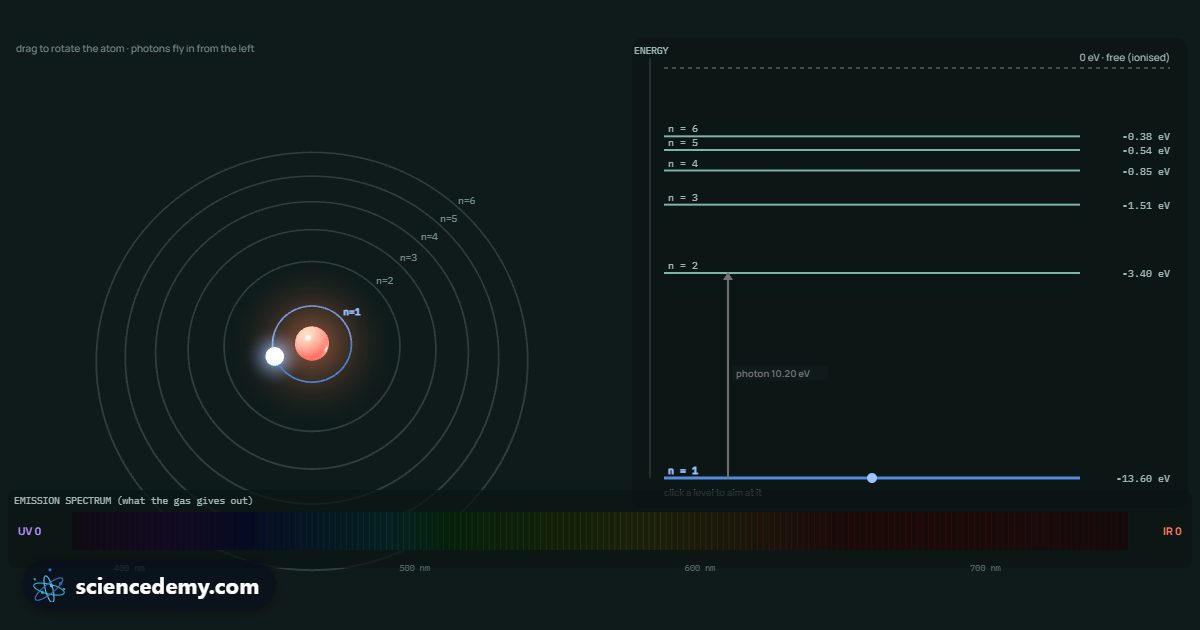
Electron LabFire photons at an atom: watch electrons jump between shells, glow in colour and finally escape.
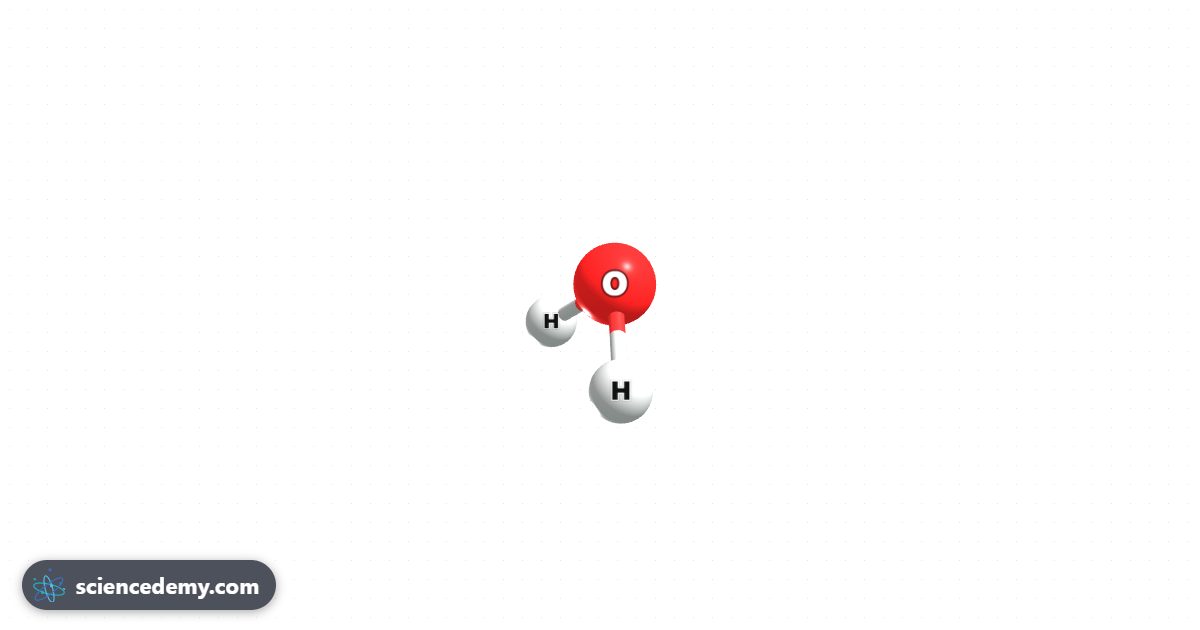
Molecule BuilderDrag atoms together to form single, double and triple bonds and discover real molecules.
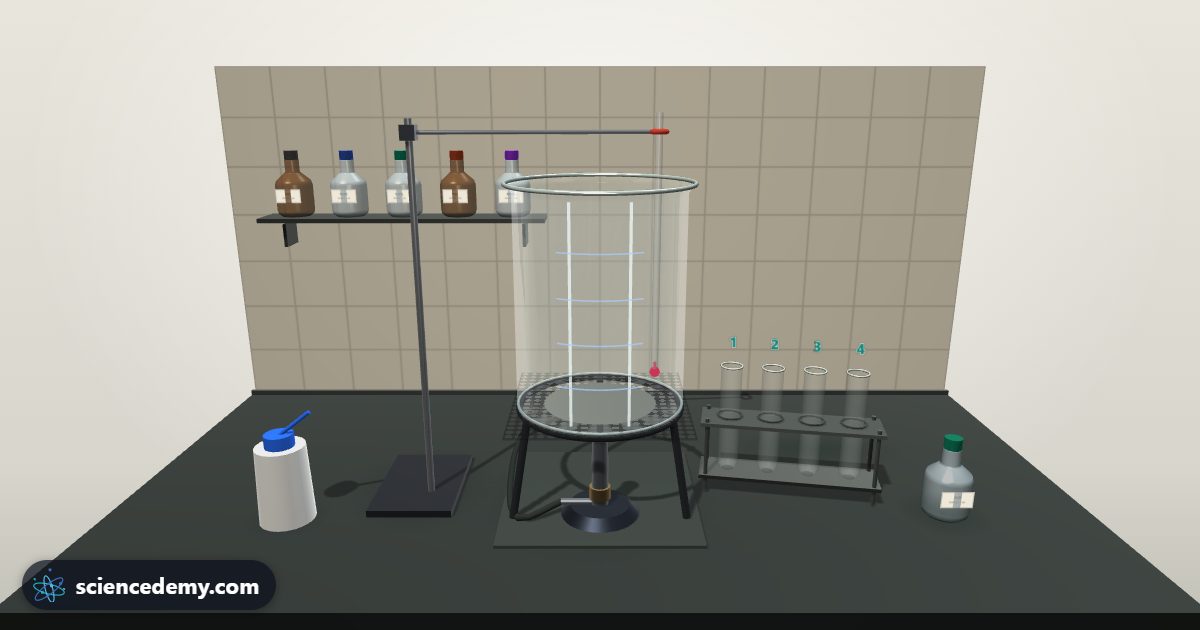
Chemistry LabPour chemicals into a beaker, heat them over a Bunsen burner and watch real reactions.
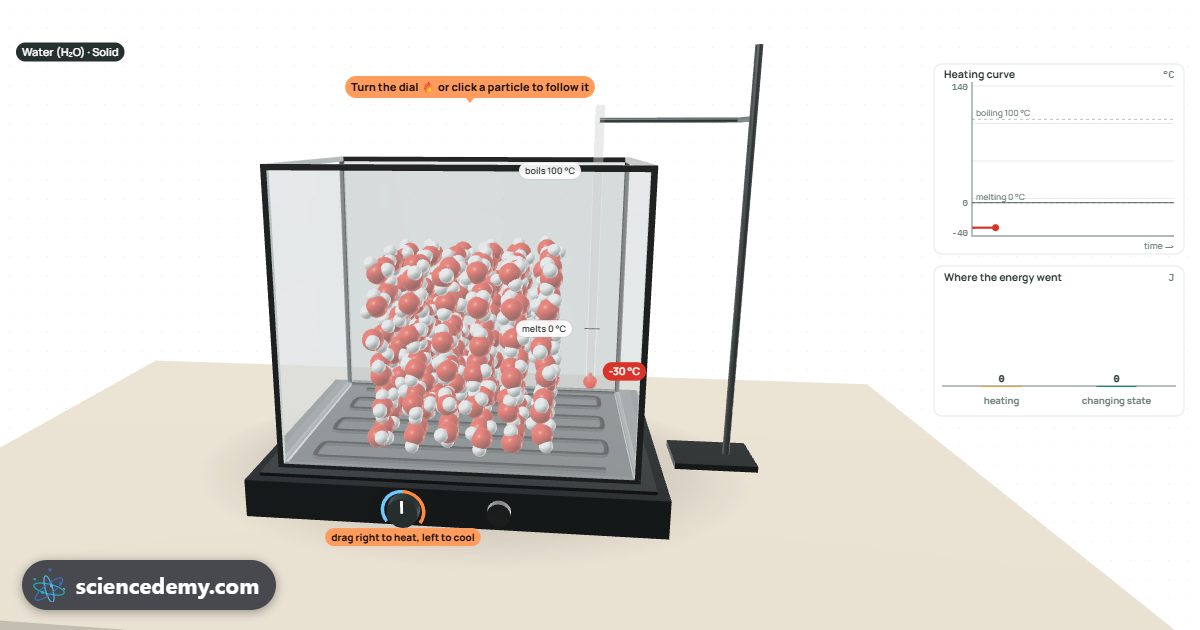
States of MatterHeat ice until it melts and boils: watch the particles change and the heating curve draw itself, flat steps and all.
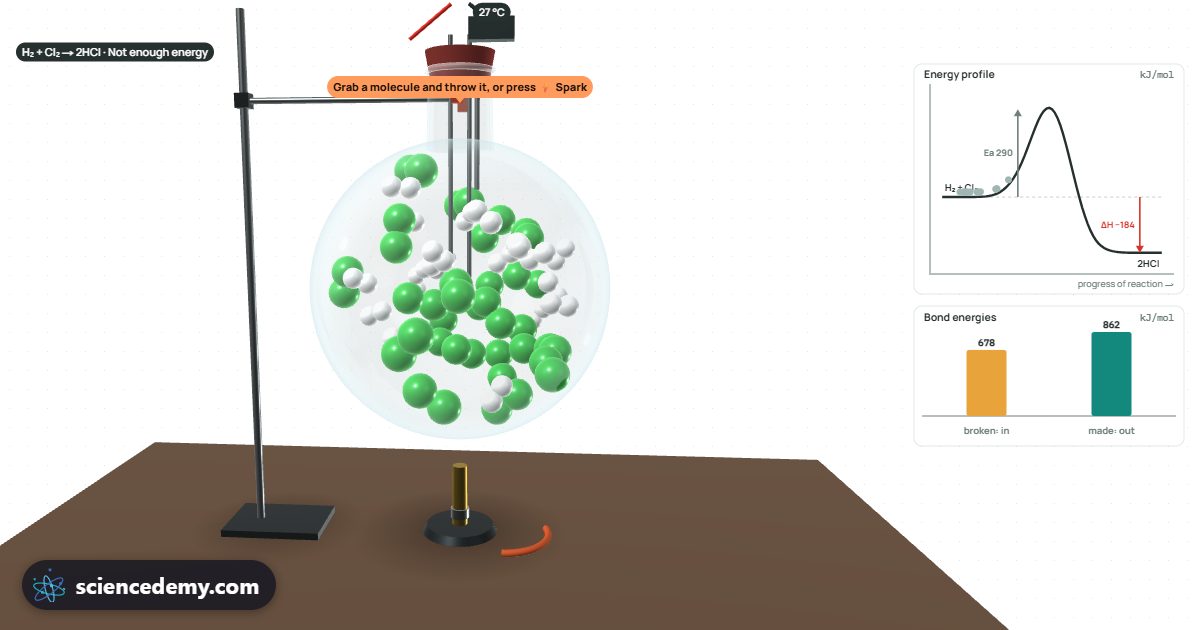
Chemical EnergeticsCollide molecules over an activation-energy hill and watch exothermic reactions heat up and endothermic ones cool down.
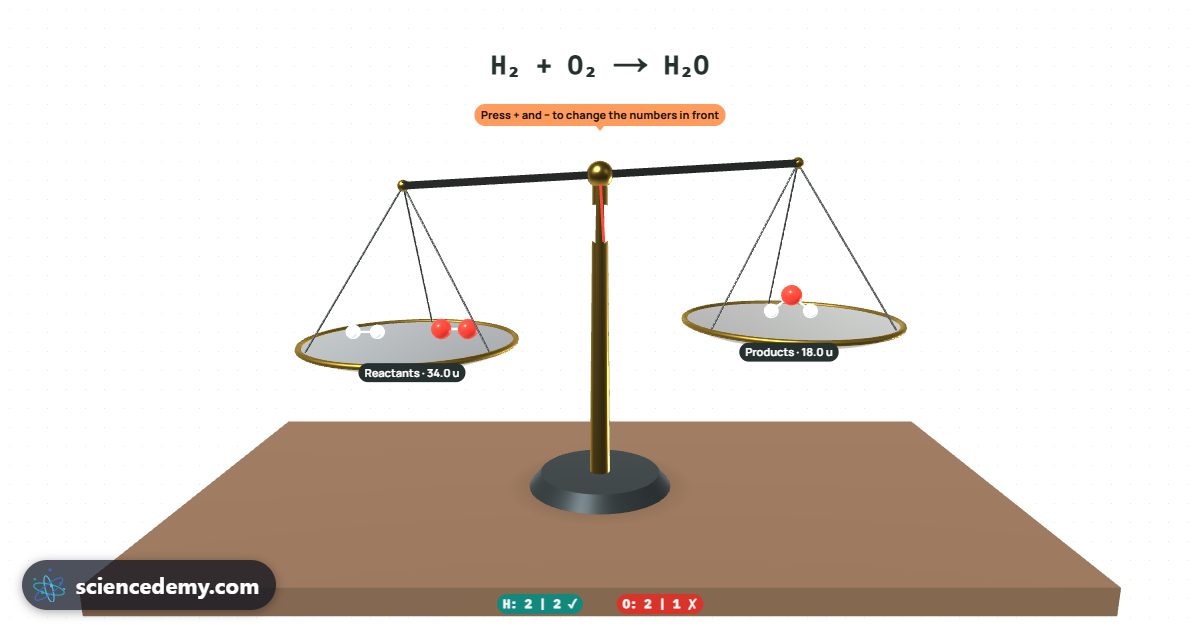
Equation BalancerBalance chemical equations on a 3D scale: count the atoms, level the beam and watch the molecules rebuild as products.
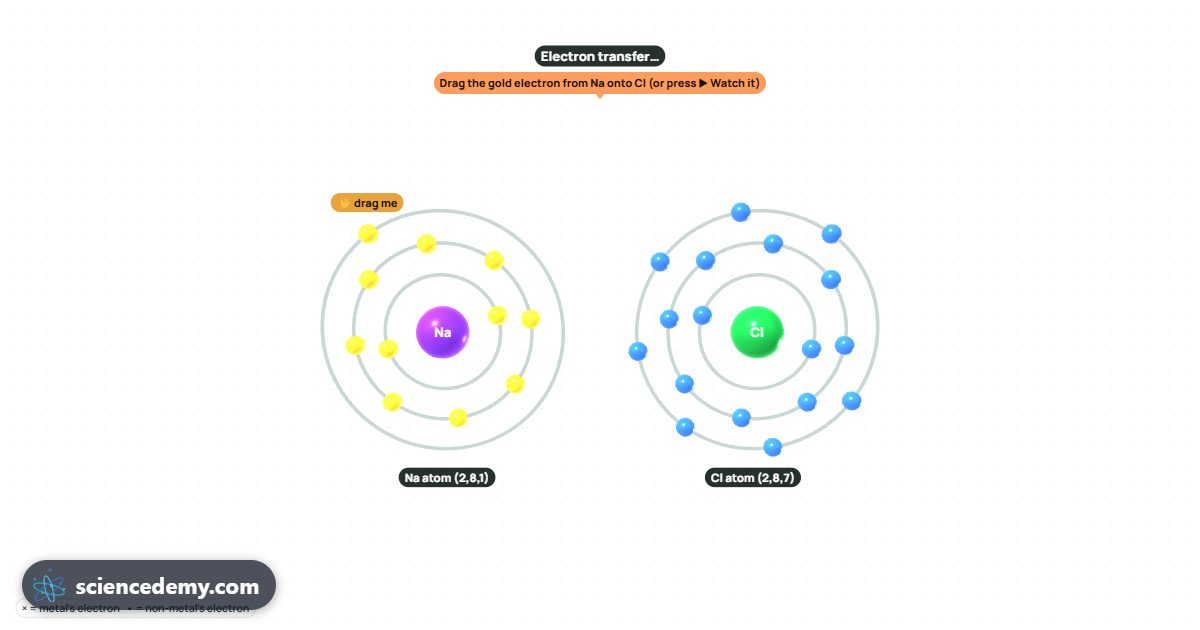
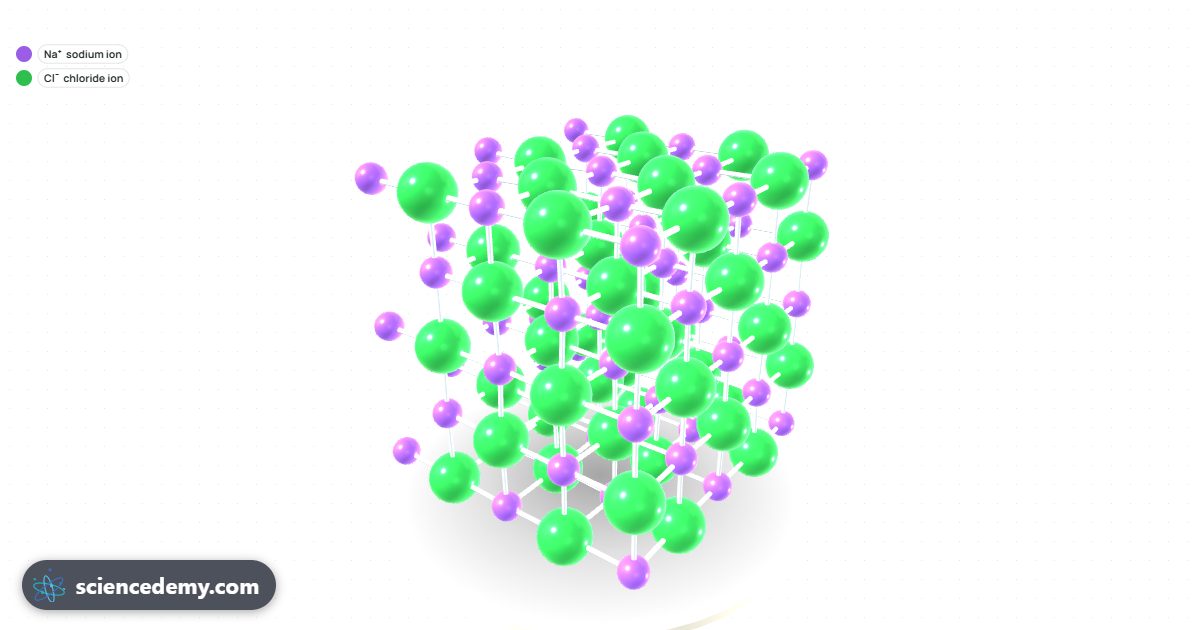
Ions & Ionic BondingWatch a metal hand its electrons to a non-metal in 3D, see the ions form and pack into a crystal of salt.
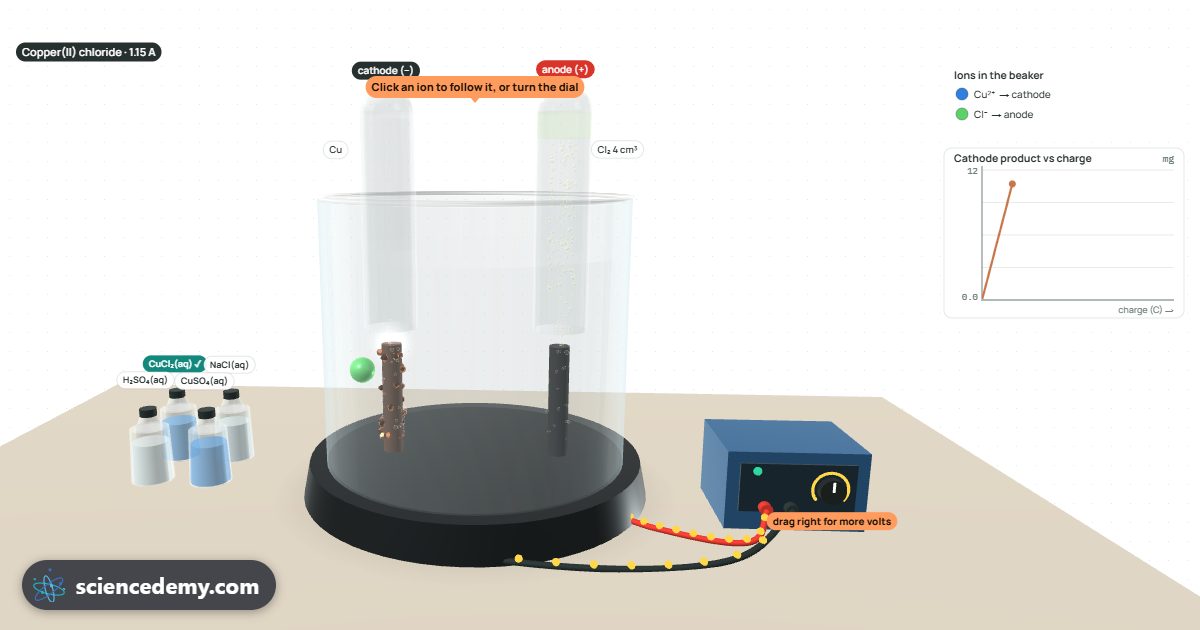
ElectrolysisSwitch on a power pack and watch ions drift to the electrodes: copper plates the cathode and gases bubble into the tubes.
Nuclear FusionHeat a plasma and fire nuclei together to see how the Sun turns mass into energy.
Crystal Lattice ViewerEight crystal lattices in 3D (NaCl, diamond, graphite, copper…): hit them with a hammer, melt them, test if they conduct.
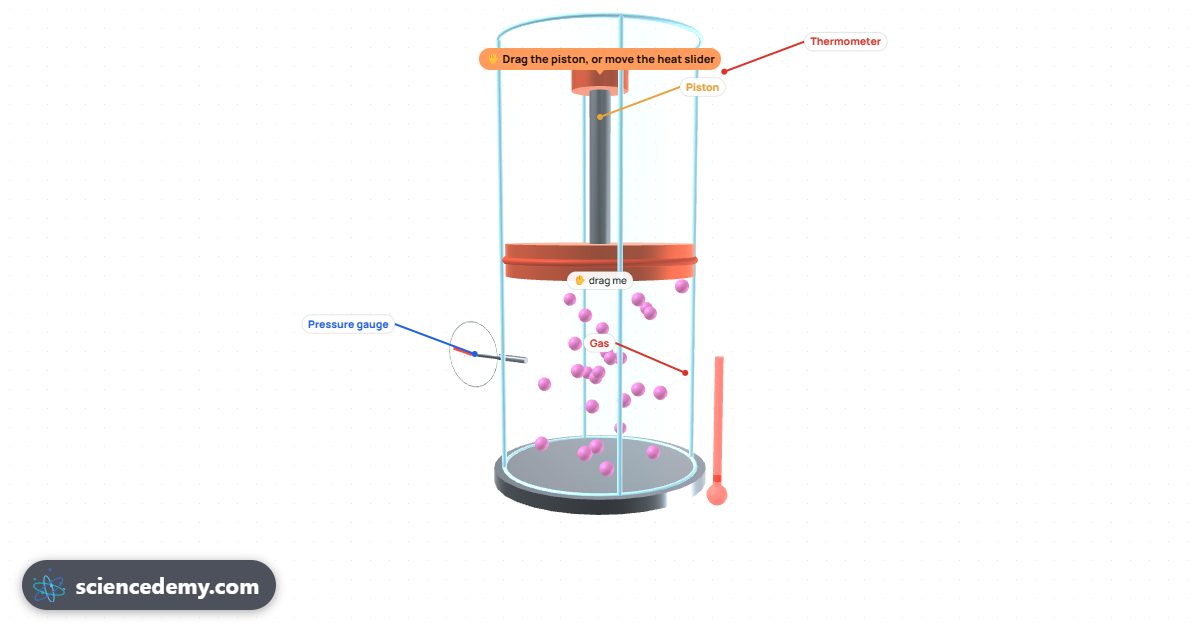
Gas LawsDrag the piston or heat the gas to see Boyle's, Charles's and the combined gas law live.
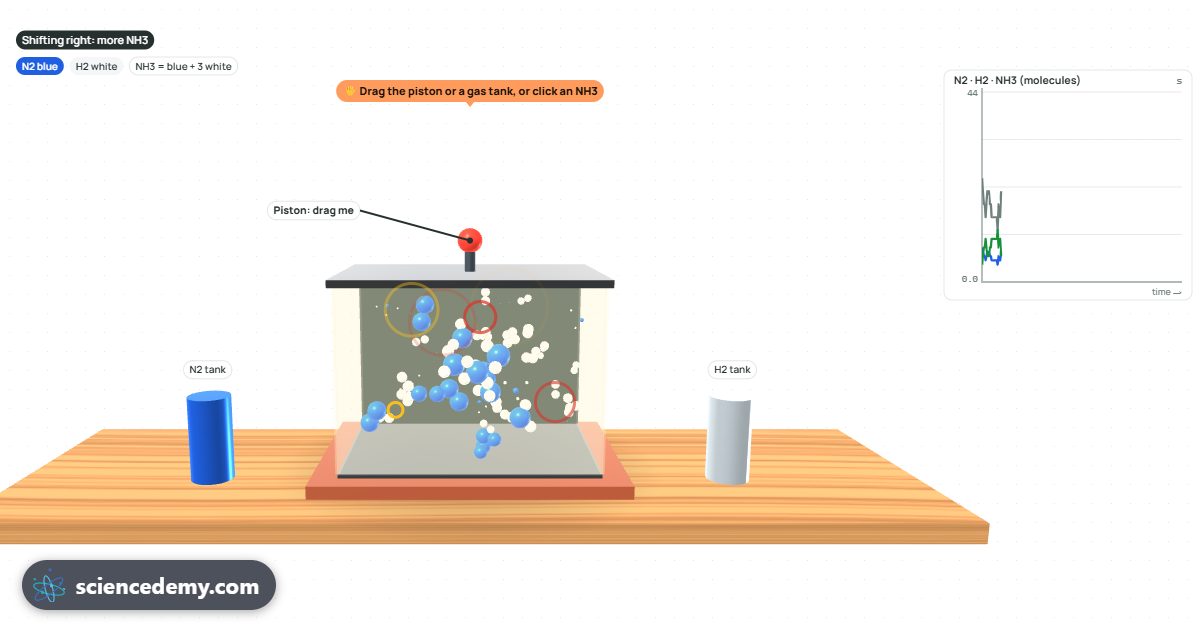
EquilibriumPush the piston, heat the box and add molecules: watch N2 + 3H2 ⇌ 2NH3 shift and settle.
- Chemistry FormulasEvery chemistry equation, live: type numbers or pull them from what you built.
Physics simulations
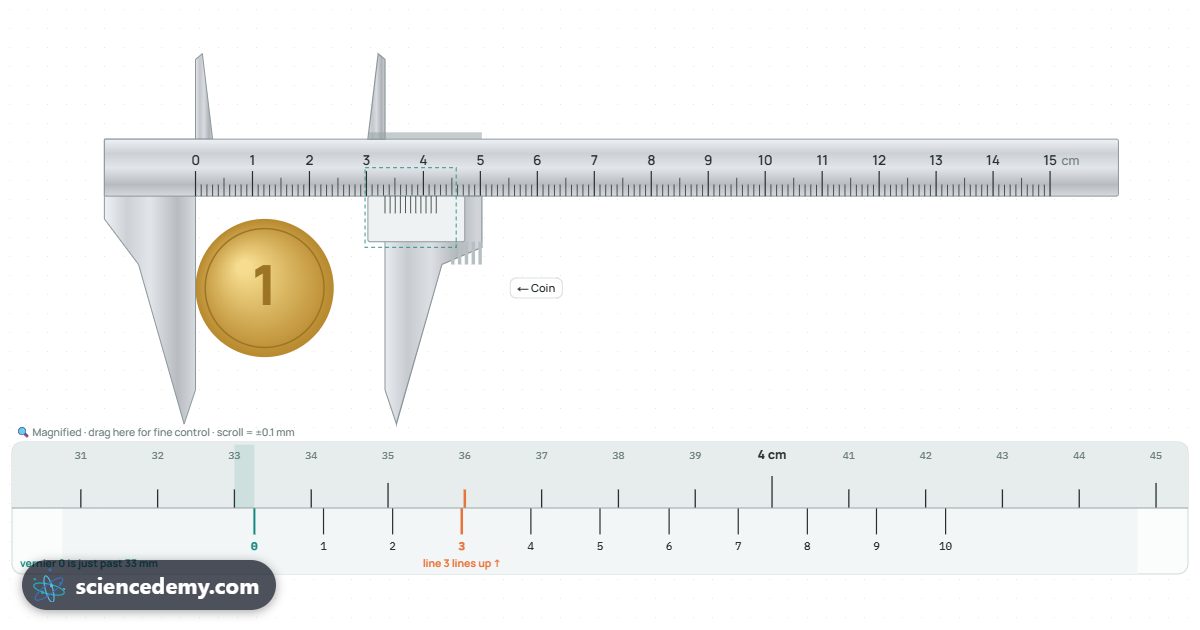
Vernier Caliper & Screw GaugeSlide the jaws of a Vernier caliper or turn a screw gauge, read the scales and check your reading.
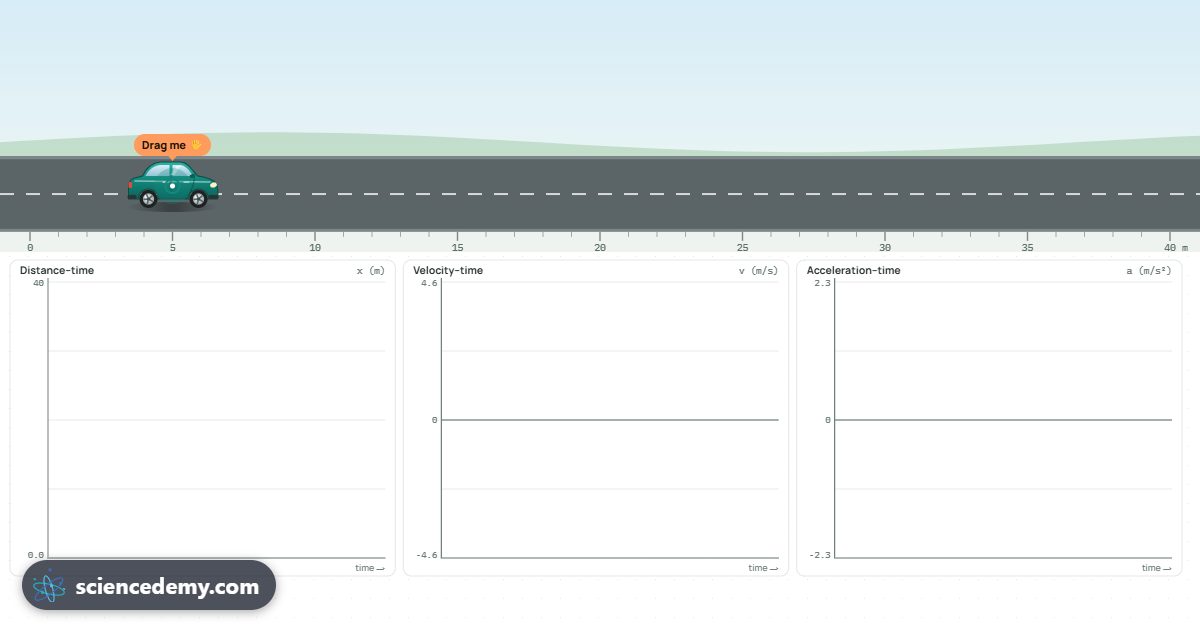
Motion GraphsDrive a car and watch its distance–time, velocity–time and acceleration–time graphs draw themselves live.
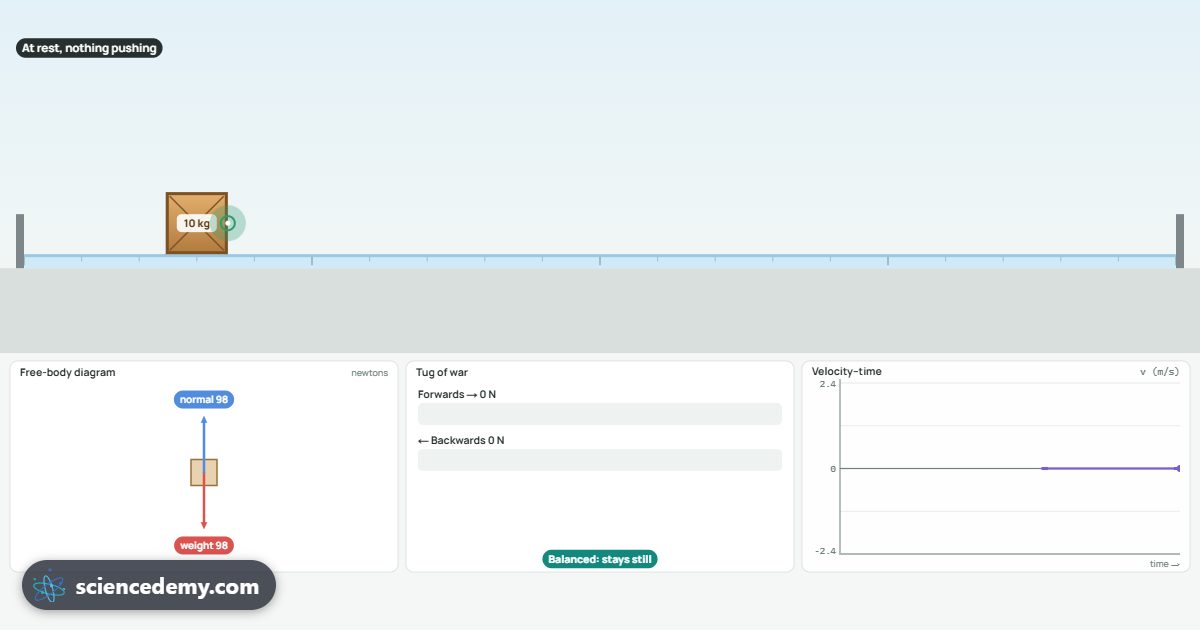
Forces & Newton's LawsPull a crate across wood, ice or rubber and watch its free-body diagram, friction and F = ma, live.
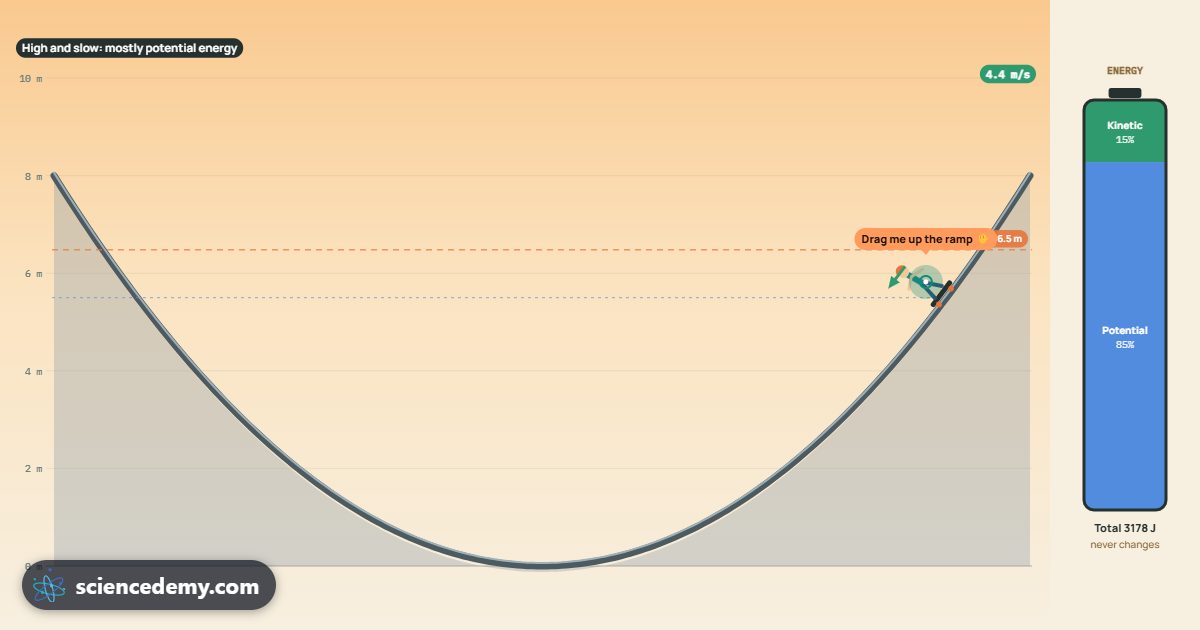
Energy Skate ParkDrop a skater into a half-pipe and watch kinetic, potential and thermal energy swap, while the total stays the same.
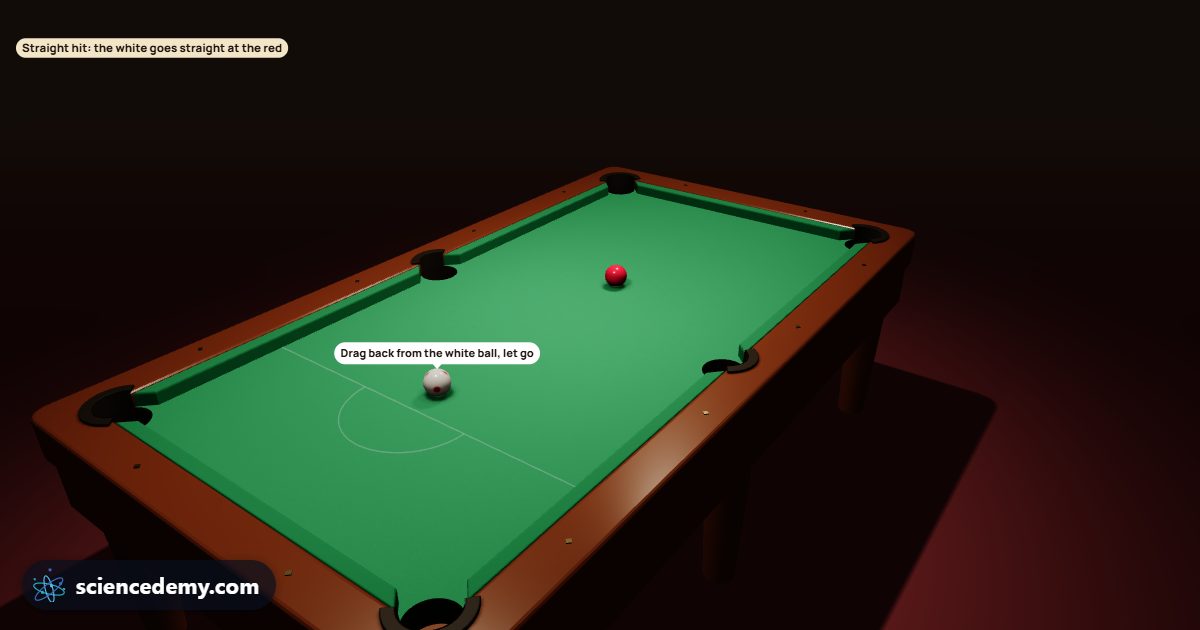
Momentum & CollisionsCrash carts on an air track, elastic or sticky, and see momentum conserved every time while kinetic energy is not.
Pendulum LabChange the length, mass and planet, time the swings and work out g from your own graph.
Waves & SoundMake waves on a rope, see and hear sound, pluck a 3D guitar and hit a drum: wavelength, frequency and v = fλ.
Projectile MotionLaunch a ball at any angle and speed, hit the target and see why 45° goes furthest.
Circuit BuilderDrag batteries, bulbs, resistors and switches onto a board and watch the current flow.
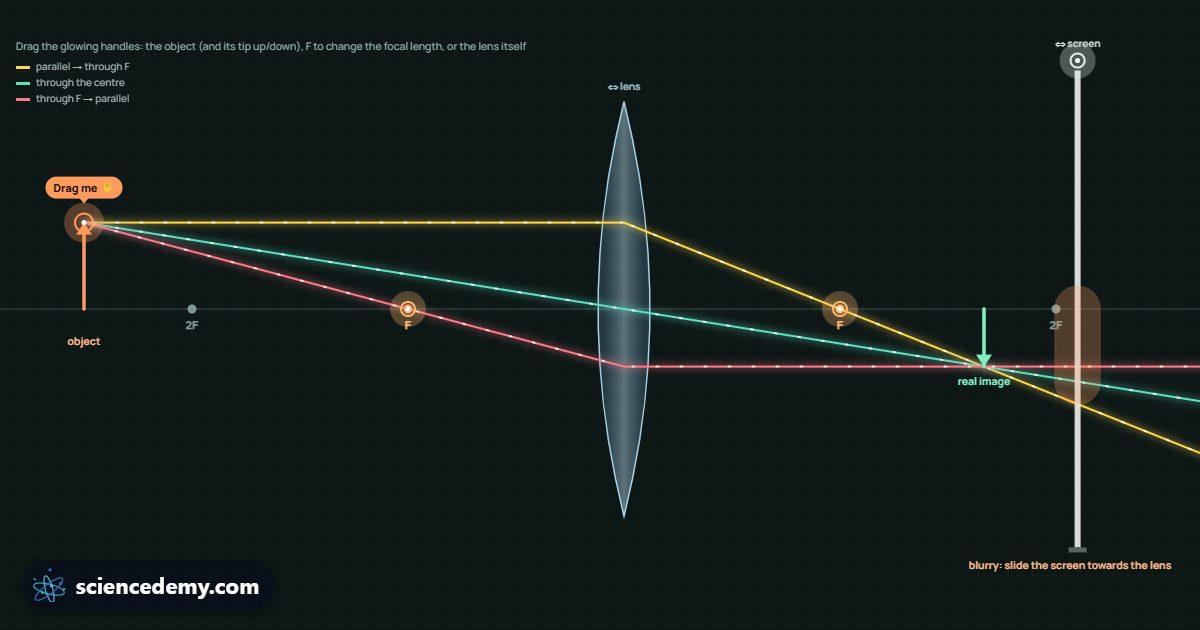
Lenses & LightMove an object past a lens or mirror and watch the rays form real and virtual images.
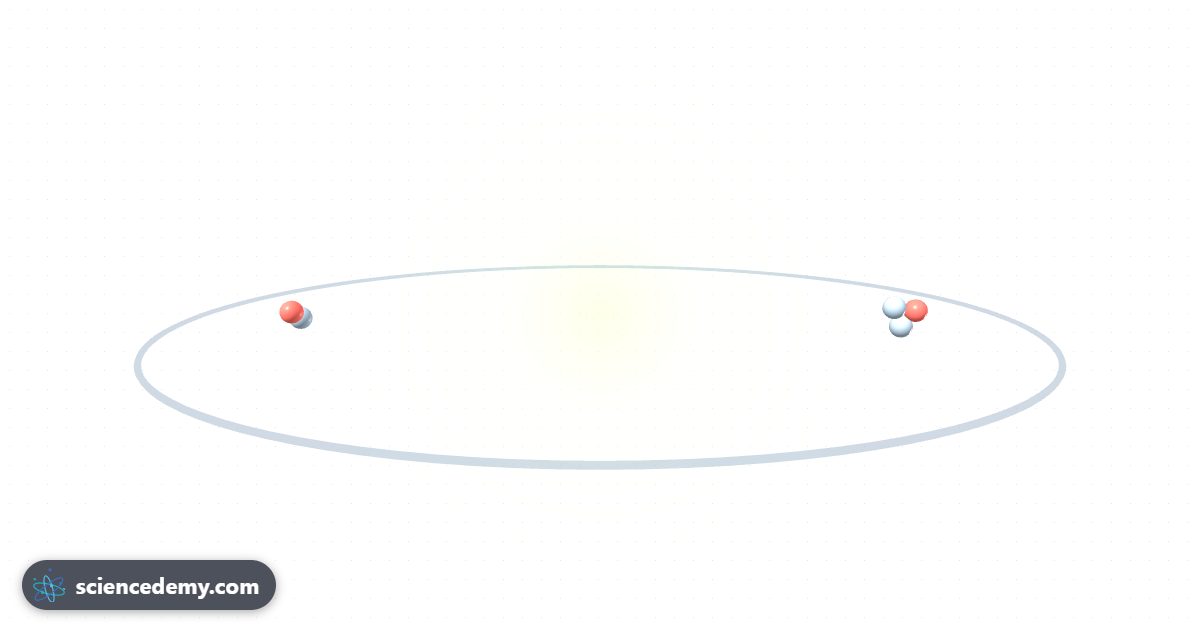
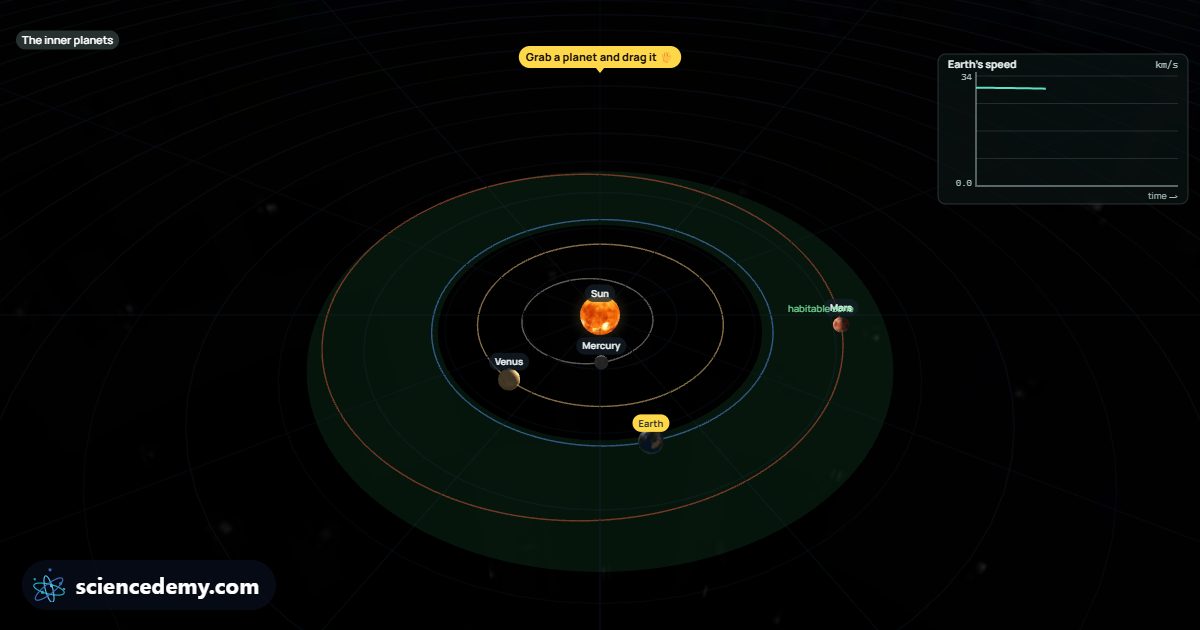
Gravity & OrbitsWatch the planets orbit in 3D, shade Kepler’s equal areas, try two suns and launch your own planet.
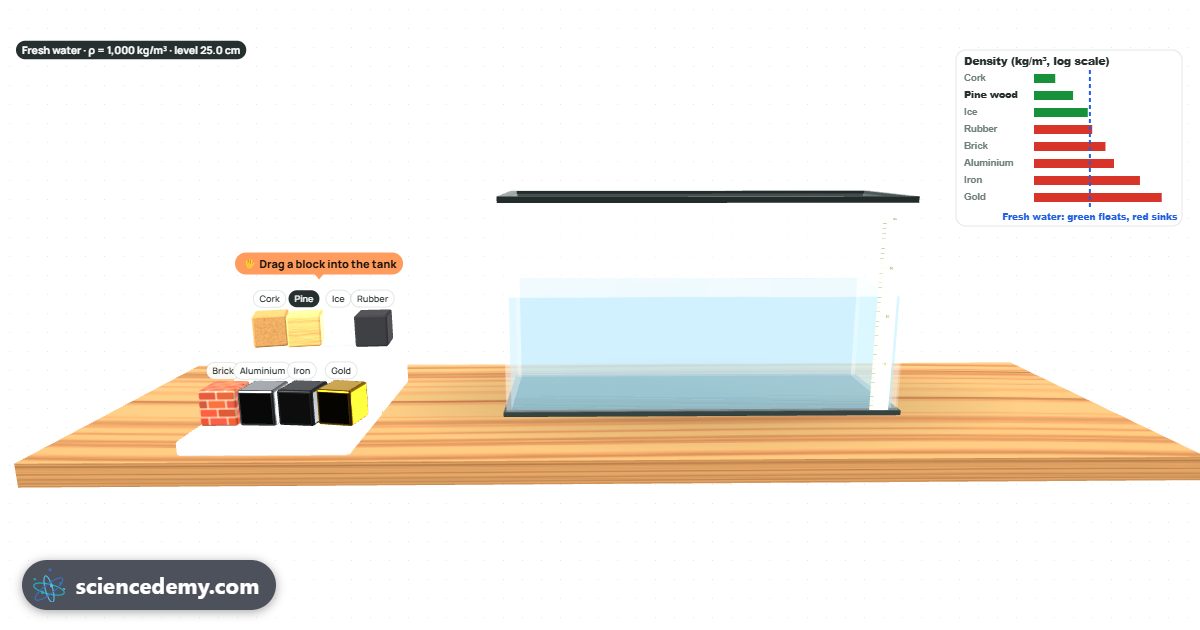
Density & BuoyancyDrag wood, ice, iron and gold blocks into water, oil, honey or mercury and watch them float or sink, with the upthrust and water level shown.
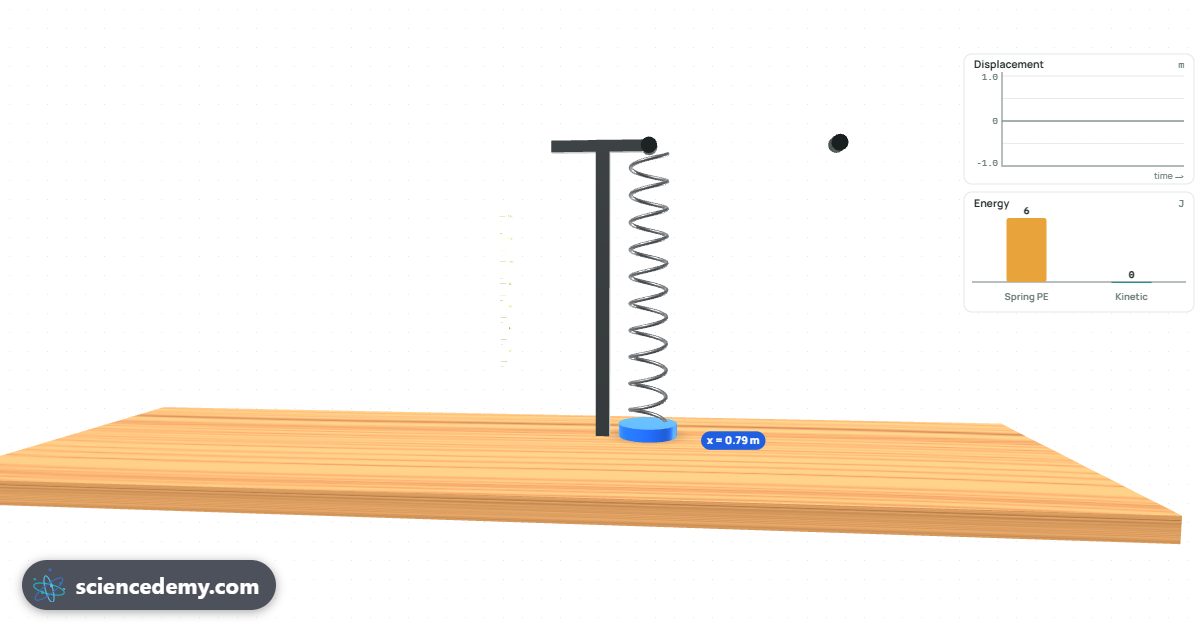
Simple Harmonic MotionStretch a mass on a spring and watch it oscillate: period, amplitude, phase, and energy swapping between spring potential energy and kinetic energy.
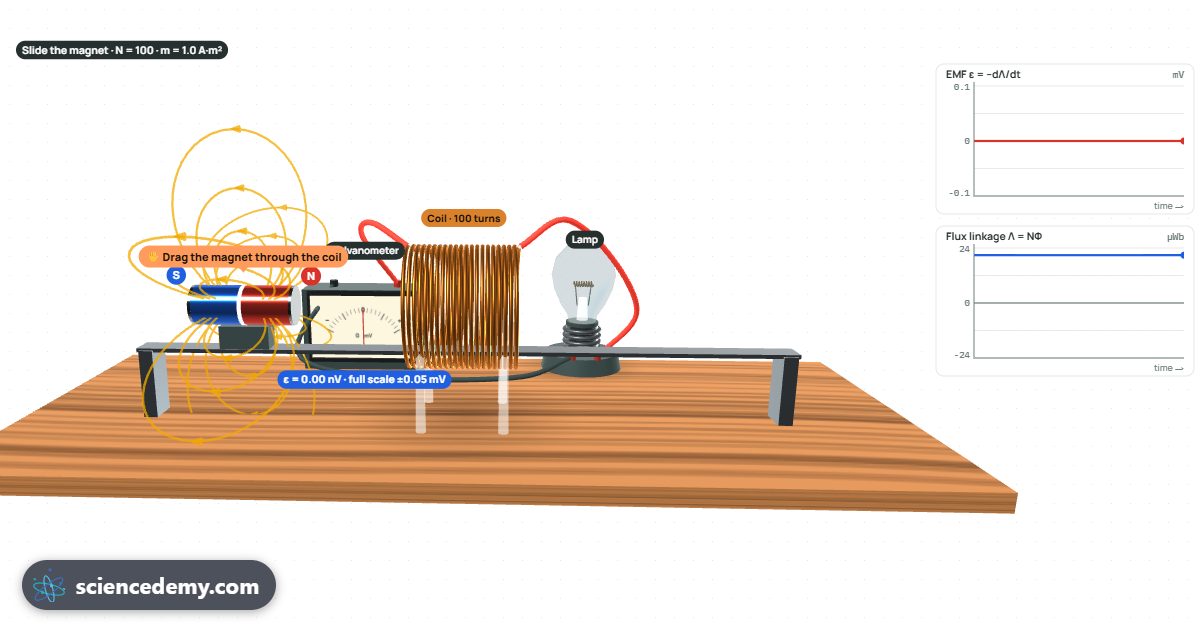
Electromagnetic InductionDrag a magnet through a coil and watch the induced EMF, Lenz's law and Faraday's law.
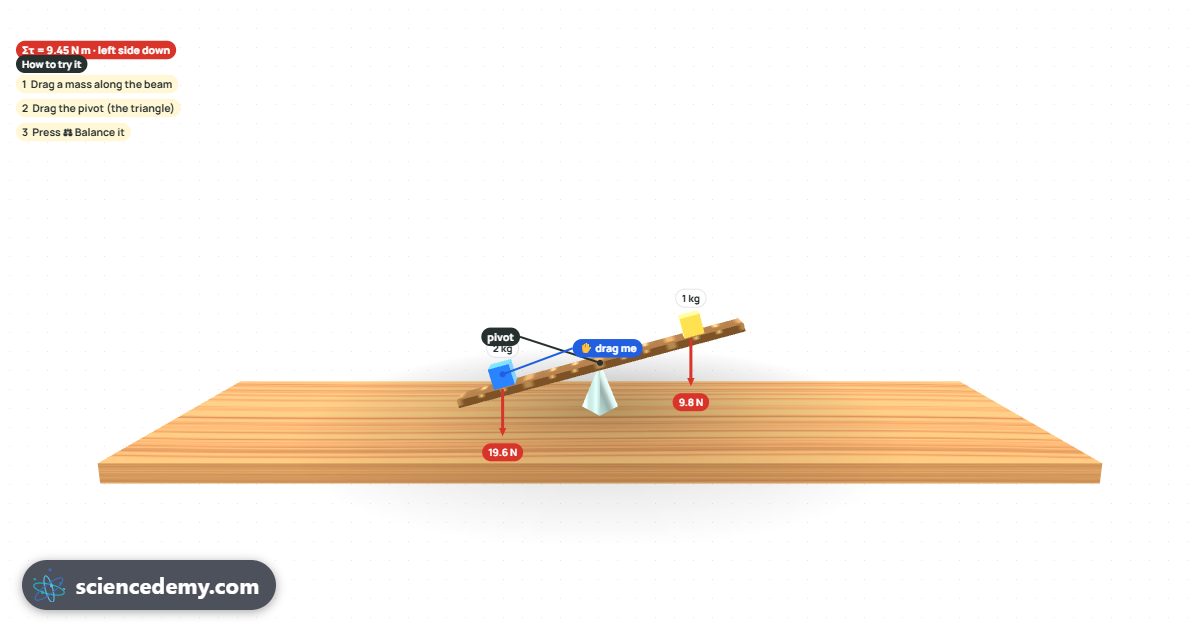
Torque & RotationPedal a bicycle and change gear, push a door at any distance and angle, and drop a weight onto a disc, ring or rod: torque, moment of inertia and Στ = Iα.
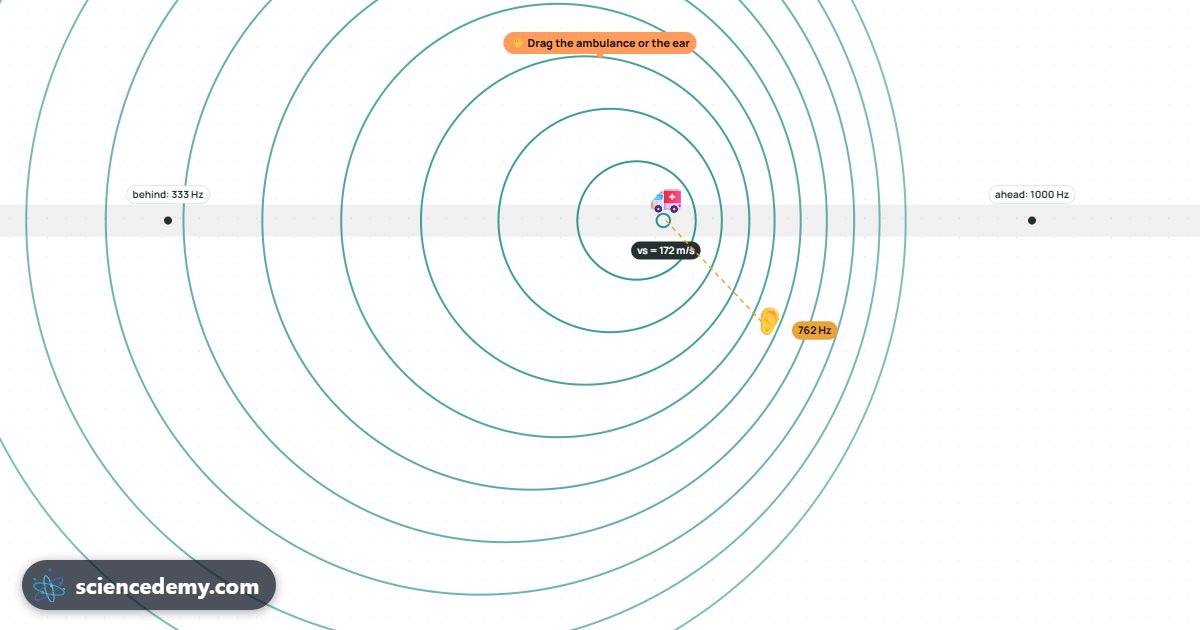
Doppler EffectDrive a siren past a listener and watch the sound waves bunch up in front and stretch out behind: hear the pitch change and read the observed frequency.
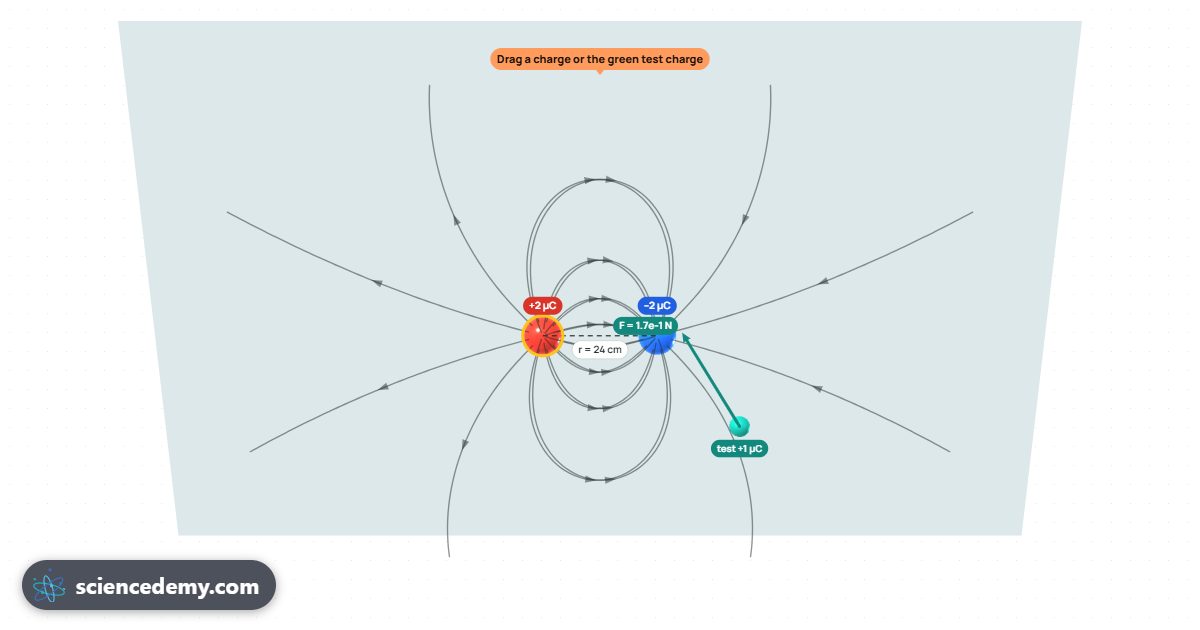
Electric FieldsDrop positive and negative charges, drag them around and watch the field lines, the force arrows and Coulomb's law update live.
- Physics FormulasEvery physics equation as a calculator: solve for any value, or fill it from your own experiments.
Biology simulations
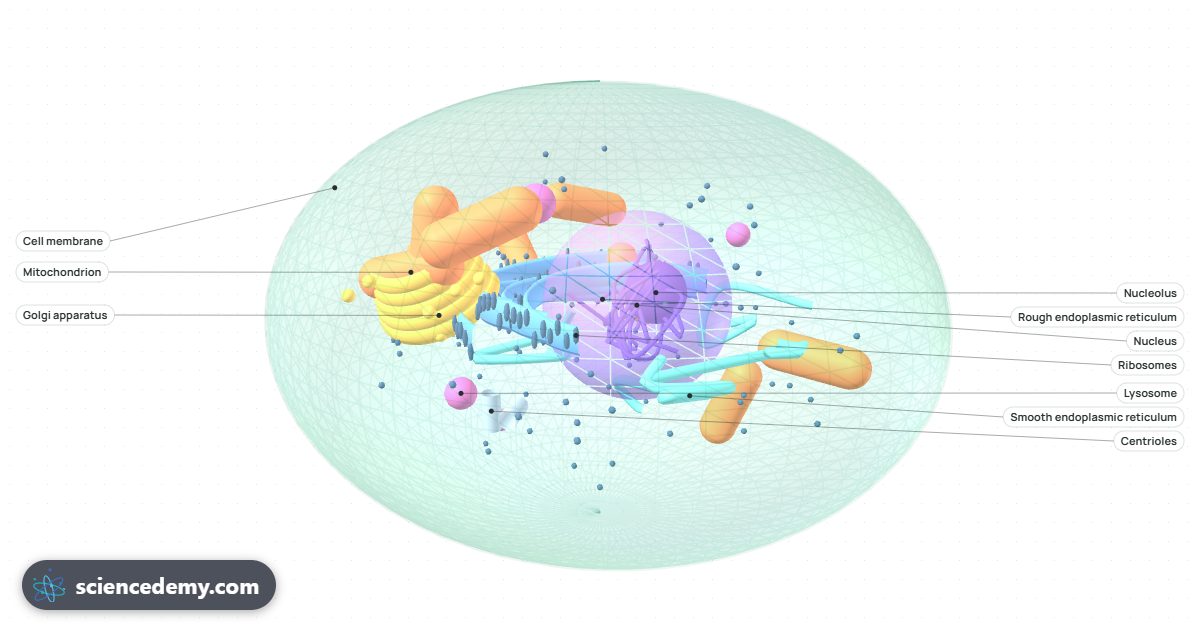
Cell ExplorerSpin a 3D animal or plant cell, click each organelle and find out what it does.
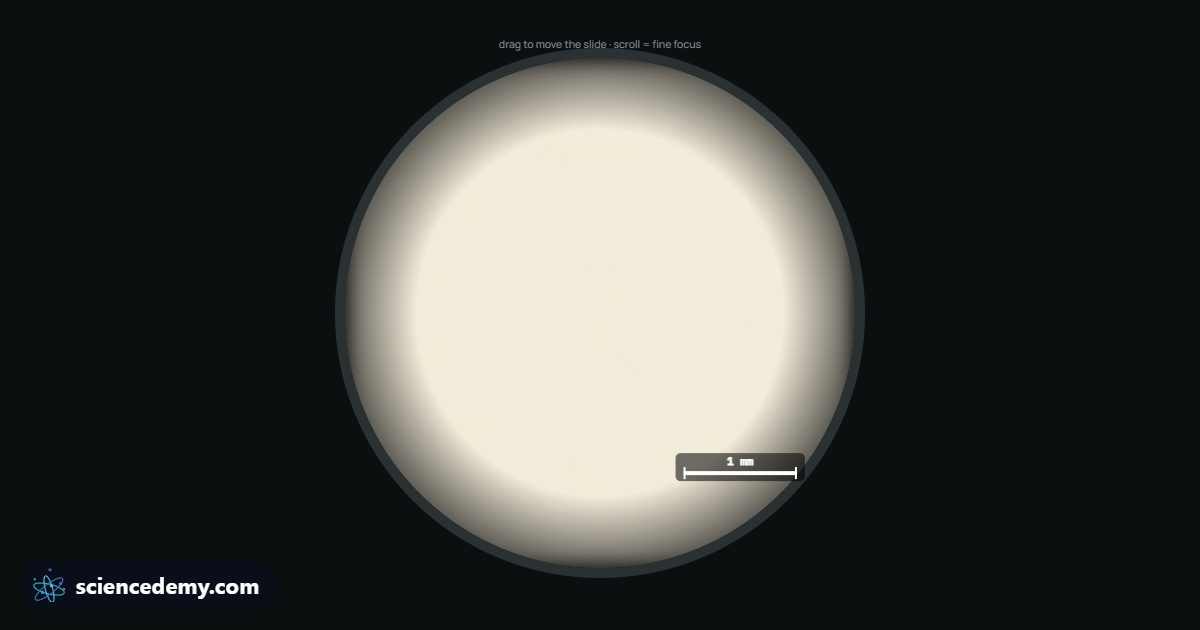
Virtual MicroscopeLoad a slide, switch lenses and focus on onion cells, cheek cells, blood and more.
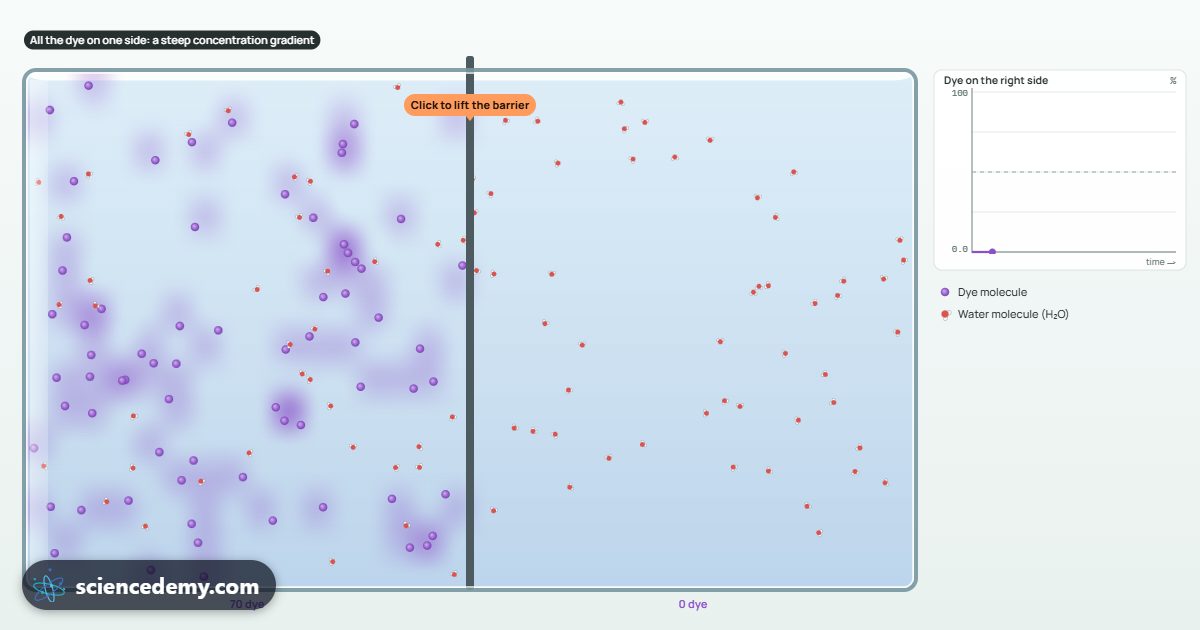
Diffusion & OsmosisWatch particles spread out, water cross a membrane, and cells swell, burst or shrivel in different solutions.
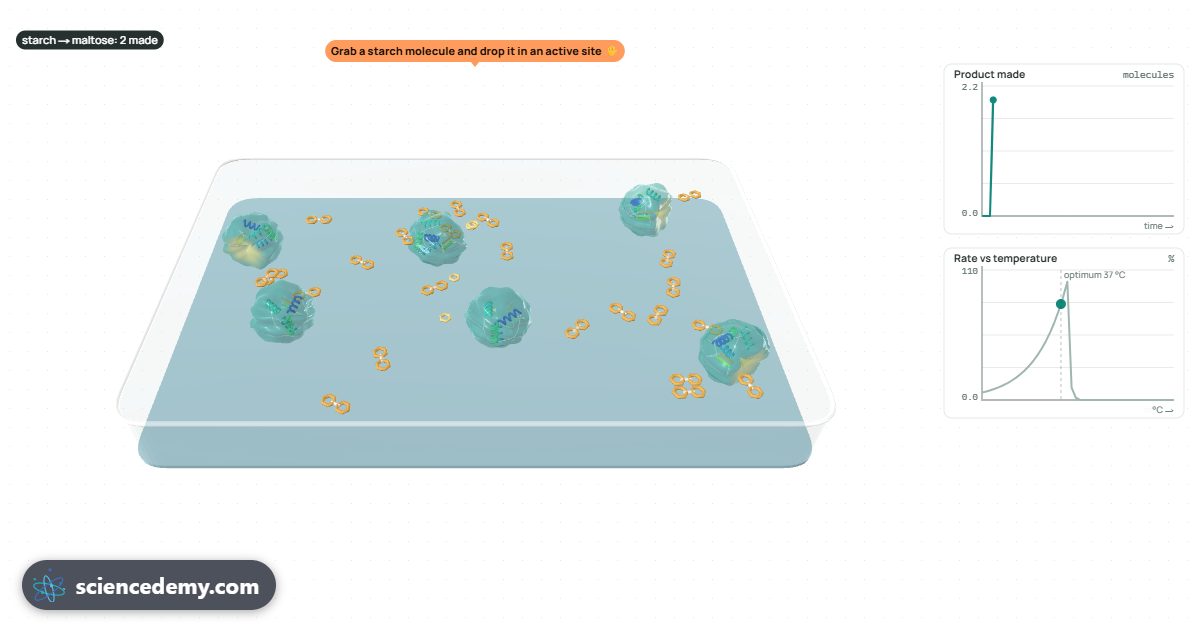
Enzyme LabFit substrates into active sites, then heat, change the pH and add inhibitors until the enzyme denatures.
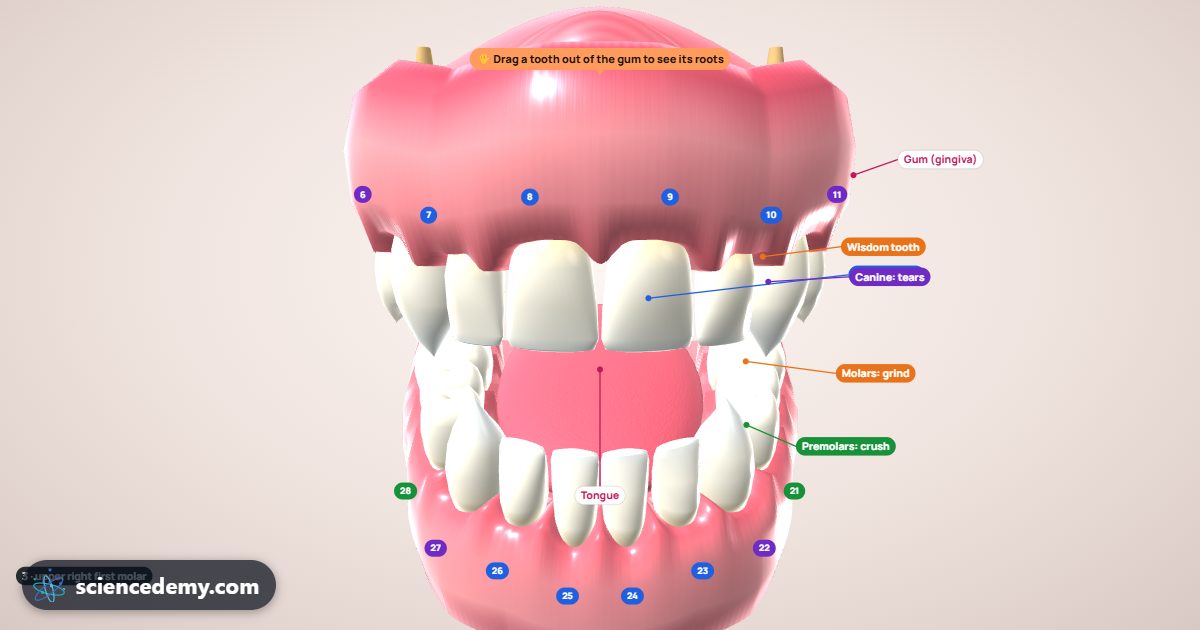
Teeth & Tooth NumbersA numbered dental chart of adult and baby teeth, a tooth cut open in 3D, and plaque you brush away before it causes a cavity.
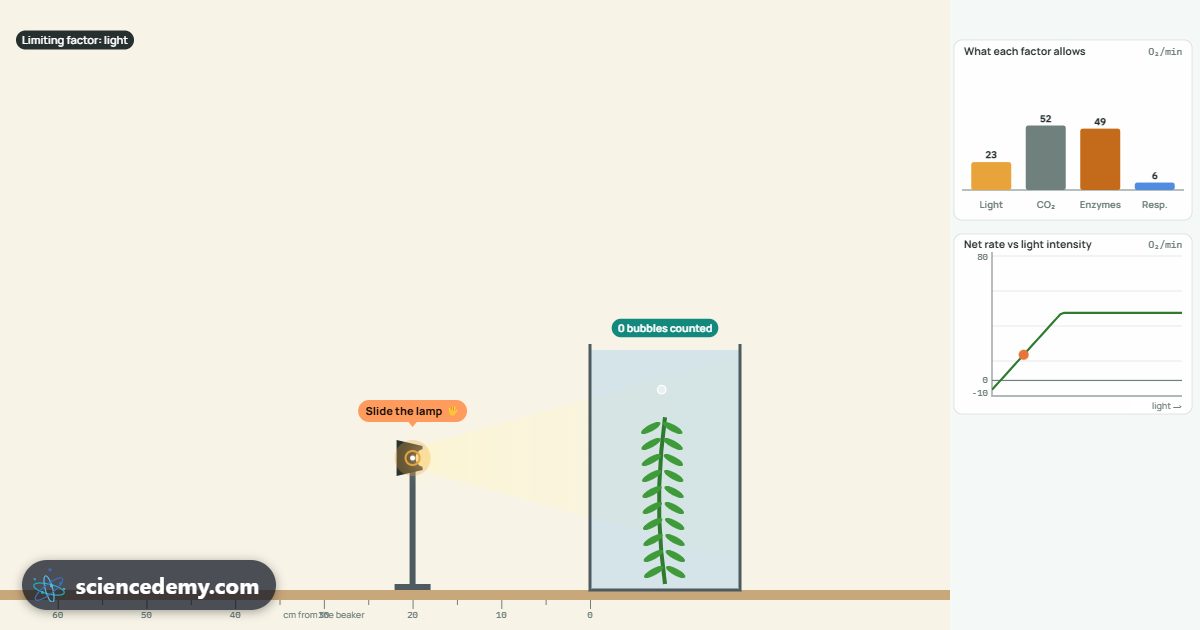
Photosynthesis & RespirationCount the oxygen bubbles from pondweed under a lamp and find the limiting factor, day and night.
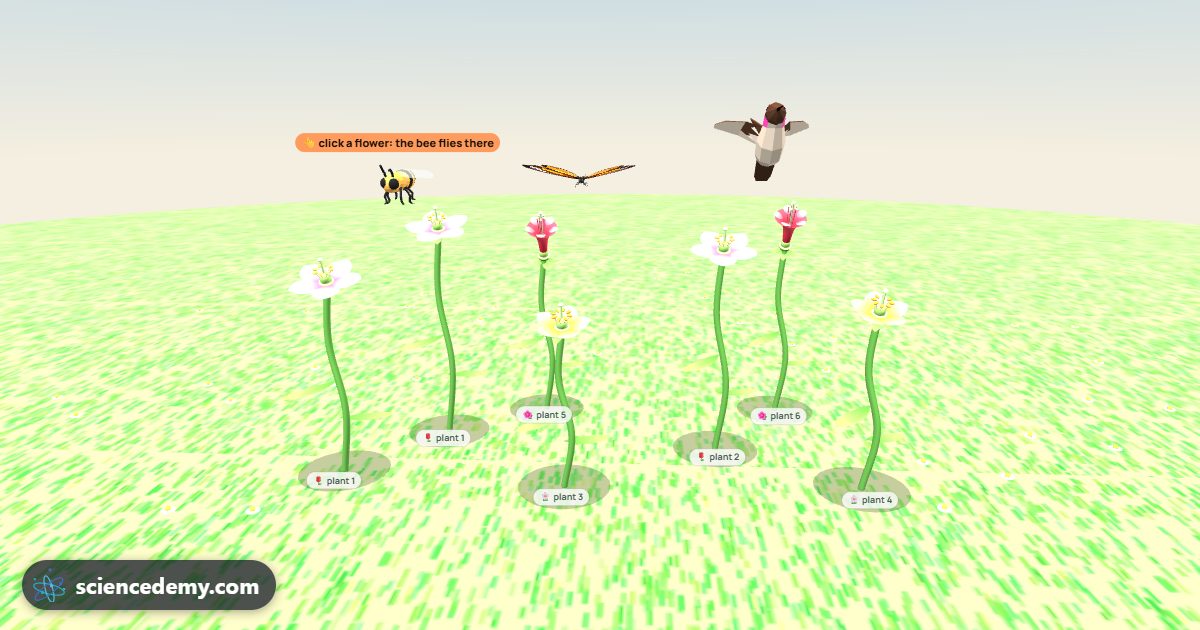
PollinationFly a bee round a 3D garden: carry pollen, watch the pollen tube grow and see fruit and seeds form.
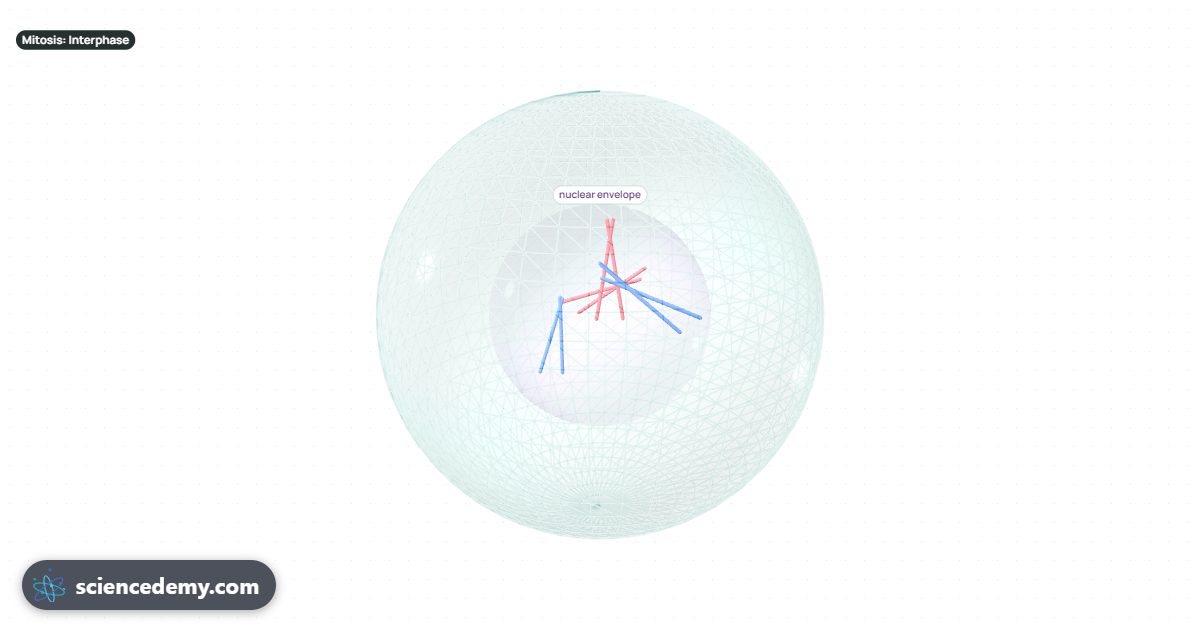
Cell Division: Mitosis & MeiosisStep through mitosis and meiosis: chromosomes copy, line up, cross over and pull apart.
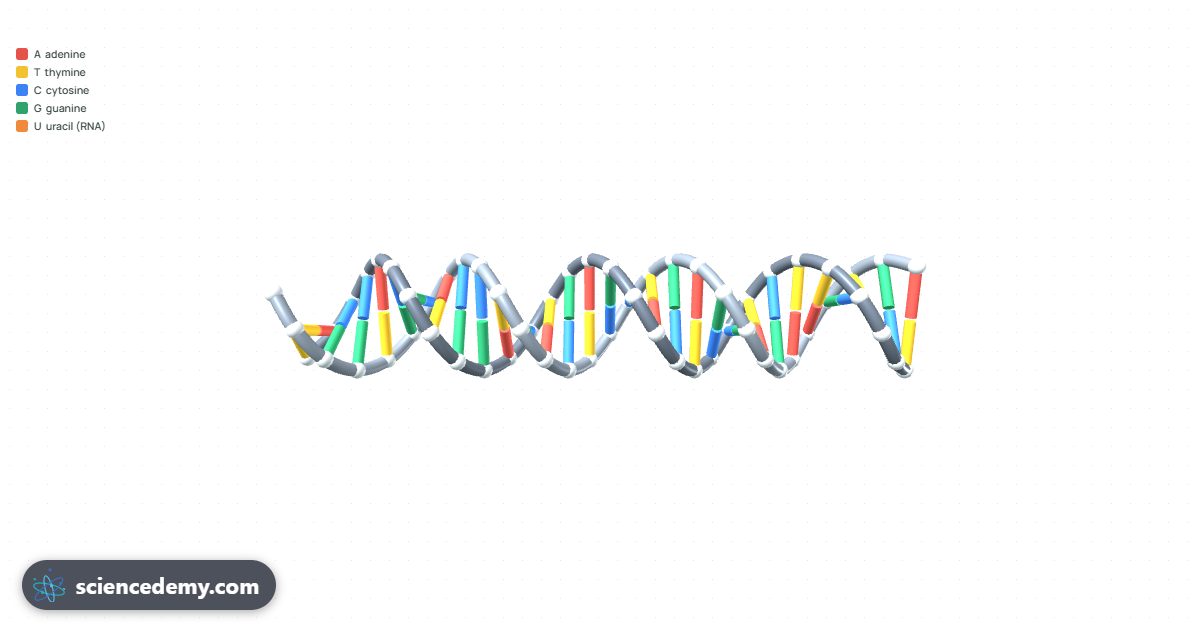
DNA BuilderPair the bases, unzip the helix, make mRNA and translate it into a protein.
- Natural SelectionBe the bird: hunt peppered moths on clean and sooty bark and watch the population evolve.
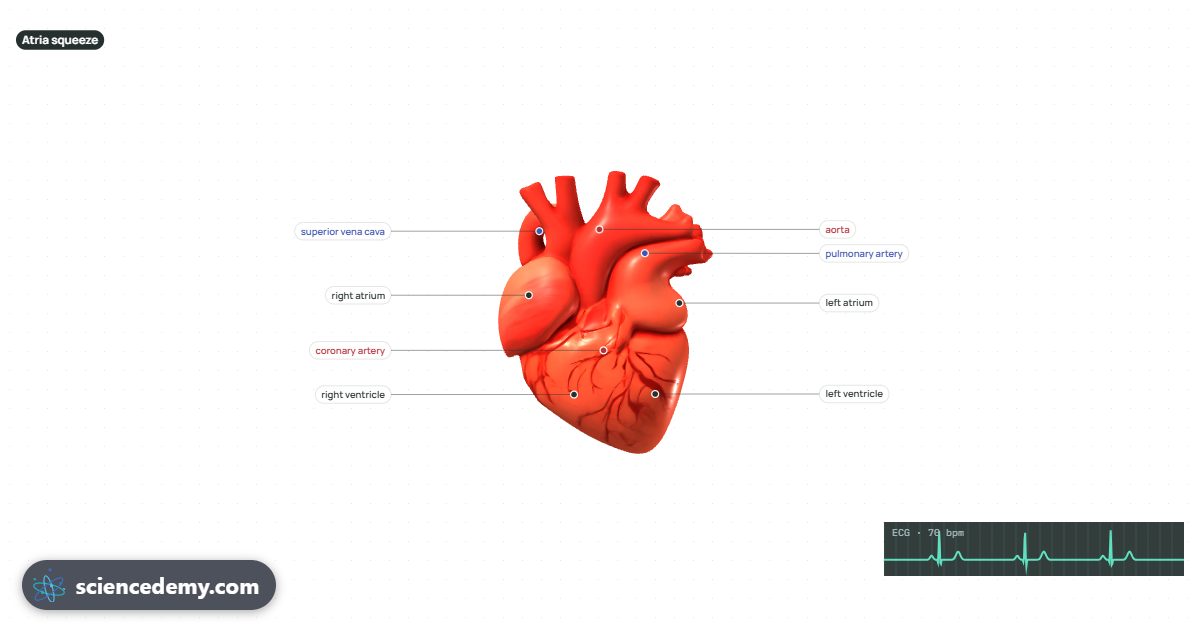
Heart & CirculationFollow blood through the four chambers and valves, read the ECG and see exercise change cardiac output.
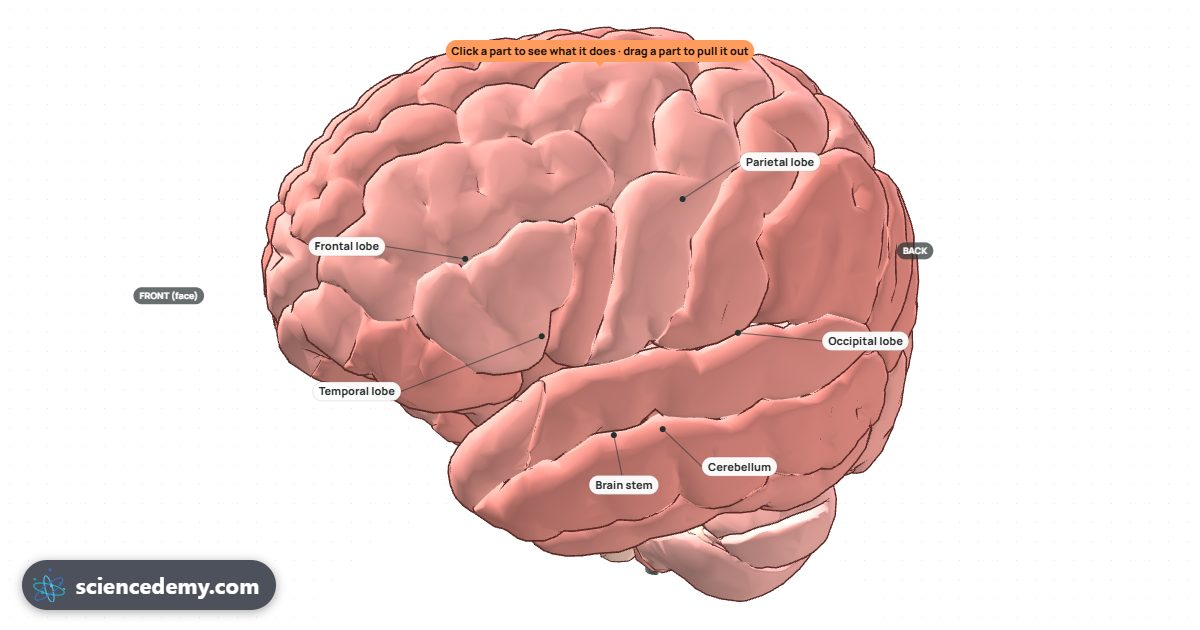
Brain & NeuronsTurn a real 3D brain, light up its lobes, then fire a neuron and send an impulse across a synapse.
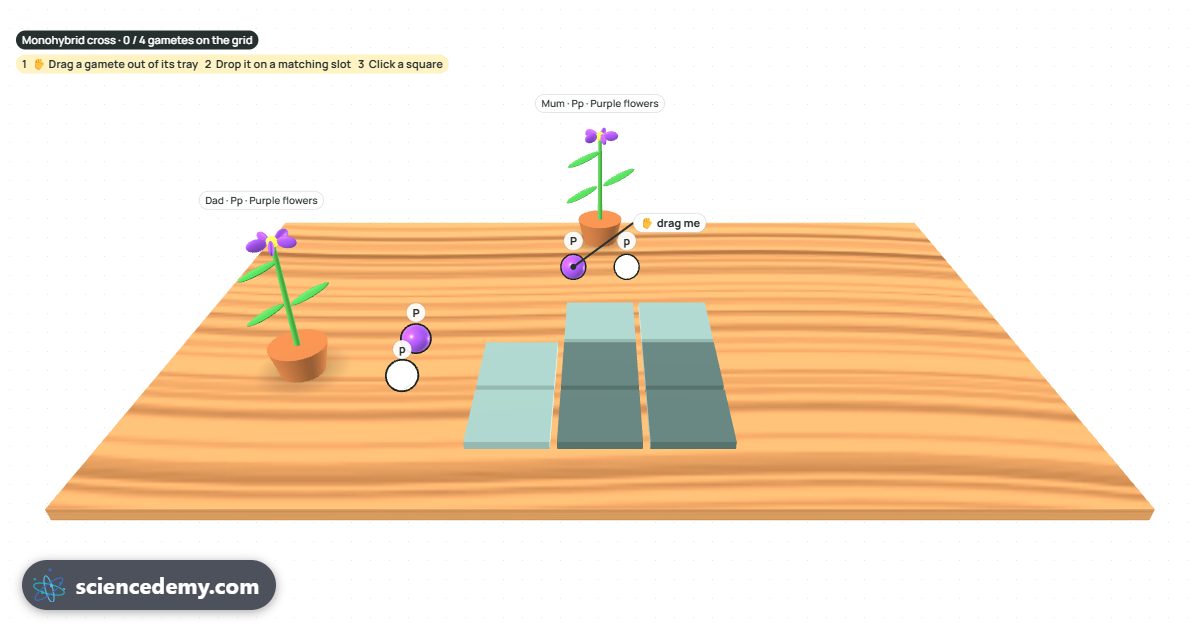
Punnett SquareDrag gametes onto a 3D Punnett square: monohybrid, dihybrid, incomplete dominance and sex-linked crosses with live ratios
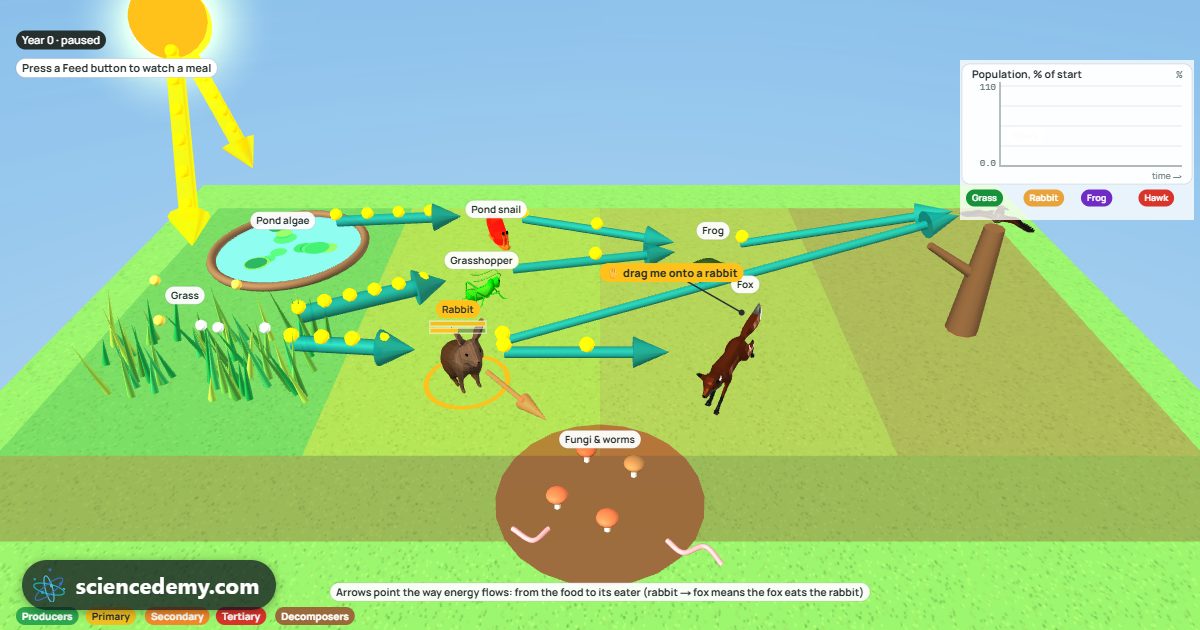
Food WebWatch a fox catch a rabbit step by step in a left-to-right food web, remove a species to see the chain reaction, spill a pesticide and watch energy flow and populations change
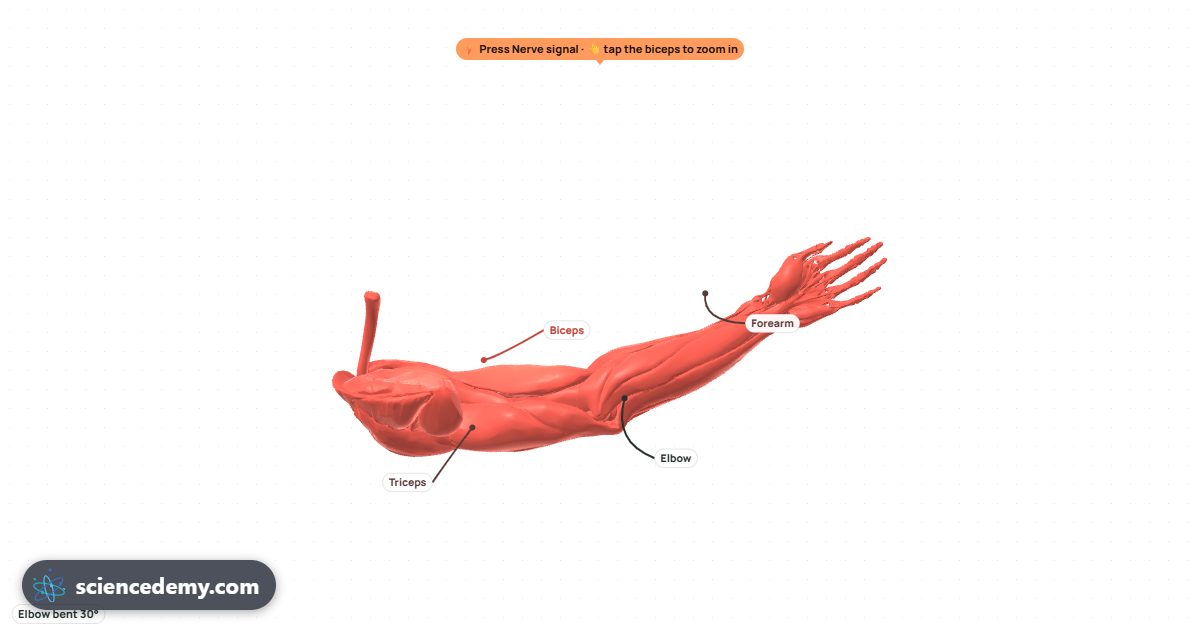
Muscle ContractionSwitch calcium and ATP on and off, step the myosin cycle one stage at a time, stretch a sarcomere by dragging a Z-disc, and watch the I-band and H-zone shrink while the A-band stays the same
- Biology FormulasEvery biology equation as a calculator: magnification, Hardy–Weinberg, cardiac output and more.
Maths simulations
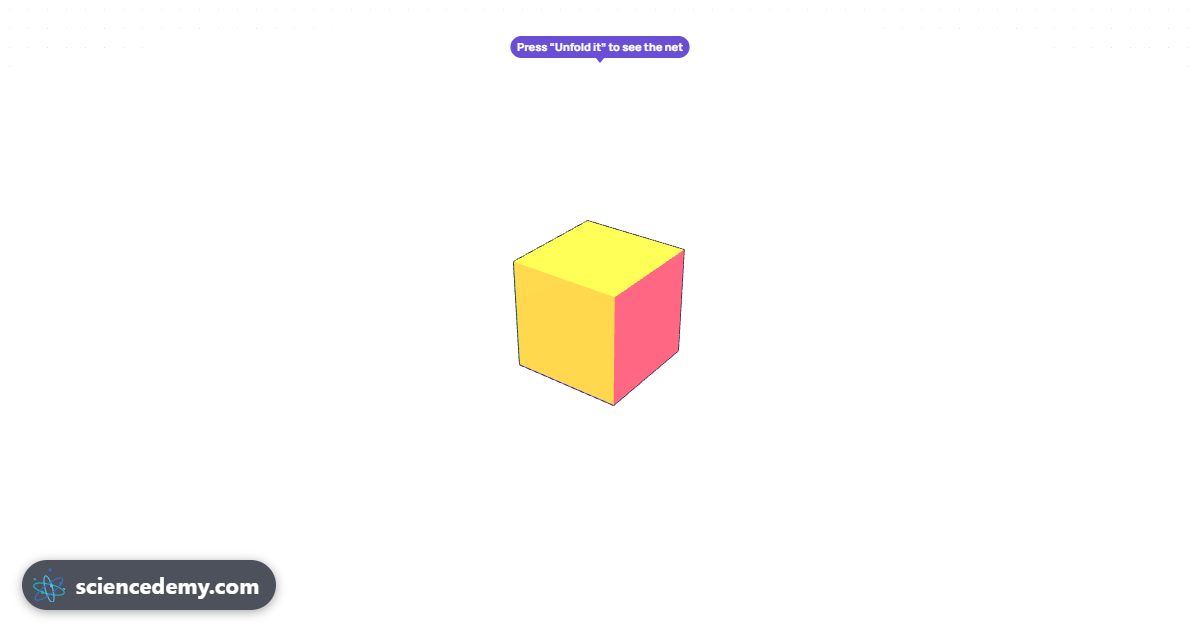
3D Shapes & NetsUnfold cubes, cylinders and cones into nets, fill them with water and slice them into cross-sections.
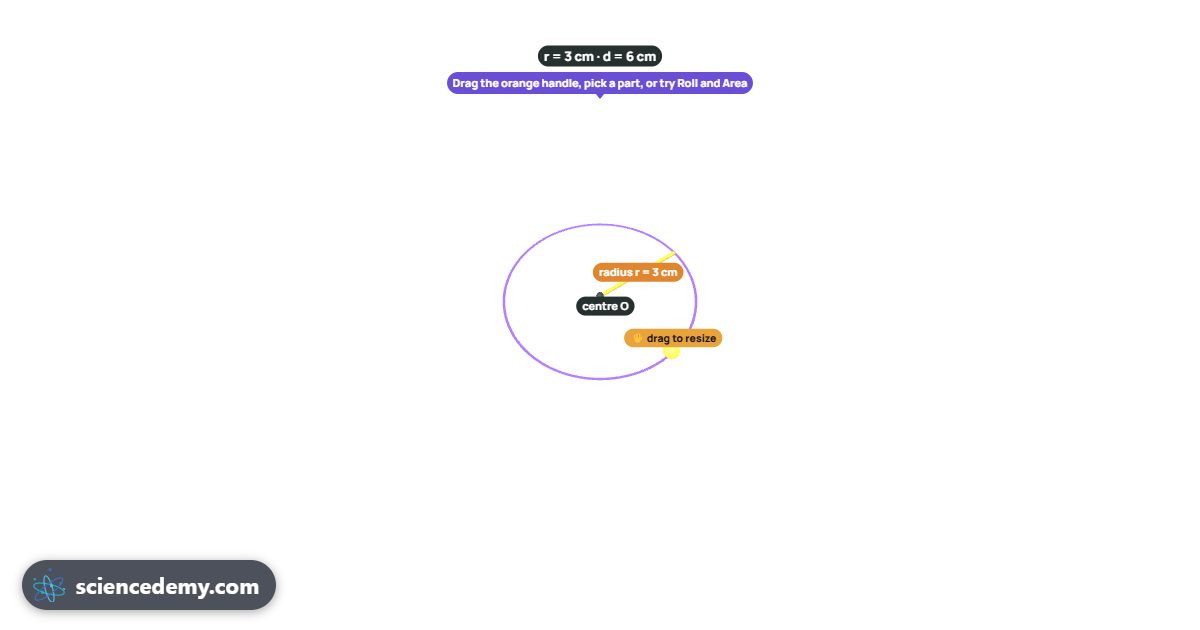
Circles & πRoll a coin to find π, cut a circle into slices that make a rectangle, and drag arcs and sectors open.
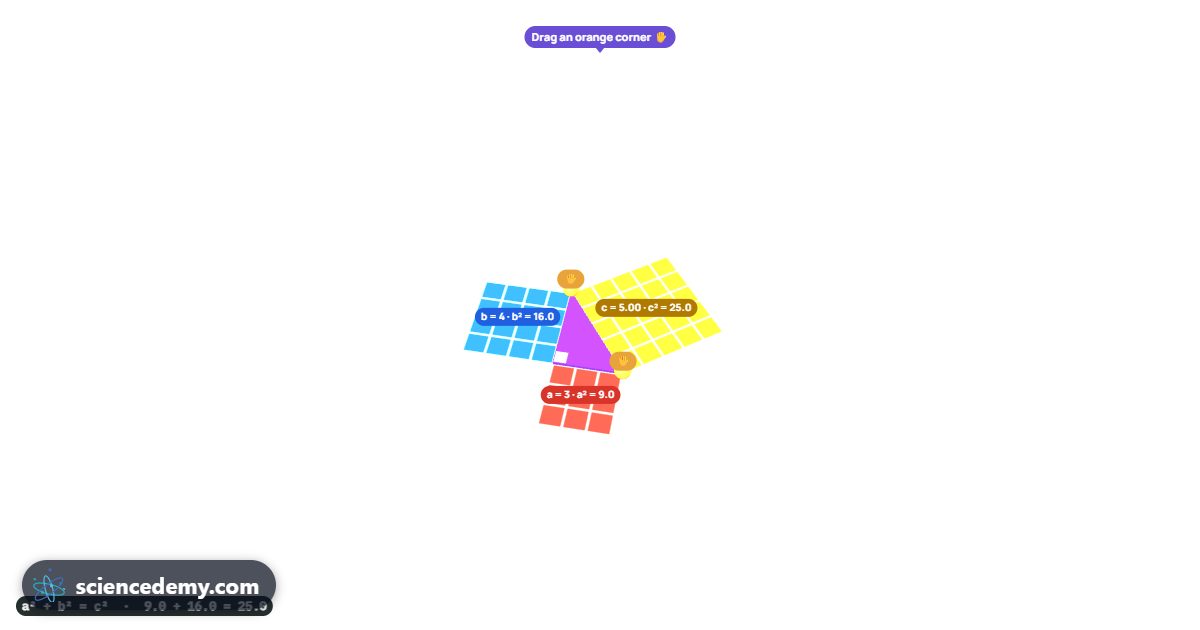
Pythagoras’ TheoremDrag a right-angled triangle, count the squares on its sides and pour water to see a² + b² = c².
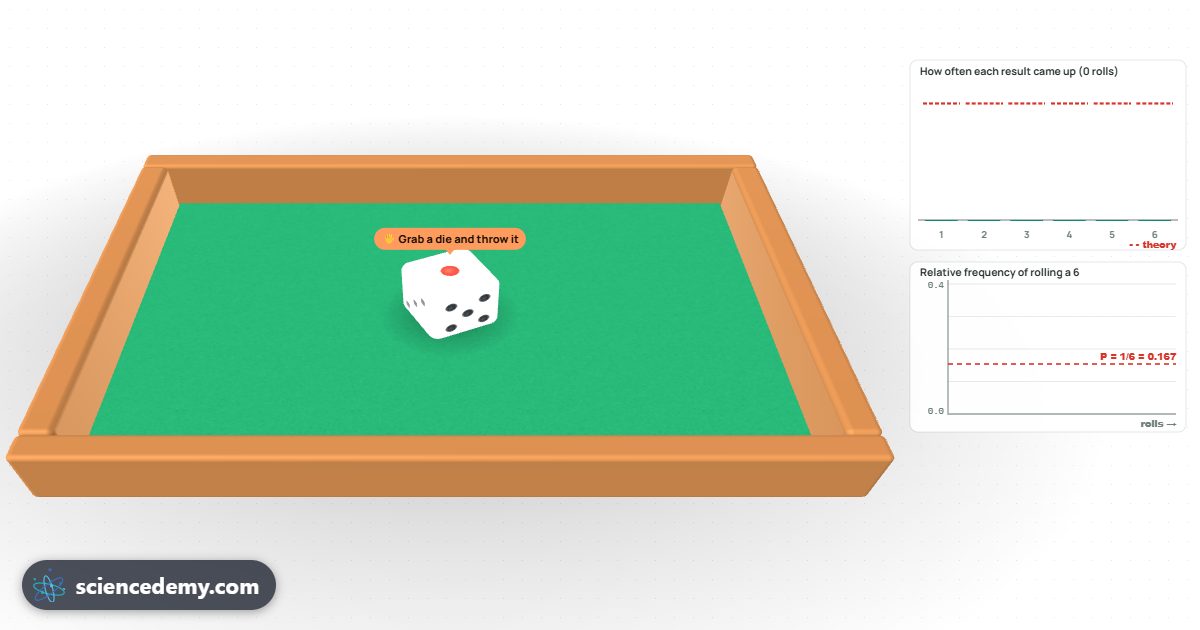
Probability: Dice & CoinsThrow 3D dice into a felt tray, flip a coin or roll 1 000 at once, and watch the relative frequency close in on the probability.
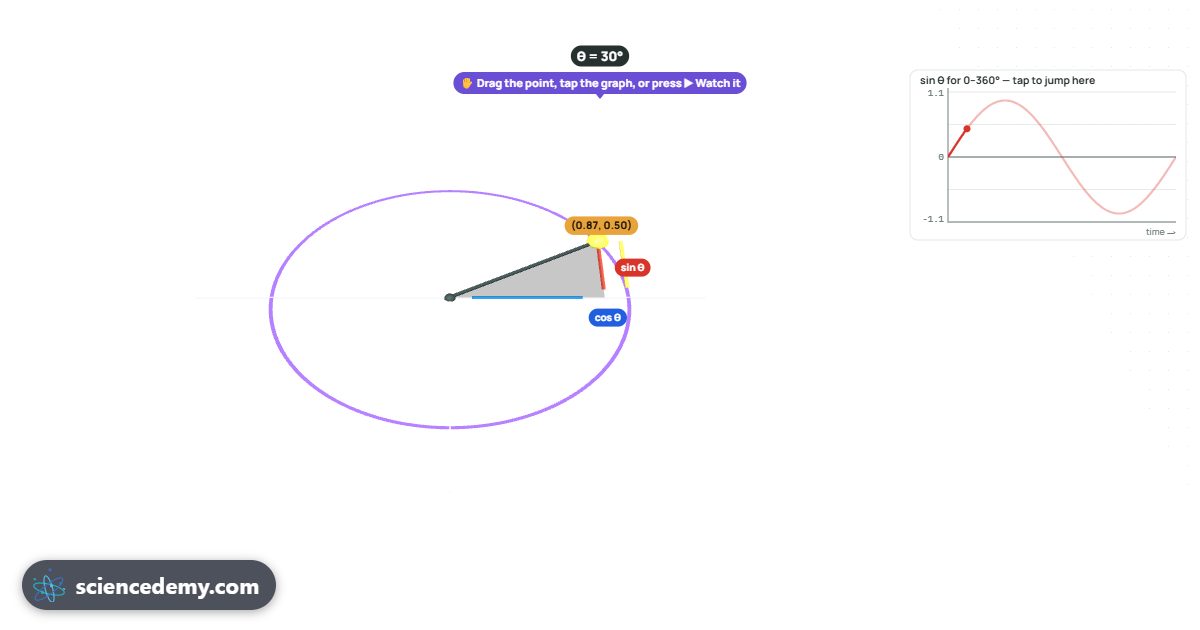
Trigonometry: Unit CircleInteractive unit circle: drag the angle and read exact sin, cos and tan values, radians and the sine wave.
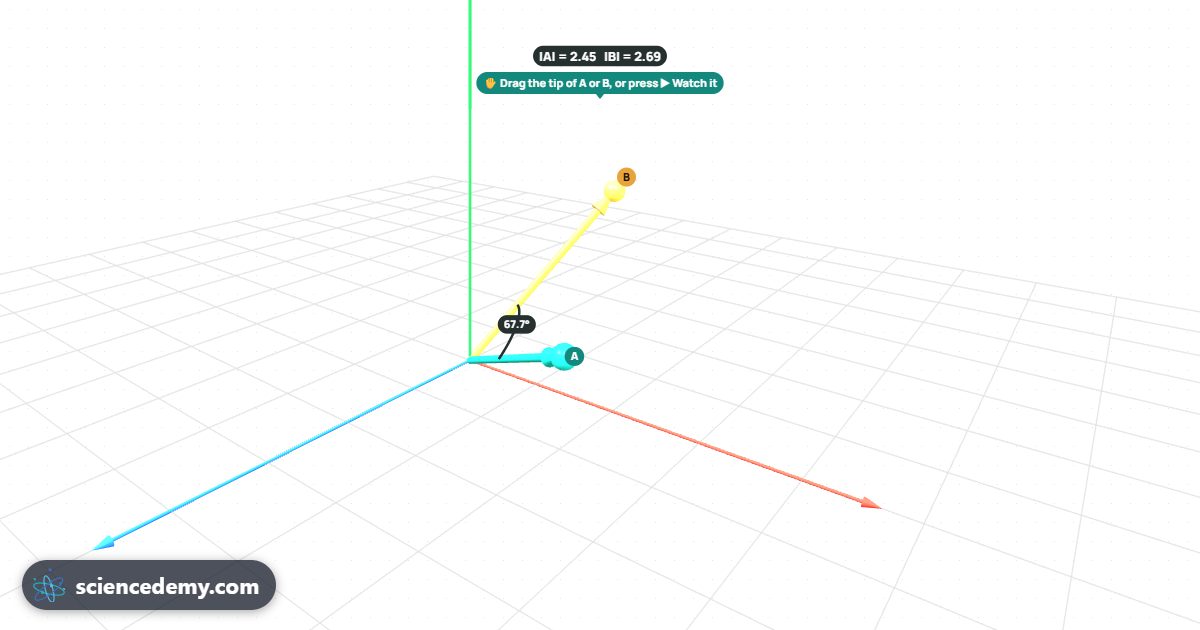
3D VectorsDrag the tips of two vectors in 3D, read their components and length live, and see them add and subtract tip to tail.
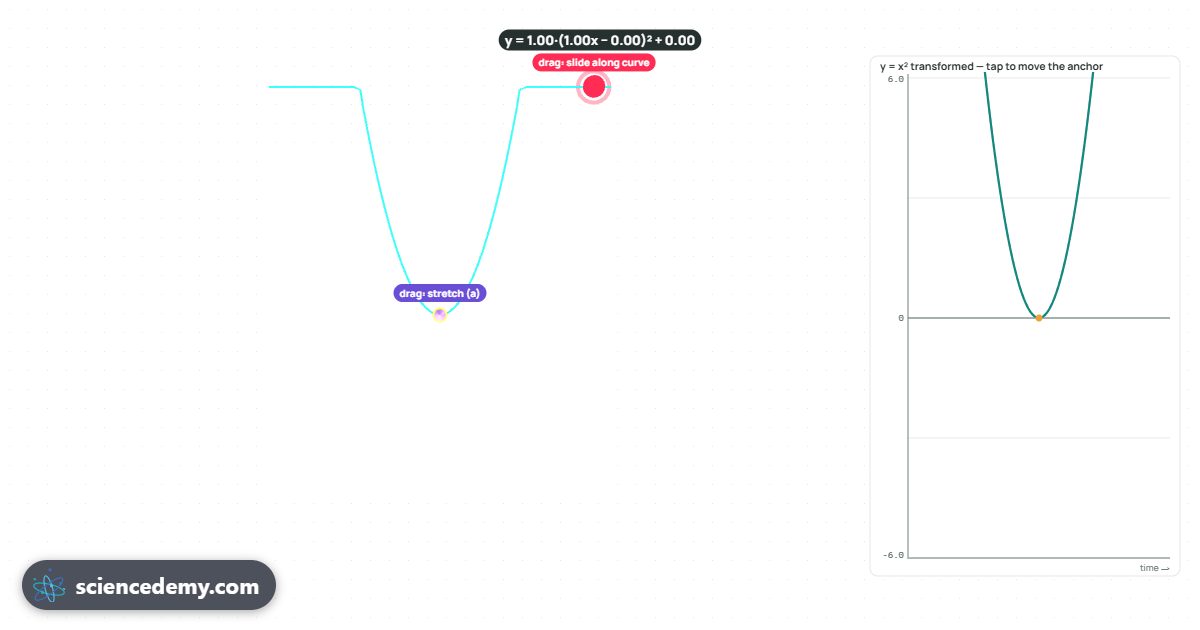
Graphing Functions & TransformationsType equations like x², sin(x) or |x| and plot several at once, play Predict the graph (draw the curve, get scored), or transform a, b, h and k with sliders and handles.
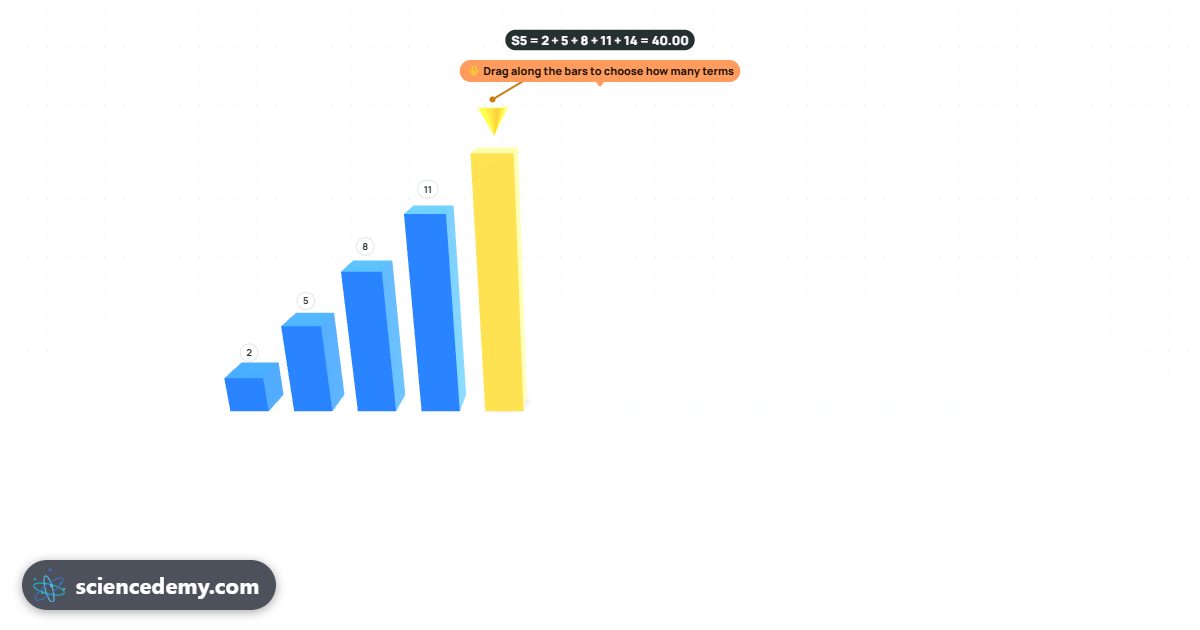
Sequences & SeriesBuild arithmetic and geometric sequences, find the nth term and the sum to n, and watch the terms grow as bars.
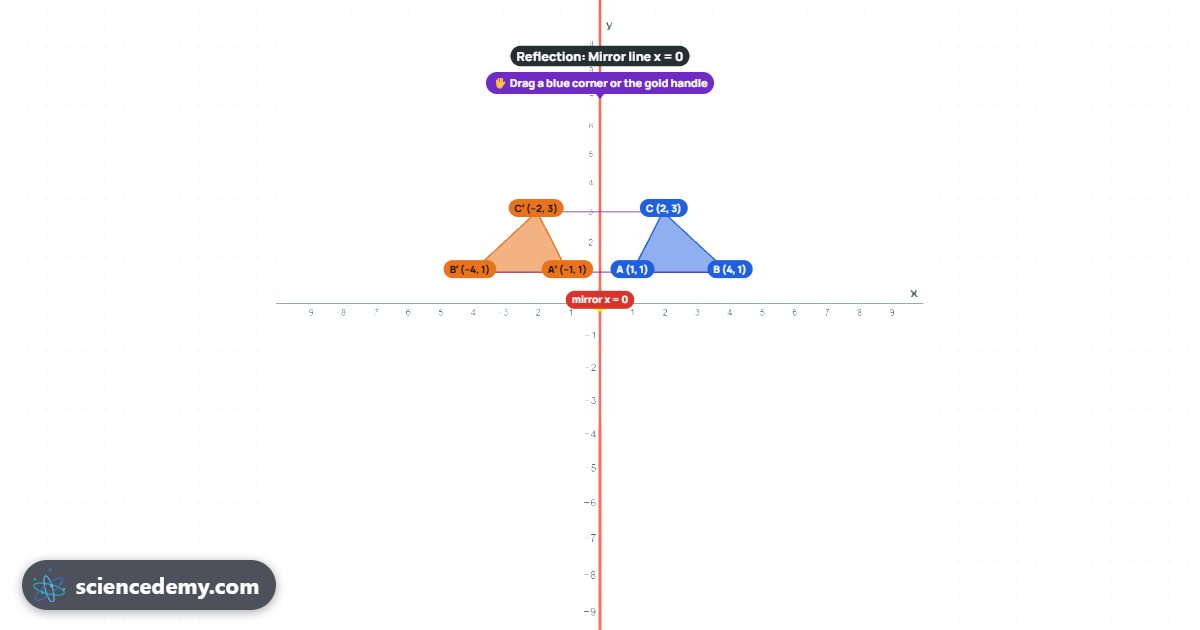
TransformationsDrag the corners of a shape on a coordinate grid, then reflect, rotate, translate and enlarge it and read off every new coordinate
- Maths FormulasEvery maths formula as a calculator: quadratic formula, Pythagoras, trigonometry, areas, volumes, statistics and interest.
Geography simulations
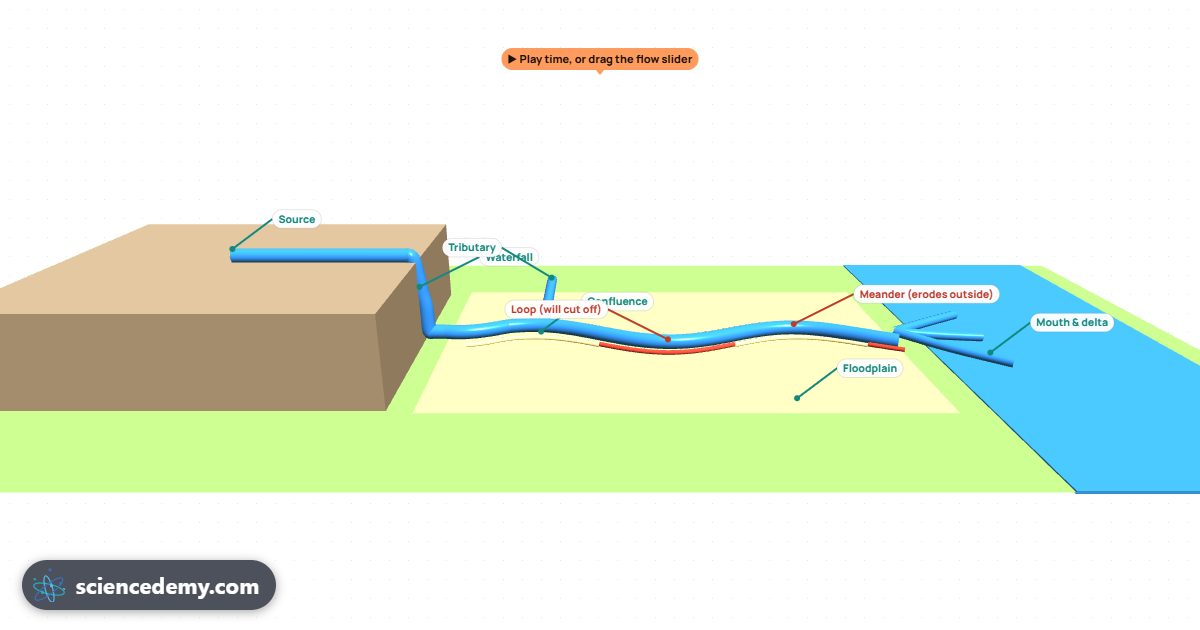
Rivers & MeandersFollow a river from source to mouth in 3D: speed up the flow, watch erosion on the outside bend and deposition on the inside until an oxbow lake cuts off.
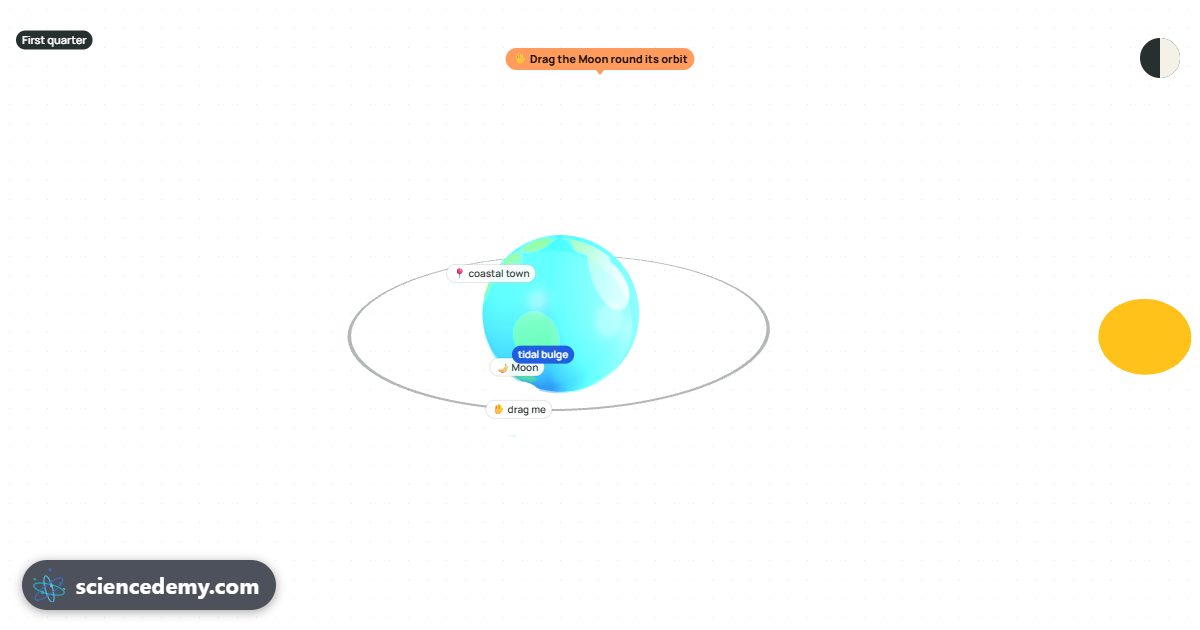
Tides & the MoonDrag the Moon around the Earth and watch the two tidal bulges follow it: see spring and neap tides, moon phases and the tide height at a coastal town.
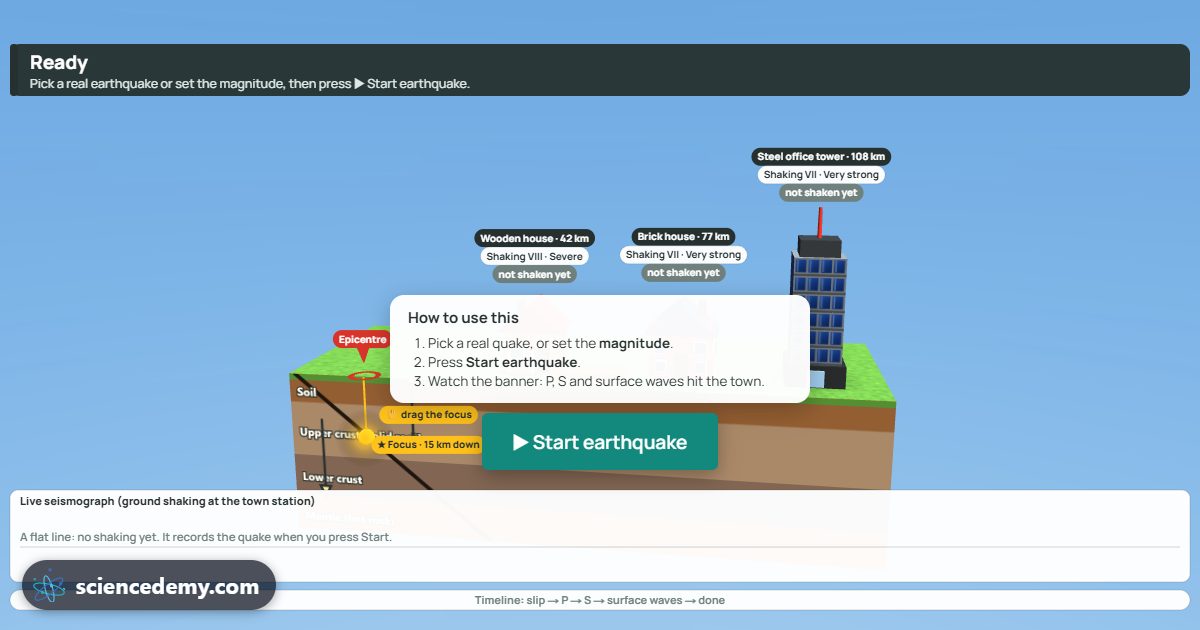
EarthquakesStart an earthquake and watch P, S and surface waves shake a town: houses crack or collapse by magnitude and distance, a live seismograph records it, then find the epicentre by triangulation
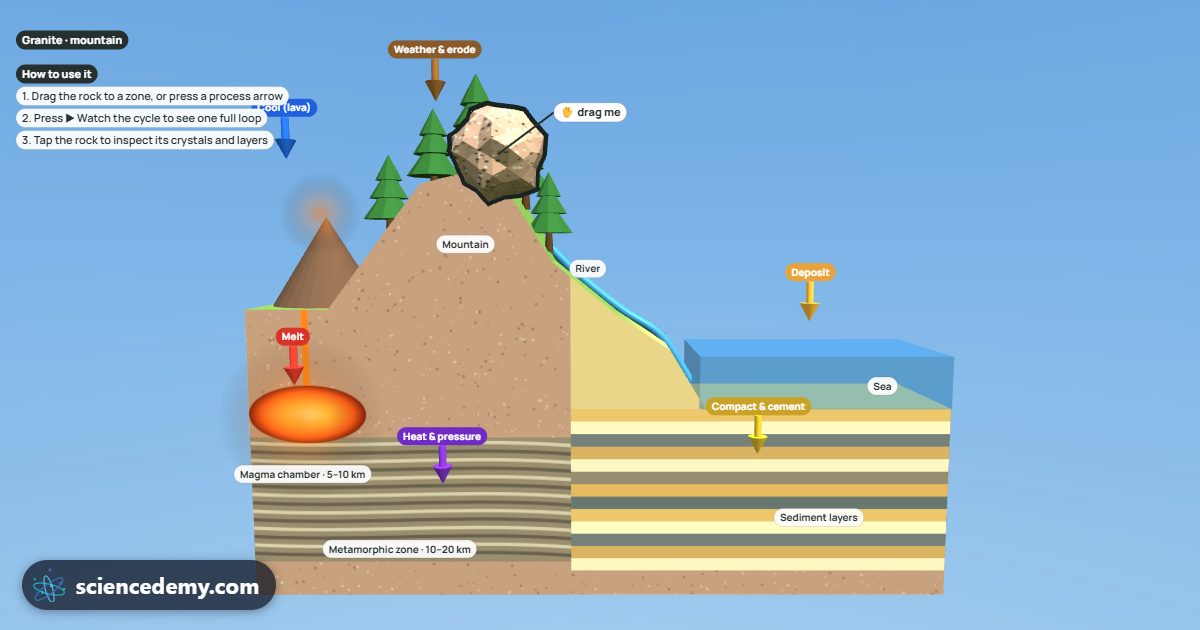
Rock CycleLabelled 3D rock cycle: drag a rock between the volcano, mountain, sea and deep crust, then melt, weather, bury and squeeze it into igneous, sedimentary and metamorphic rock.
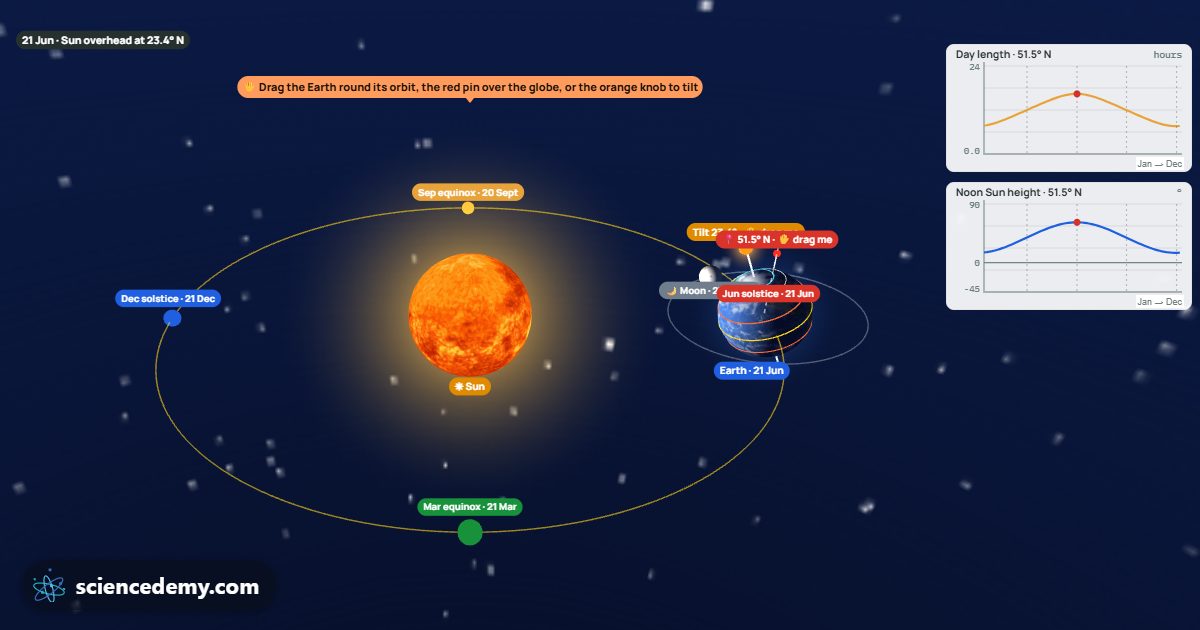
Seasons & Earth's TiltDrag the Earth round the Sun, tilt its axis and move a pin over the globe to see day length and noon Sun height
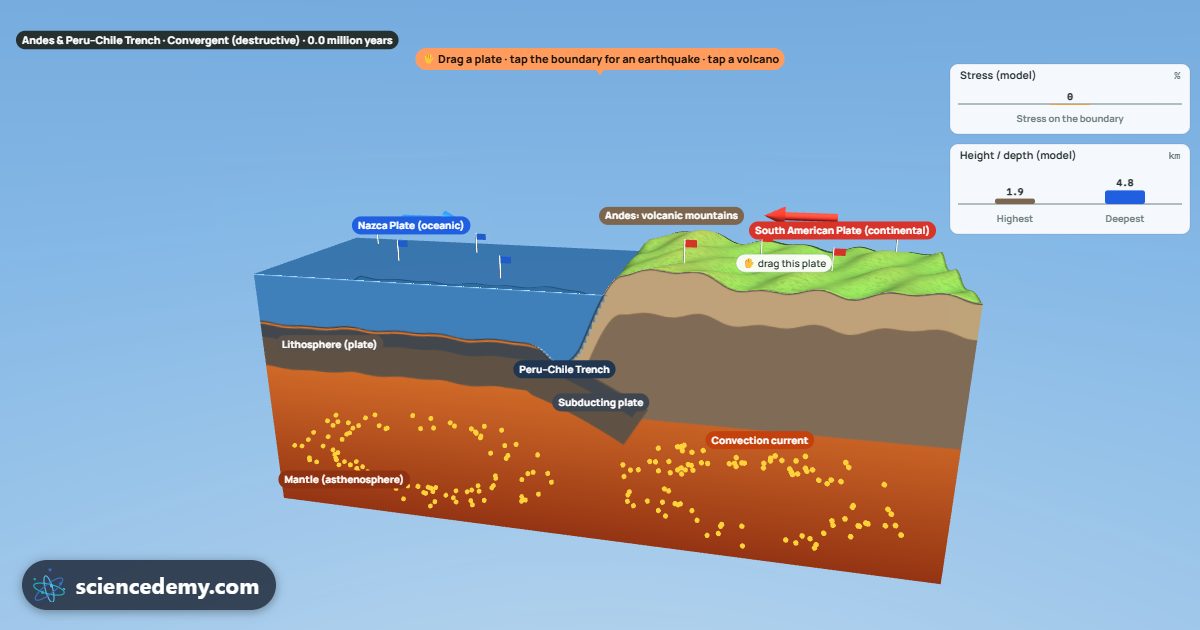
Plate TectonicsDrag two tectonic plates together or apart: build mountains, trenches, volcanoes and rift valleys, and set off earthquakes.
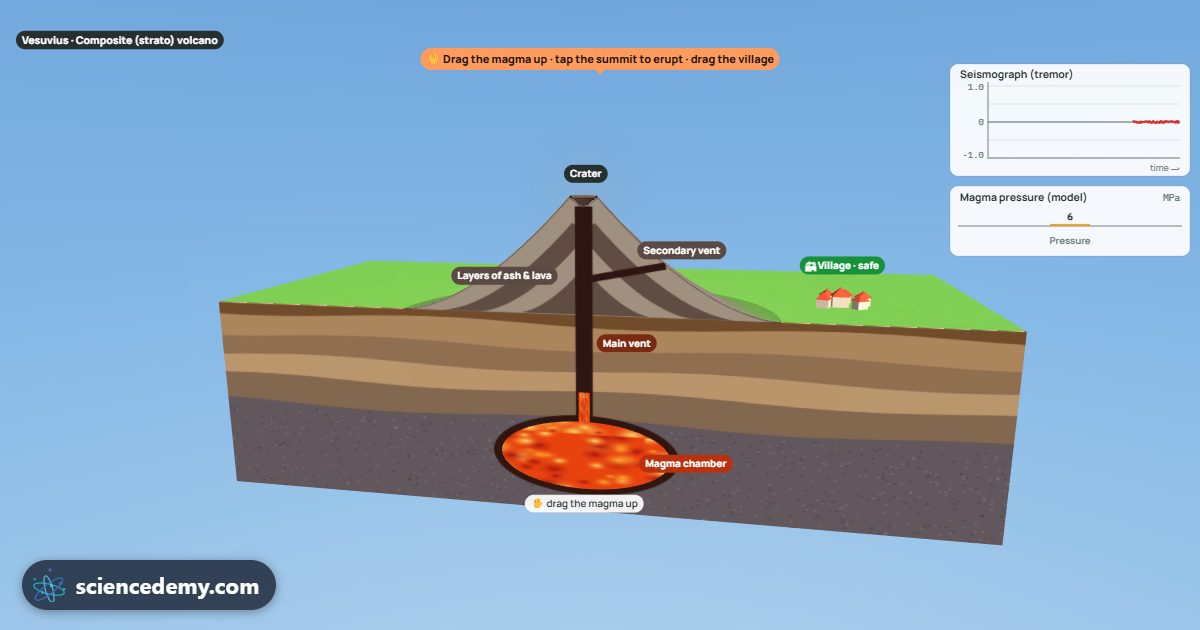
VolcanoCut-away 3D volcano: build pressure in the magma chamber, pick the volcano type and trigger an eruption with lava, ash and bombs.
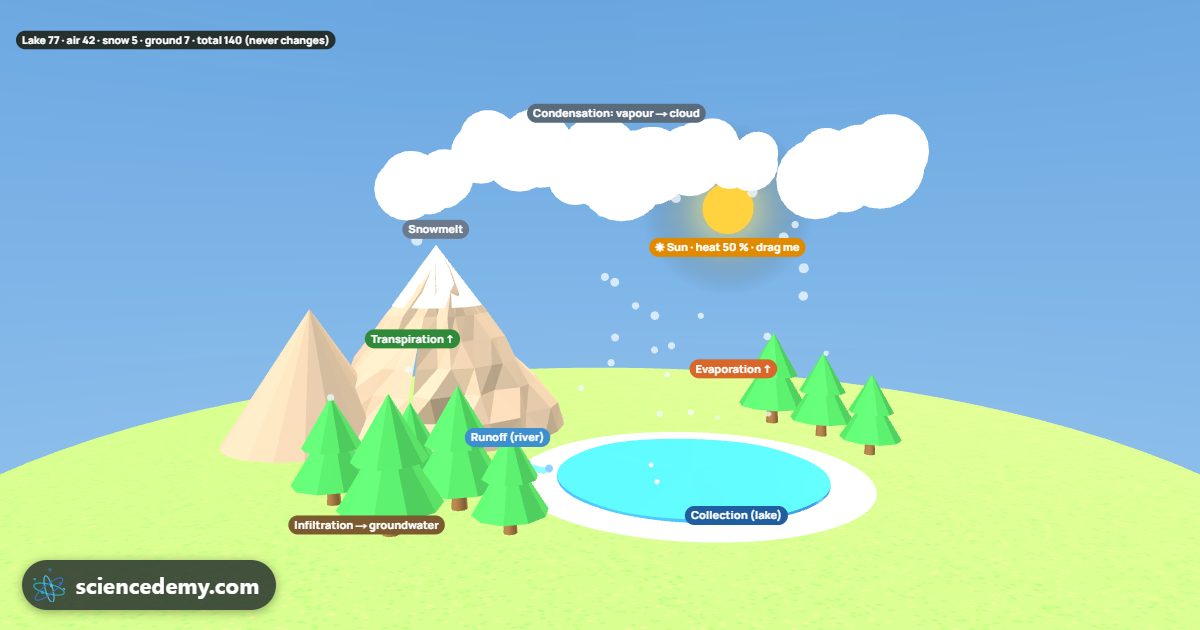
Water CycleLabelled 3D water cycle: drag the sun, steer the clouds, make it rain or snow and follow every drop.
Latest articles
- Physics
Doppler Effect: Definition, Formula and Examples
The Doppler effect is the change in a wave's frequency when its source or observer moves. Learn the formula, a worked siren example and red and blue shift.
6 November 2026 · 5 min read - Geography
What Causes Tides? Spring and Neap Tides Explained
The Moon’s gravity pulls the sea into two bulges, so most coasts get two high tides about 12 h 25 min apart. Learn why spring and neap tides happen.
6 November 2026 · 7 min read - Biology
Biotic and Abiotic Factors: Examples and Differences
Biotic factors are living parts of an environment, abiotic ones are non-living, like temperature, light and water. See examples and a biotic vs abiotic table.
5 November 2026 · 4 min read